Thai Omelet (Kai Jeow)
User Reviews
5
-
Prep Time
2 mins
-
Cook Time
3 mins
-
Total Time
5 mins
-
Servings
1
-
Calories
171 kcal
-
Course
Main Course, Breakfast, Lunch
-
Cuisine
Thai
Thai Omelet (Kai Jeow)
Description
Thai Omelet (Kai Jeow) starts with whisking together eggs, thinly sliced scallions, soy sauce, salt, and pepper. Heating a non-stick pan or wok with olive oil to very hot ensures the eggs cook quickly, forming a lightly browned, airy texture. Cooking 1-2 minutes on each side results in an evenly cooked omelet with a soft interior and crisp edges.
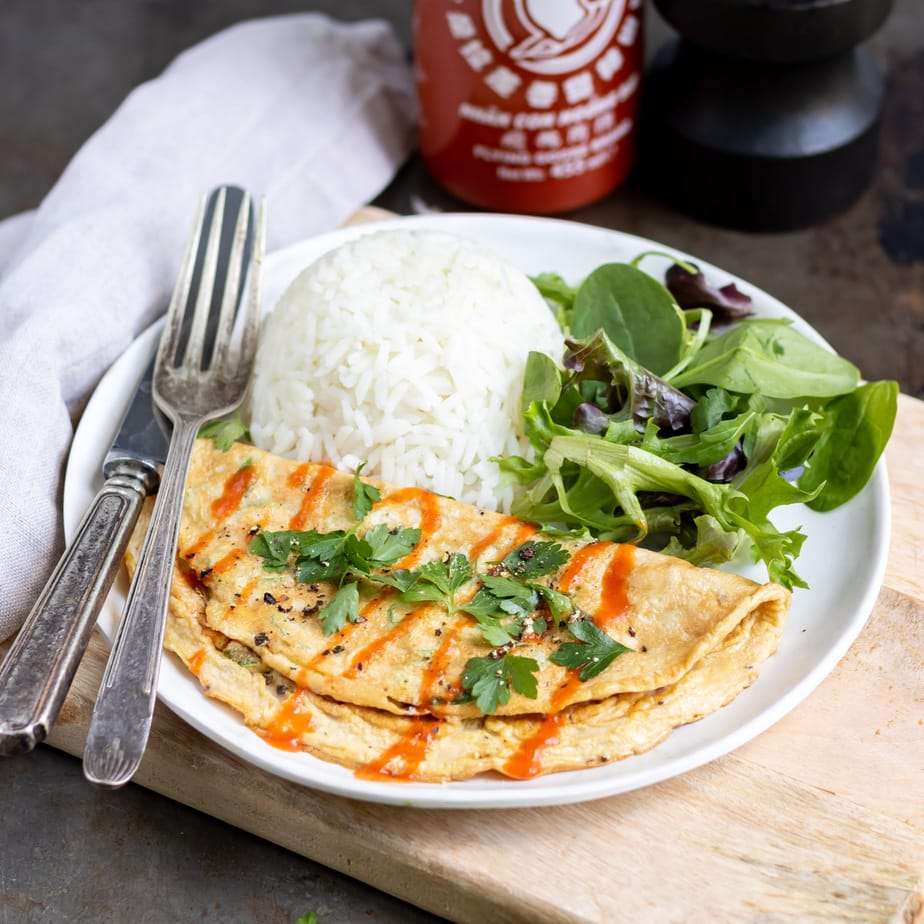
The omelet’s flavor is enhanced by the soy sauce and scallions, giving subtle umami and slight onion notes. Sriracha provides optional spicy heat, while fresh cilantro adds herbaceous brightness when served.
This omelet typically accompanies steamed rice, noodles, or turmeric rice, making a simple yet fulfilling dish. It also adapts to variations like adding curry powder for extra flavor or using duck eggs for richness. Using a well-seasoned or non-stick pan is key to preventing sticking and maintaining the fluffy texture.
The recipe is flexible for vegan or gluten-free adjustments by substituting ingredients as noted.
Ingredients
- 1 teaspoon olive oil
- 2 egg
- 1 scallion thinly sliced, aka spring onion
- ½ teaspoon soy sauce
- salt
- black pepper
To serve:
- sriracha hot sauce (optional)
- cilantro aka coriander
Instructions
- Heat the oil in a frying pan or wok until very hot.
- Beat the eggs, chopped spring onion, soy sauce, salt and pepper.
- Pour into the hot pan. Cook for 1-2 minutes until lightly browned, flip and cook for a further 1-2 minutes on the other side.
- Serve immediately, drizzled with sriracha sauce to taste.
Notes
- Whip eggs thoroughly before cooking to achieve a fluffy, pancake-like texture with air pockets.
- Use a hot pan or wok to quickly fry the eggs and create a light, airy omelet with crisp edges.
- A non-stick or well-seasoned cast iron pan works best to prevent sticking and maintain texture.
- Serve with sriracha and fresh cilantro for added spice and freshness.
- For variations, try adding curry powder to eggs or use duck eggs for a richer flavor.
- For gluten-free, use Tamari or other gluten-free soy sauce alternatives.
- Vegan versions can be made using a suitable vegan egg replacer found in health food stores.
Nutrition Information
Show DetailsNutrition Facts
Serving: 1Serving
Amount Per Serving
Calories 171 kcal
% Daily Value*
| Calories | 171kcal | 9% |
| Carbohydrates | 1g | 0% |
| Protein | 11g | 22% |
| Fat | 12g | 18% |
| Saturated Fat | 3g | 15% |
| Cholesterol | 327mg | 109% |
| Sodium | 294mg | 12% |
| Potassium | 121mg | 3% |
| Vitamin A | 595IU | 12% |
| Vitamin C | 2.2mg | 2% |
| Calcium | 49mg | 5% |
| Iron | 1.5mg | 8% |
* Percent Daily Values are based on a 2,000 calorie diet.
User Reviews
Overall Rating
5
You'll Also Love