The Best and The Easiest Classic Crème Brûlée
User Reviews
4.6
-
Prep Time
20 mins
-
Cook Time
40 mins
-
Cooling Time
1 hr
-
Total Time
2 hrs
-
Servings
6 servings
-
Calories
363 kcal
-
Course
Baked Goods
-
Cuisine
French
The Best and The Easiest Classic Crème Brûlée
Description
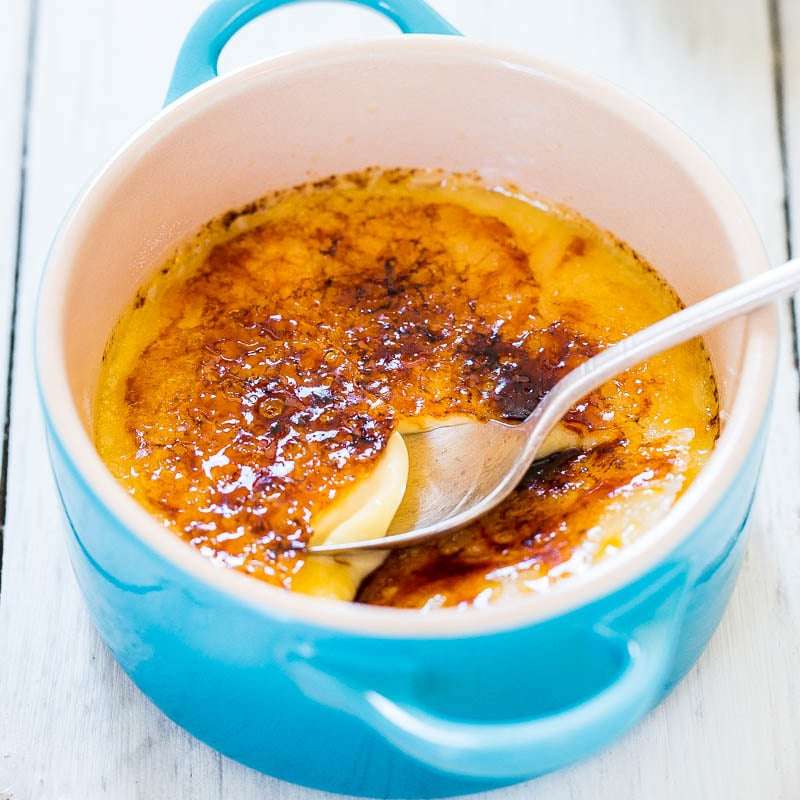
The Best and The Easiest Classic Crème Brûlée combines heavy cream, egg yolks, sugar, and vanilla extract to create a rich custard. Heating the cream until just bubbling and then mixing it with vigorously whisked egg yolks and sugar ensures a smooth blend. The mixture is baked gently in ramekins set in a water bath, which regulates temperature and prevents curdling, producing a delicate, silky texture. After cooling, a thin layer of sugar is spread on top of each custard and caramelized with a torch or broiler to form a crisp, crystalline crust.
The dessert balances the creamy, rich custard with the brittle caramelized topping, offering a textural contrast in each spoonful. It’s typically served in individual ramekins, suitable for elegant presentation.
If unsugared and un-torched, the crème brûlée can be refrigerated for up to three days, allowing for make-ahead preparation. Using superfine sugar for the topping helps achieve a smooth, even caramelization, but granulated sugar may be substituted.
Ingredients
- 1 pint heavy cream 2 cups, aka whipping cream
- 4 egg yolk from large eggs
- ¼ cup granulated sugar
- 1 tablespoon vanilla extract
- pinch salt optional and to taste
- water for water bath, about 3 to 4 cups
- 1 to 2 teaspoons sugar for caramelizing (granulated may be substituted but superfine melts more smoothly and evenly, superfine, per each ramekin
Instructions
- Preheat oven to 300 degrees F. Place 6 ramekins in a 9×13 pan or large baking pan that will be used for a water bath. Spray ramekins with non-stick cooking spray; set aside.
- Add the cream to a 2-cup glass measuring cup or microwave-safe bowl. Heat on high power until cream begins to bubble just a bit, but don’t let it come to a full boil; it took 3 1/2 minutes in my micro (or heat cream over medium heat on the stove, about 10 minutes). Remove cream from micro; set aside to cool.
- Crack the eggs into a small bowl and with clean hands, pick out the yolks and put them in a large bowl. I find picking out the yolks very carefully with my fingers is the easiest way to separate whites/yolks, but separate them as you prefer. Use the whites for another recipe or discard.
- To the large bowl with the yolks, add 1/4 cup granulated sugar, and whisk vigorously for 3 to 4 minutes until the mixture is lighter and paler in color, and has fluffed in volume. Your shoulder should be burning; use an electric mixer if you wish, or burn some calories, save dishes, and whisk by hand; set aside.
- With a spoon, remove any skin that’s formed on the cream. It will be quite warm, but not scalding; it should read 165F max on a thermometer.
- Very slowly pour about 1/4 cup of cream into the eggs, whisking the whole time. This is tempering the eggs (getting them used to the warm cream) so you don’t scramble them.
- Continue pouring the cream into the eggs very slowly, whisking the whole time.
- Add the vanilla, optional salt, and whisk to combine. Some recipes call for straining the mixture through a fine sieve now, but I find there’s no difference so I skip straining.
- Evenly pour mixture into prepared ramekins; set aside.
- Add 2 cups water to 2-cup glass measuring cup and microwave on high power until boiling, about 4 minutes.
- Slowly and carefully pour the hot water into the 9×13 pan. The water creates a water bath so the crème brûlée bakes more evenly. Make sure the water isn’t being poured onto or splashing into the ramekins. Top off with more very hot tap water until the water level in the pan is about as high as the level of crème brûlée inside the cups.
- Bake for 40 to 45 minutes, or until set with some jiggle. Baking time will vary widely based on pan size, if you’re baking 4 to 6, level of water in water batch, type of ceramic the ramekins are made of, climate and oven variances, and personal preference. Use your judgment and bake until done, noting that crème brûlée will set up more as it cools. If you open the oven and gently move the baking pan and the crème brûlée makes a wave-like motion, more than just slight jiggling, they’re not done. They should not be browned, won’t rise, and if testing with a thermometer it should read 150F to 155F for food safety; however I bake until about 170F because at 155F, there’s still too much jiggle for my liking.
- Remove pan from the oven and very carefully with a hot mitt, remove ramekins from water bath and place them on a wire rack to cool completely, about 1 hour.
- Cover them with lids or plastic wrap, and transfer to fridge to chill for at least 3 hours, or up to 3 days in advance.
- Prior to serving, evenly sprinkle each ramekin with 1 to 2 teaspoons superfine sugar. I prefer 2 teaspoons each to achieve an appropriately thick caramelized top layer.
- Using a torch held about 6 inches away from the surface, heat the sugar, making sure to keep the torch moving evenly to prevent burning. When sugar is sufficiently caramelized to your liking, serve immediately.
Notes
- Crème brûlée can be refrigerated unsugared and un-torched for up to 3 days before serving.
- Heating cream just until it bubbles avoids overcooking and helps create a smooth custard.
- Using a water bath during baking ensures even cooking and prevents custard from curdling.
Nutrition Information
Show DetailsNutrition Facts
Serving: 6servings
Amount Per Serving
Calories 363 kcal
% Daily Value*
| Serving | 1 | |
| Calories | 363kcal | 18% |
| Carbohydrates | 13g | 4% |
| Protein | 5g | 10% |
| Fat | 33g | 51% |
| Saturated Fat | 20g | 100% |
| Polyunsaturated Fat | 11g | 65% |
| Trans Fat | 1g | 50% |
| Cholesterol | 244mg | 81% |
| Sodium | 82mg | 3% |
| Sugar | 12g | 24% |
* Percent Daily Values are based on a 2,000 calorie diet.
User Reviews
Overall Rating
4.6
You'll Also Love