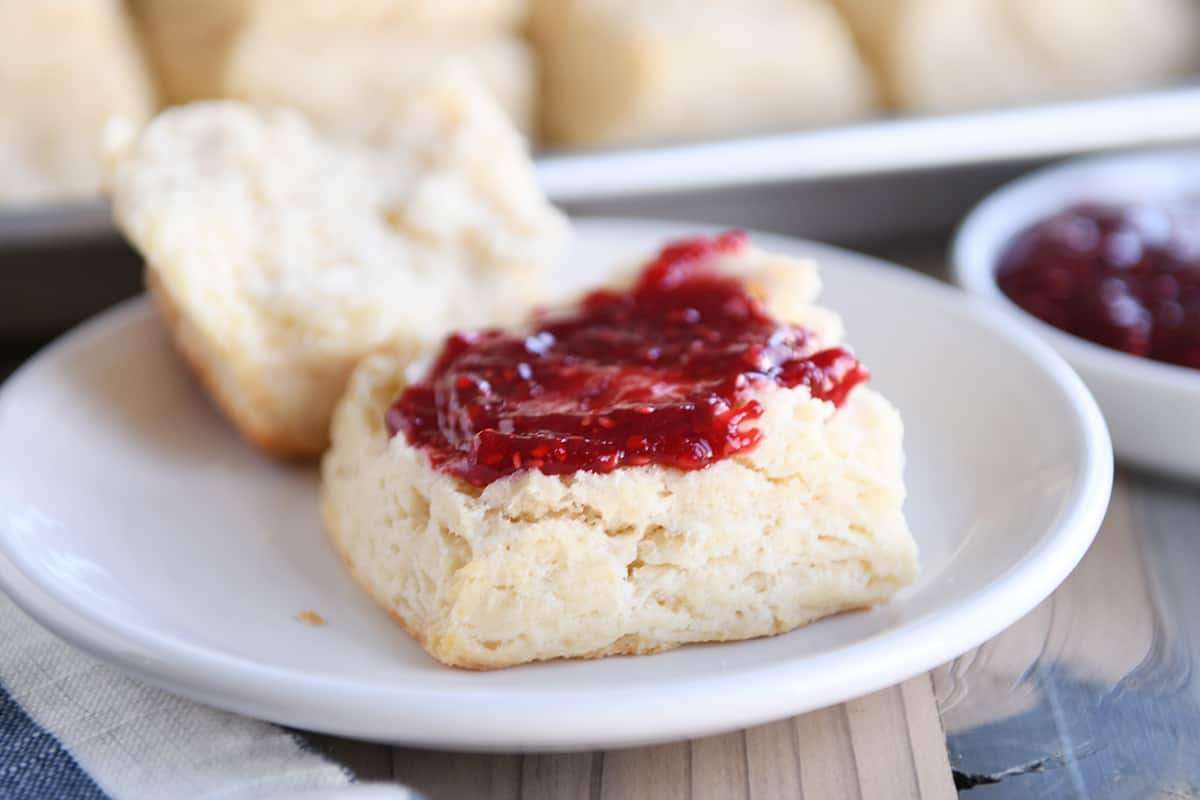
The Best Flaky Buttermilk Biscuits
User Reviews
4.9
The Best Flaky Buttermilk Biscuits
Description
This biscuit recipe combines all-purpose flour, baking soda, baking powder, salt, very cold butter cut into small pieces, and buttermilk. The cold butter is cut into the flour mixture until pea-sized bits remain, which creates layers when baked. Buttermilk is added just until the dough comes together to avoid overworking, which can toughen the biscuits. The dough is transferred onto a floured surface and gently patted to thickness before folding several times, which also develops flaky layers. The biscuits are then baked at a high temperature until golden and cooked through, producing a crusty exterior with soft, flaky layers inside. Cold ingredients and minimal handling are key to the texture.
Ingredients
- 3 cups all-purpose flour plus more for dusting, unbleached
- ½ teaspoon baking soda
- 1 ½ tablespoons baking powder
- 1 teaspoon salt
- 9 tablespoons butter very cold, cut into pieces
- 1 ½ cups buttermilk more or less
Instructions
- Preheat the oven to 450 degrees F. Combine the dry ingredients in a bowl, or in the bowl of a food processor. Cut the butter into the flour mixture until the mixture is like coarse meal and the butter is in small, pellet-sized pieces (slightly smaller than a pea). This will take a few short pulses in the food processor.
- Pour in the buttermilk and mix/pulse only until just combined. The dough should start to come together but you don't want to overmix the dough. If there are lots of dry patches throughout the dough, add a bit more buttermilk, just a tablespoon or two at a time until the dough comes together.
- Scrape the dough out of the food processor or bowl onto a lightly floured counter. Gently pat (do not roll with a rolling pin!) the dough to about 1/2-inch thick. Gently fold the dough in half or in thirds, repeating for a total of 4-5 times and pressing it gently to 1-inch thick after the last fold. These folds, combined with the cold butter, are what help to create flaky layers in the biscuits.
- Use a round biscuit or cookie cutter to cut into circles. Do not turn the cutter while pressing into the dough, just press firmly enough to cut all the way through the dough.
- Line a large, rimmed cookie sheet with a silpat liner or parchment paper. Place the biscuits on the pan with the sides barely touching each other. This helps the biscuits rise up instead of out. If you like crustier sides to your biscuits, space them further apart. They won't rise as high but they'll have golden edges.
- Bake for about 10-12 minutes until the biscuits are lightly golden on top and bottom, taking care to not overbake. Serve immediately.
Notes
- If a food processor is unavailable, use a pastry blender or two knives to cut the butter into the flour without warming it up.
- Avoid overmixing the dough to keep biscuits tender and flaky; add buttermilk gradually to bring the dough together.
- Folding the dough several times builds layers that enhance flakiness.
- Cold butter and cold dough help create distinct biscuit layers and prevent toughening.
Nutrition Information
Show DetailsNutrition Facts
Serving: 12biscuits
Amount Per Serving
Calories kcal
% Daily Value*
| Serving | 1 Biscuit | |
| Calories | 208kcal | 10% |
| Carbohydrates | 26g | 9% |
| Protein | 4g | 8% |
| Fat | 10g | 15% |
| Saturated Fat | 6g | 30% |
| Cholesterol | 26mg | 9% |
| Sodium | 505mg | 21% |
| Fiber | 1g | 4% |
| Sugar | 2g | 4% |
* Percent Daily Values are based on a 2,000 calorie diet.
User Reviews
Overall Rating
4.9
You'll Also Love