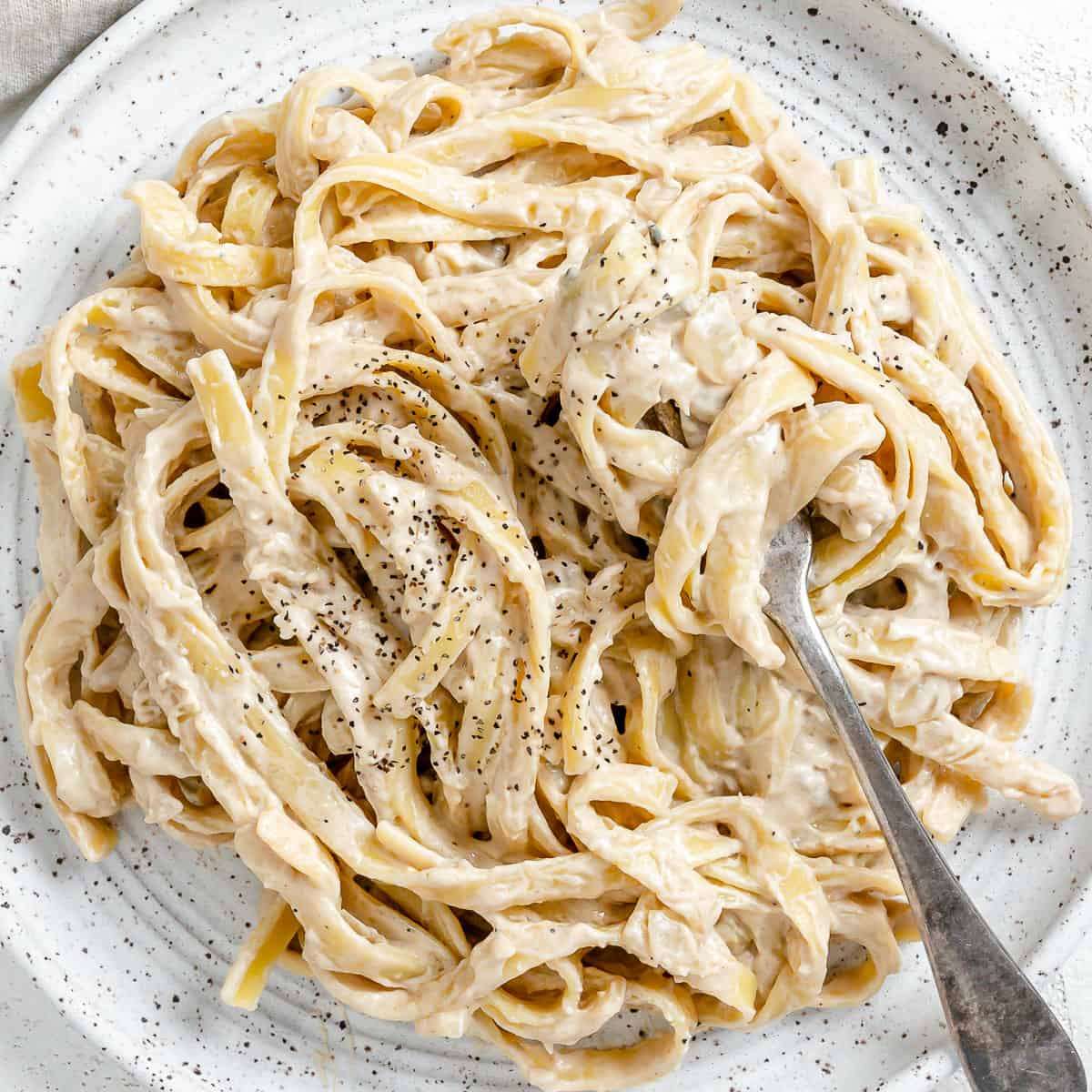
The Best Vegan Fettuccine Alfredo
User Reviews
5
The Best Vegan Fettuccine Alfredo
Description
This recipe starts by blending raw almonds with water to create a smooth almond milk base, strained to remove pulp. Onion and garlic are sautéed in olive oil, then vegetable broth and the almond milk are added and brought to a boil. The uncooked fettuccine is dropped into the pot to cook in the sauce, allowing the noodles to absorb flavor directly. Cornstarch is whisked in to thicken the sauce to a creamy consistency, seasoned with salt and black pepper.
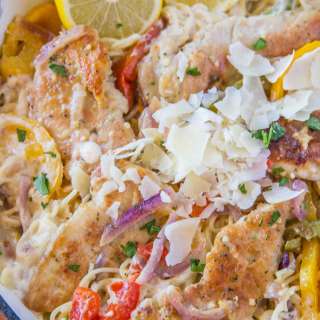
The resulting dish features tender fettuccine enveloped in a smooth, rich Alfredo-style sauce derived entirely from plant-based ingredients. The onion and garlic provide aromatic depth, while the parsley garnish adds a fresh note and color contrast.
Stirring frequently during cooking prevents the pasta from sticking and sinking. Using low-sodium broth avoids excessive salt, as additional salt is added to taste. The recipe is designed for uncooked pasta to be cooked directly in the sauce, which concentrates flavor and simplifies cleanup.
Ingredients
- 1 cup almond raw unsalted
- 3 cups water divided, 2 tablespoons
- 1 tablespoon extra-virgin olive oil
- 1 medium yellow onion diced
- 5 large garlic minced, cloves
- 4 cups vegetable broth or the equivalent amount of vegetable bouillon/paste and water, low-sodium
- 16 ounces fettuccine uncooked
- 4 teaspoons cornstarch
- 1 tablespoon salt (only if using low-sodium broth)
- 1 teaspoon black pepper ground
- black pepper for garnish, freshly cracked, to taste
- ½ cup parsley for garnish, fresh, finely chopped
Instructions
- Using a high-powered blender, blend the almonds and 3 cups of water until a creamy plant milk forms. Over a large bowl, pour the liquid through a nut milk bag to strain out the pulp, and gently massage the bag until all the plant milk has passed through and only a thick crumbly clump of almond pulp remains. Set aside the silky smooth almond cream and discard the pulp (or save it to use in another recipe).
- Heat the olive oil in a large pot over medium heat. Add the onion and garlic and sauté for 2 to 4 minutes, until soft and fragrant.
- Add the vegetable broth and homemade almond milk, increase the heat to medium high, and bring to a boil.
- Add the fettuccine to the pot and cook uncovered for the amount of time suggested on the package or until the noodles are cooked and tender. This will take 9 to 12 minutes but can vary depending on the type of pasta you use. Stir the pasta frequently to prevent it from clumping and sticking to the bottom of the pan.
- While the pasta is cooking, mix the cornstarch and 2 tablespoons of water in a small bowl until the cornstarch dissolves.
- Two minutes before the pasta is done, add the cornstarch and water mixture, salt, and ground black pepper to the pot. Cook for 2 to 5 minutes, until the sauce starts to thicken.
- Turn the heat off and allow the pasta and sauce to rest on the stove for 5 minutes to thicken. If the sauce is still very liquid, turn the heat on while mixing the pasta and sauce for another 1 to 2 minutes—but keep in mind that the sauce will continue to thicken with time.
- Plate the pasta and garnish with the cracked black pepper and parsley.
Notes
- Stir pasta frequently to prevent sticking and sinking during cooking in sauce.
- Use low-sodium vegetable broth and adjust salt accordingly.
- Cook uncooked fettuccine directly in the Alfredo sauce for better flavor integration.
Nutrition Information
Show DetailsNutrition Facts
Serving: 6to 8 servings
Amount Per Serving
Calories 478 kcal
% Daily Value*
| Calories | 478kcal | 24% |
| Carbohydrates | 65g | 22% |
| Protein | 17g | 34% |
| Fat | 18g | 28% |
| Saturated Fat | 2g | 10% |
| Polyunsaturated Fat | 4g | 24% |
| Monounsaturated Fat | 10g | 50% |
| Trans Fat | 0.1g | 5% |
| Cholesterol | 64mg | 21% |
| Sodium | 1189mg | 50% |
| Potassium | 429mg | 9% |
| Fiber | 7g | 28% |
| Sugar | 4g | 8% |
| Vitamin A | 471IU | 9% |
| Vitamin C | 9mg | 10% |
| Calcium | 112mg | 11% |
| Iron | 3mg | 17% |
* Percent Daily Values are based on a 2,000 calorie diet.
User Reviews
Overall Rating
5
You'll Also Love