Tonkotsu Ramen
User Reviews
4.7
-
Prep Time
15 mins
-
Cook Time
2 hrs 45 mins
-
Total Time
3 hrs
-
Course
Main Course, Soup
-
Cuisine
Japanese
Tonkotsu Ramen
Description
Tonkotsu Ramen centers around a creamy, opaque broth achieved by simmering pig trotters and pork leg bones alongside chicken bones to extract collagen and marrow. The initial boiling and thorough cleaning of bones help yield a pure yet flavorful stock. Aromatics like ginger, garlic, and onion add depth while white peppercorns contribute gentle spice. The soup is completed with tahini and braising liquid from chashu pork, creating a rich, emulsified mouthfeel.
A key element is the mayu, a black garlic oil prepared by gently frying garlic in toasted sesame oil, adding a robust, slightly smoky accent. The final broth is seasoned with salt, mirin, and white pepper, and garnished with toasted sesame seeds and minced fatback, which emulsifies into the broth for a silky texture without greasiness.
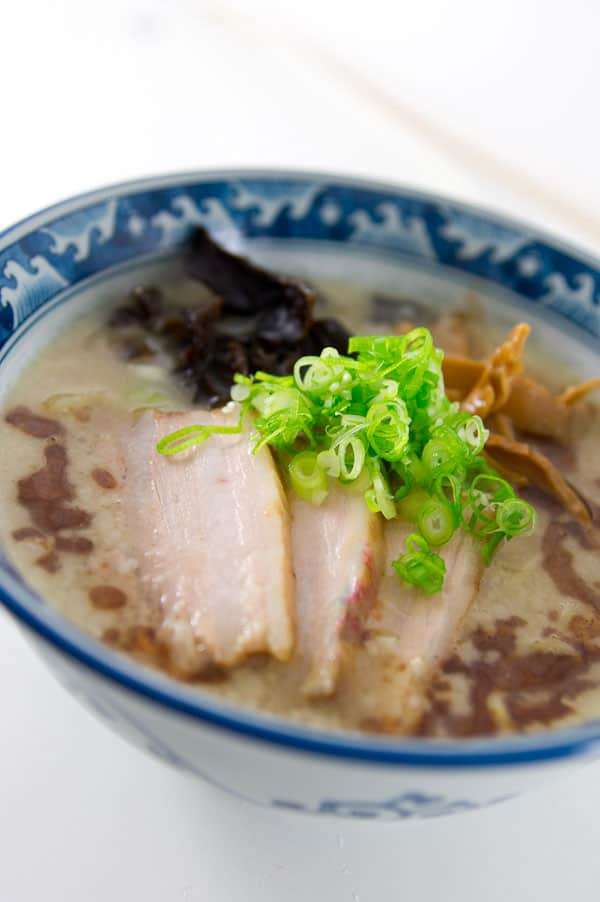
To serve, fresh ramen noodles and sliced chashu are added, garnished with scallions and a spoonful of mayu for aroma and flavor complexity. The creamy broth contrasts with the springy noodles and tender pork for a satisfying dish that balances richness with umami. Properly browning onions and using specific pork bones are crucial for authentic color and texture.
The recipe notes highlight the importance of bone selection, fatback, and salt brand to achieve the characteristic creamy appearance and balanced saltiness of tonkotsu ramen broth. Substituting or omitting certain ingredients alters the texture and flavor. These details guide achieving a well-rounded final soup with traditional mouthfeel and taste.
Ingredients
Tonkotsu Base ( makes 10-12 cups of stock)
- 2 pig trotters (cut in half lengthwise)
- 1.5 pounds pork bone cut into several pieces, leg bone
- 1.5 pounds chicken bones
- 2 inch knob ginger sliced thin, fresh
- 1 small head garlic (trimmed but whole)
- 1 large onion (sliced thinly)
- 1 teaspoon white peppercorns
Mayu (black garlic oil)
- ¼ cup sesame oil toasted
- 5 cloves garlic grated
For soup
- 3 cups Tonkotsu base (from recipe above)
- 1 tablespoon tahini
- 1 tablespoon braising liquid strained from chashu
- 2 cloves garlic finely grated (not pressed)
- 1 - 2 teaspoons kosher salt (to taste)
- 1 teaspoon mirin
- ⅛ teaspoon ground white pepper
- 1 tablespoon sesame seeds coarsely ground, toasted
- 2 tablespoons fatback finely minced (salted pork fat)
To serve
- ½ batch ramen noodles fresh
- 2 teaspoons mayu (from recipe above)
- chashu sliced
- 2 scallions finely chopped
Instructions
Tonkotsu Base
- Fill a pressure cooker ⅔rds of the way with water and bring to a boil. Add the pig trotters to the boiling water and cook until you stop seeing red blood come out of the bones (about 10-15 minutes). The idea is to draw out as much of the gunk as possible into this first batch of water. Transfer the trotters to a bowl of cold water then repeat with the leg bones and chicken bones (you can use the same water).
- Dump the now very dirty water down the drain and wash the pot. Scrub any dark brown scrum off all the bones and rinse them thoroughly. Return the cleaned bones to the pot and cover with water (the water should come up an inch above the top of the bones). Bring the pot to a boil and skim off any chunks or foam that floats to the surface. Keep doing this until you don't seen any more foam or scum floating up. This will take about 30 minutes.
- While the bones are going, Heat ½" of oil in a pot over medium heat and add the head of garlic and ginger. Fry this until they are browned and shriveled up. Use a slotted or wire mesh to transfer the ginger and garlic to a bowl. Add the onions to the oil and fry these until caramelized and shriveled. Add the fried onions to the ginger and garlic and set aside.
- Once the stock is scum-free, add the caramelized ginger, garlic, and onions, along with the white pepper to the stock. Affix the pressure cooker lid and cook on high pressure for 1 hour and 45 minutes. If you don't have a pressure cooker, cover with a lid and cook at a boil for 5-6 hours (you may need to check and add water periodically, the bones should be mostly covered in water).
- Once the pressure is released use tongs to remove and discard all the bones. Remove any chunks of pork and set aside for another use. Strain the stock into a bowl and skim off any excess fat.
Mayu (black garlic oil)
- To make the black garlic oil, add the sesame oil into a small saucepan along with the grated garlic. Put the pan over medium low heat and let the garlic cook stirring occasionally until it is very dark brown. When the garlic is very dark, turn the heat down to low and let it cook until it is black.
- As soon as it hits black, turn off the heat and transfer the hot oil and garlic to a heatproof bowl. Let this mixture cool down completely. Add the cooled oil to a blender or food processor and blitz until there are no visible garlic particles left and the oil is uniformly black.
- It will taste burnt and slightly bitter, but this is okay as you only add a little bit to each bowl. Put it the oil in a container and refrigerate until you are ready to use it.
Tonkotsu Ramen
- Heat the tonkotsu base in a sauce pan. In a bowl whisk together the tahini, chashu liquid, grated garlic, salt, mirin and white pepper. Add this to the hot broth and whisk to combine. Taste and adjust salt as needed. Bring to a simmer, then add the sesame seeds and pork fat and whisk to combine.
- Split the cooked noodles between two bowls. Pour the tonkotsu soup over the noodles. Top with chashu, scallions and whatever else you want to add. Finish the ramen with a drizzle of mayu on each bowl.
Notes
- Use pig trotters and pork leg bones to achieve the creamy white tonkotsu broth due to their marrow and collagen content.
- Don't omit fatback; whisking small bits into the broth at the end creates a creamy emulsion without greasiness.
- Brown the onions deeply but avoid burning; adjust heat for even color.
- Tahini used should be light beige and pourable; sesame paste is not a substitute.
- Salt types vary in saltiness; start with specified amount and adjust to taste carefully.
- Fresh ramen noodles and sliced chashu pork complete the authentic serving.
User Reviews
Overall Rating
4.7
You'll Also Love