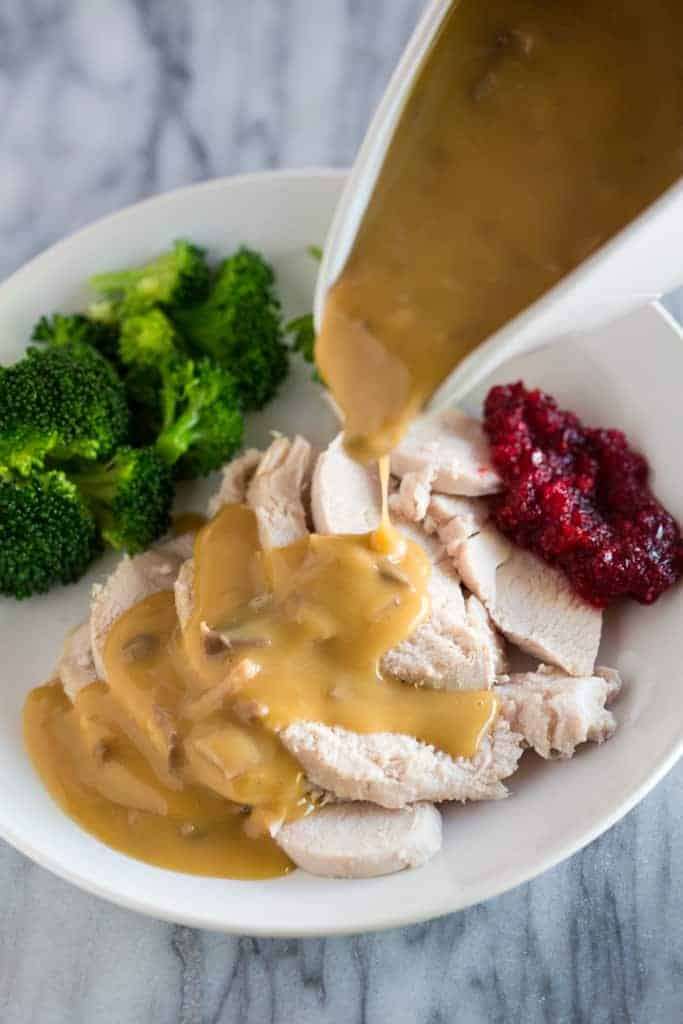
Turkey Gravy
User Reviews
5
-
Prep Time
10 mins
-
Cook Time
10 mins
-
Total Time
20 mins
-
Servings
15
-
Calories
25 kcal
-
Course
Side Dish, Main Course
-
Cuisine
American
Turkey Gravy
Description
This turkey gravy starts by simmering the turkey giblets and neck to extract flavor, discarding the liver to avoid a strong, bitter taste. The cooked giblets are chopped finely and reserved to add texture and meatiness to the gravy. The drippings left in the roasting pan after cooking the turkey form the foundation when poured into a saucepan.
Flour is whisked into the pan drippings and broth to achieve a smooth thickening effect. The broth used can be chicken, turkey, or vegetable, keeping the flavor balanced and the gravy silky. Salt and black pepper adjust the seasoning to taste.
The finished gravy serves as a classic complement to roasted turkey and other traditional side dishes, enhancing the meal with its rich, savory depth.
Leftover gravy handles refrigeration well and can be gently reheated with additional broth to adjust consistency. A gluten-free adaptation is possible by using a gluten-free all-purpose flour substitute.
Ingredients
- turkey drippings from roasted turkey
- 1/2 cup all-purpose flour
- 4 cups chicken broth or turkey or vegetable broth, low-sodium
- salt to taste
- black pepper to taste
- Turkey giblets optional, uncooked
- turkey neck optional, uncooked
Instructions
- Place the neck, heart, liver, and gizzards of the turkey inside a medium size sauce pan. Cover the giblets completely with water and bring the water to a boil. Once boiling, simmer for 1 hour or until the meat is cooked through.
- Next, use a slotted spoon to remove the giblets from the water and set them aside. At this point you can decide to discard the liquid from the giblet water or save a little of it to use at the very end of making your gravy if you need to make the gravy thinner. Otherwise you don't need this liquid).
- Once the giblets have cooled, remove the livers and discard them (they add a really strong taste and flavor not many people like). Use your fingers to remove any meat from the turkey neck. Add the meat to the rest of the giblets and discard what's left of the neck. Then dice the giblets into small pieces and reserve them for the gravy.
- When you have taken your turkey out of the oven, pour the drippings (what’s left in the roasting pan after cooking the turkey. This includes fat that has melted and any bits of meat that have fallen off) from your turkey roasting pan into a large bowl. (Tip the pan away from your body and be careful not to burn your self)!
- Now let the drippings sit for a minute, allowing the fat to naturally separate from the rest of the drippings. You will notice that the fat will rise to the top, leaving the drippings and liquid on the bottom. Use a large spoon or ladle to skim (remove) most of the fat from the top of the the drippings.
- To make the gravy, use a large sauce pan and add 1 cup of drippings to the pan.
- Add 1/2 cup flour to the pan and whisk together until it makes a smooth paste. (At this point, you'll need to use a little of your own judgement. You want a pasty consistency. If yours seems a little greasy, add more flour).
- When you have found the right consistency, whisk the mixture slowly over the heat as it begins to brown. You are creating a roux.
- Once you get a nice golden brown color, add 4 cups of chicken broth and 1 additional cup of drippings.
- Allow the gravy to cook, whisking constantly for about 5 to 8 minutes, or until thickened. Then add the giblet meat.
- At this point, decide for yourself if you like the consistency of the gravy. If the gravy is too thick, add giblets broth or drippings liquid. If gravy is too thin, cook for about 10 minutes. If it's still thin, add a cornstarch slurry (mix 1 tablespoon of cornstarch with 1 tablespoon of water and then add to the gravy). Continue heating until gravy thickens to desired consistency.
- Once your happy with the consistency of your gravy, season with salt and pepper, to taste, and enjoy!
- Store leftover gravy covered, in the refrigerator.
Notes
- Store leftover gravy in a sealed container in the refrigerator for 2-3 days.
- Make gravy ahead and refrigerate for up to 2 days; reheat gently, thinning with broth or water as needed.
- Use gluten-free flour as a one-to-one substitute for a gluten-free gravy.
- The recipe includes optional giblets and necks for added stock flavor, excluding liver to avoid bitterness.
Nutrition Information
Show DetailsNutrition Facts
Serving: 15Serving
Amount Per Serving
Calories 25 kcal
% Daily Value*
| Calories | 25kcal | 1% |
| Carbohydrates | 3g | 1% |
| Protein | 1g | 2% |
| Sodium | 18mg | 1% |
| Potassium | 58mg | 1% |
| Calcium | 3mg | 0% |
| Iron | 0.3mg | 2% |
* Percent Daily Values are based on a 2,000 calorie diet.
User Reviews
Overall Rating
5
You'll Also Love