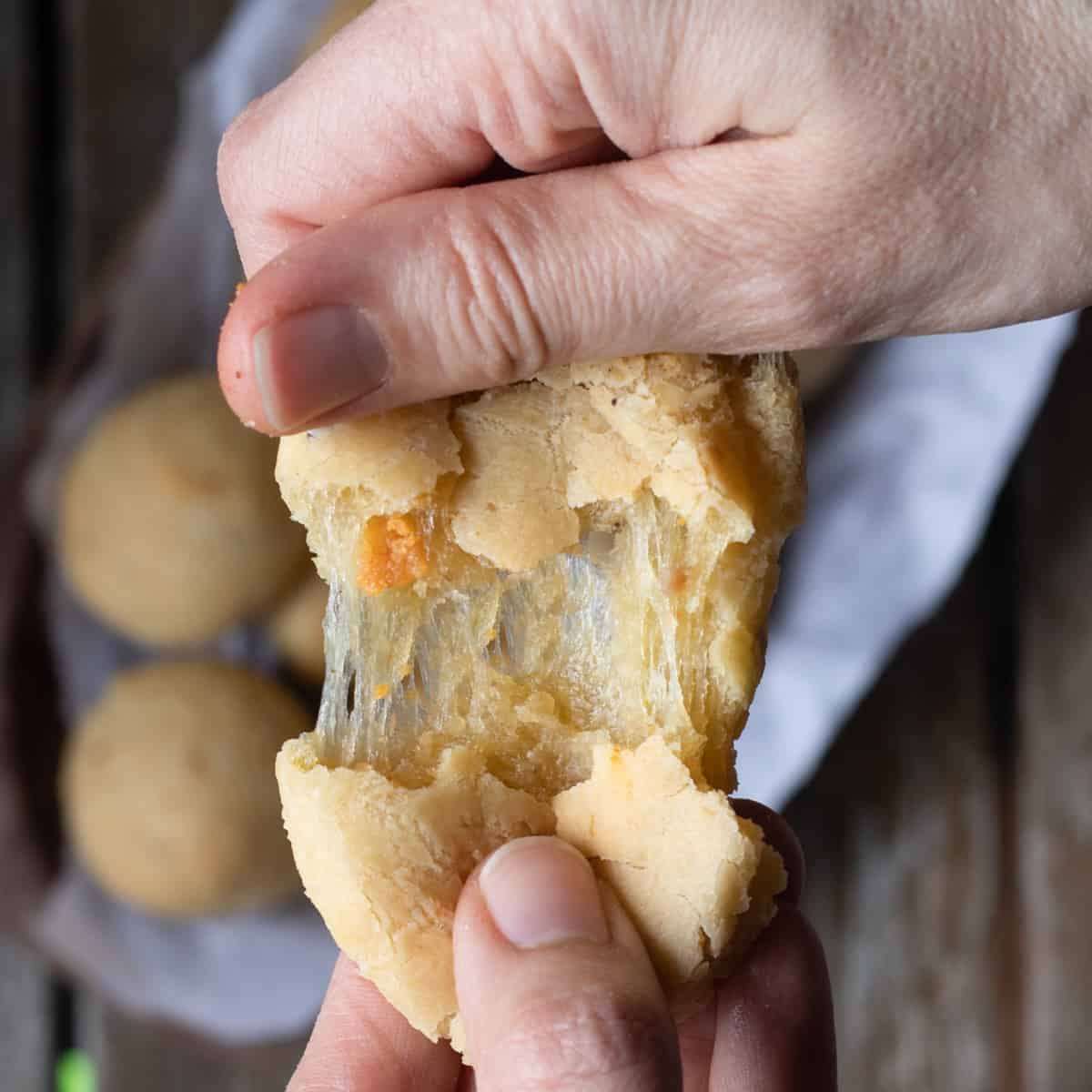
Vegan pao de queijo, Brazilian cheese breads
User Reviews
4.7
Vegan pao de queijo, Brazilian cheese breads
Description
This recipe starts by heating water, olive oil, plant milk, and salt until small bubbles appear, then pouring that hot mixture over tapioca flour to form a stretchy dough. After a rest period, cooked and mashed potatoes are added along with nutritional yeast and garlic powder to boost flavor. When using vegan cheese, it is incorporated at this stage, requiring a slight adjustment in potato quantity.
The dough is kneaded on a floured surface until smooth and elastic, which is key to achieving the characteristic chewiness of Brazilian cheese bread. Then the dough is shaped into balls and baked until golden and puffy.
The breads offer a crispy exterior with soft, chewy insides due to tapioca flour. Nutritional yeast adds a savoriness that compensates for the lack of dairy cheese, while optional vegan hard cheese improves depth of flavor. Using tapioca flour is essential to replicate the traditional texture; substituting other flours will alter it significantly.
You can store these breads in an airtight container for up to five days or freeze them for longer storage. Reheating in the oven crisps the exterior again. The recipe advises choosing artisan-style vegan cheeses over processed brands for optimal texture and taste. Adjusting hydration and resting times may resolve issues like hollow breads or dough dryness.
Ingredients
- 2 cups tapioca flour 250g
- ¾ cup potato peeled and diced (about 2-3 small potatoes, russets, cooked
- ½ cup water
- ¼ cup plant milk oat, almond, or soy
- ⅓ cup olive oil
- 1 teaspoon salt
- 4 tablespoon nutritional yeast
- 1 teaspoon garlic powder
Cheese version:
- ¼ cup vegan hard cheese Use an artisan-style vegan cashew cheese brand.
Instructions
- Prep: Preheat oven to 350°F and boil a pot of salted water. Add tapioca flour to a glass bowl.
- Heat Wet Ingredients: In a saucepan over medium-high heat, combine water, oil, plant milk, and salt. Heat until small bubbles form (don’t let it boil), then slowly pour over the tapioca flour. Stir with a wooden spoon until the dough becomes stretchy.
- Rest the Dough: Cover the tapioca mixture and let it rest for 10 minutes in a warm spot.
- Cook and Mash Potatoes: Meanwhile, peel and cook potatoes in boiling salted water until fork-tender. Mash until smooth.
- Make Dough: To the rested tapioca mixture, add mashed potatoes, nutritional yeast, salt, and garlic powder. 👉 If using vegan cheese, grate it and add it now, but reduce the potato quantity to ½ cup.
- Knead Dough: Lightly dust a clean countertop with tapioca flour. Transfer the dough and knead until smooth and slightly stretchy. If sticky, lightly dust with more tapioca flour, but don’t overdo it.
- Shape: Now divide the dough into 16 pieces and form them into balls. You can make smaller balls if you like, but the traditional size is a golf ball.
- Shape and Bake: Form dough into 1-2 inch balls and place on an oiled parchment paper or baking sheet. Bake for 30-35 minutes, or until golden brown with a crisp outer shell.
Notes
- Use tapioca flour specifically; substituting with other flours will change the bread's texture.
- Choose artisan-style vegan cheeses such as Cashew-based brands for best flavor and texture; avoid processed types like Daiya.
- If dough feels dry, add warm water 1-2 teaspoons at a time and knead again for proper elasticity.
- Store baked breads airtight in the fridge up to 5 days or freeze unbaked/baked breads up to 3 months for convenience.
- Reheat breads at 350°F for 5-10 minutes to regain crispness and warmth before serving.
Nutrition Information
Show DetailsNutrition Facts
Serving: 16balls
Amount Per Serving
Calories 147 kcal
% Daily Value*
| Serving | 1ball | |
| Calories | 147kcal | 7% |
| Carbohydrates | 21g | 7% |
| Protein | 1g | 2% |
| Fat | 7g | 11% |
| Saturated Fat | 1g | 5% |
| Sodium | 219mg | 9% |
| Potassium | 82mg | 2% |
| Fiber | 1g | 4% |
| Sugar | 1g | 2% |
| Vitamin A | 10IU | 0% |
| Vitamin C | 1mg | 1% |
| Calcium | 8mg | 1% |
| Iron | 1mg | 6% |
* Percent Daily Values are based on a 2,000 calorie diet.
User Reviews
Overall Rating
4.7
You'll Also Love