White Bread Recipe
User Reviews
5
White Bread Recipe
Description
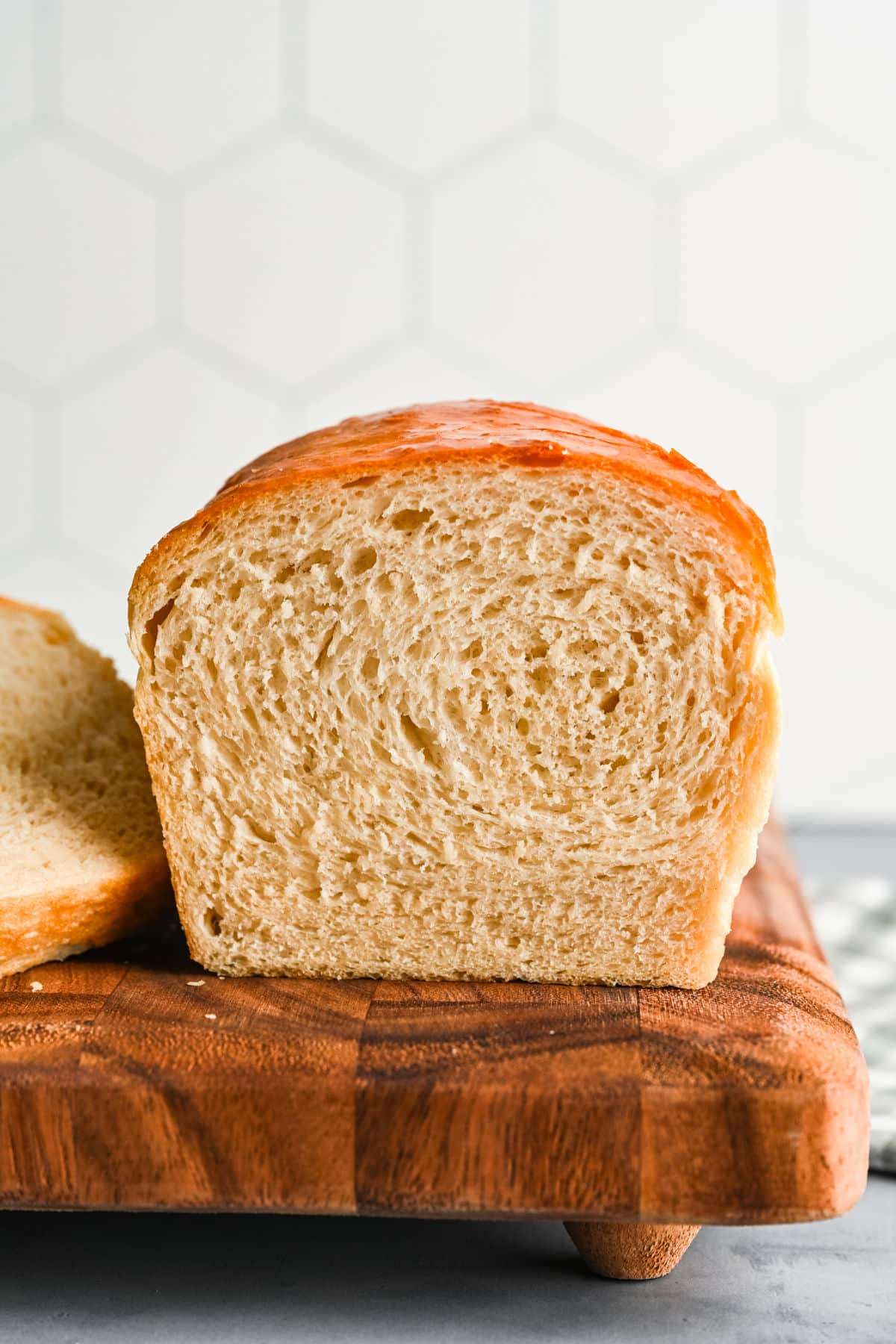
The White Bread Recipe combines warm water at 100-110°F with instant yeast and honey to activate fermentation and add sweetness. Salt and room-temperature butter enrich the dough, which is formed by gradually adding all-purpose flour until the dough is soft but not overly sticky. Kneading with a stand mixer develops gluten for a smooth, elastic texture.
After covering and allowing the dough to rise in a warm place until doubled in size, it is gently shaped into two loaves. Each loaf is rolled tightly and placed seam side down in greased loaf pans, promoting an even shape during the final rise and baking. An optional brush of melted butter after baking softens the crust and adds flavor.
This bread is versatile for everyday use, from sandwiches to toast. Using active dry yeast instead of instant yeast requires proofing the yeast separately. Adjusting flour quantity ensures the right dough consistency. Handling and temperature control are key for good rise and crumb. The recipe offers a foundation for home bakers seeking classic white bread.
Water temperature is crucial; too hot will kill yeast, while too cool will slow rising. Adjust flour amounts as needed to keep the dough slightly tacky but manageable. Melted butter after baking enhances crust softness and flavor.
Ingredients
- 1 ⅔ cups water 100-110F, warm
- 2 ¼ teaspoons instant yeast
- 3 tablespoons honey
- 1 teaspoon salt
- 2 tablespoons butter at room temperature
- 4 ½ cups all-purpose flour
- 1 ½ tablespoons butter optional, melted
Instructions
- In the bowl of a stand mixer fitted with the dough hook combine the water, yeast, and honey.
- Add salt, butter, and 3 cups flour to the bowl.
- Continue to add in flour ¼ cup at a time until it forms a soft, sticky dough. You may not need to use all of the flour.
- Knead on low for about 5 minutes, or until the dough clears the sides of the bowl and is soft and smooth. If the dough is too sticky, add the flour 1 tablespoon at time until it feels slightly sticky when you pinch it but doesn't come off on your fingers.
- Cover with plastic wrap, and let rise in a warm spot for about 45 minutes or until doubled in size.
- Turn the dough onto a lightly floured surface.
- Divide it into two equally sized portions.
- Gently pat each half into an 8×12 inch rectangle.
- Starting at the short end, roll up the rectangle into a tight roll and pinch the seams to seal.
- Tuck the ends of the roll slightly underneath and place each loaf into a greased 8×4 inch loaf pan seam side down.
- Cover with a greased piece of plastic wrap and let rise for about 45 minutes in a warm and spot until doubled in size.
- Toward the end of the rising time, preheat oven to 400 F and adjust oven rack to lower-middle position.
- Bake loaves for 20-25 minutes, or until until golden brown. They should sound hollow when thumped.
- Let cool in pan for 5 minutes, and then remove to a wire rack to finish cooling.
- Brush the loaves with melted butter, if desired.
Notes
- Use water warmed between 100-110°F; hotter water can kill the yeast and prevent rising.
- Active dry yeast can substitute instant yeast but needs to proof for 5-10 minutes until foamy before mixing.
- Adjust flour quantity to achieve a soft, slightly sticky dough that doesn't cling to fingers when pinched.
- Brushing melted butter on the baked loaves softens the crust and adds flavor.
- Nutrition values are estimates.
Nutrition Information
Show DetailsNutrition Facts
Serving: 20slices
Amount Per Serving
Calories 67 kcal
% Daily Value*
| Serving | 1slice | |
| Calories | 67kcal | 3% |
| Carbohydrates | 11g | 4% |
| Protein | 2g | 4% |
| Fat | 2g | 3% |
| Saturated Fat | 1g | 5% |
| Cholesterol | 5mg | 2% |
| Sodium | 193mg | 8% |
| Potassium | 34mg | 1% |
| Fiber | 1g | 4% |
| Sugar | 5g | 10% |
| Vitamin A | 65IU | 1% |
| Calcium | 9mg | 1% |
| Iron | 1mg | 6% |
* Percent Daily Values are based on a 2,000 calorie diet.
User Reviews
Overall Rating
5
You'll Also Love