World's Easiest Yeast Bread recipe - Artisan, NO KNEAD
User Reviews
5
World's Easiest Yeast Bread recipe - Artisan, NO KNEAD
Description
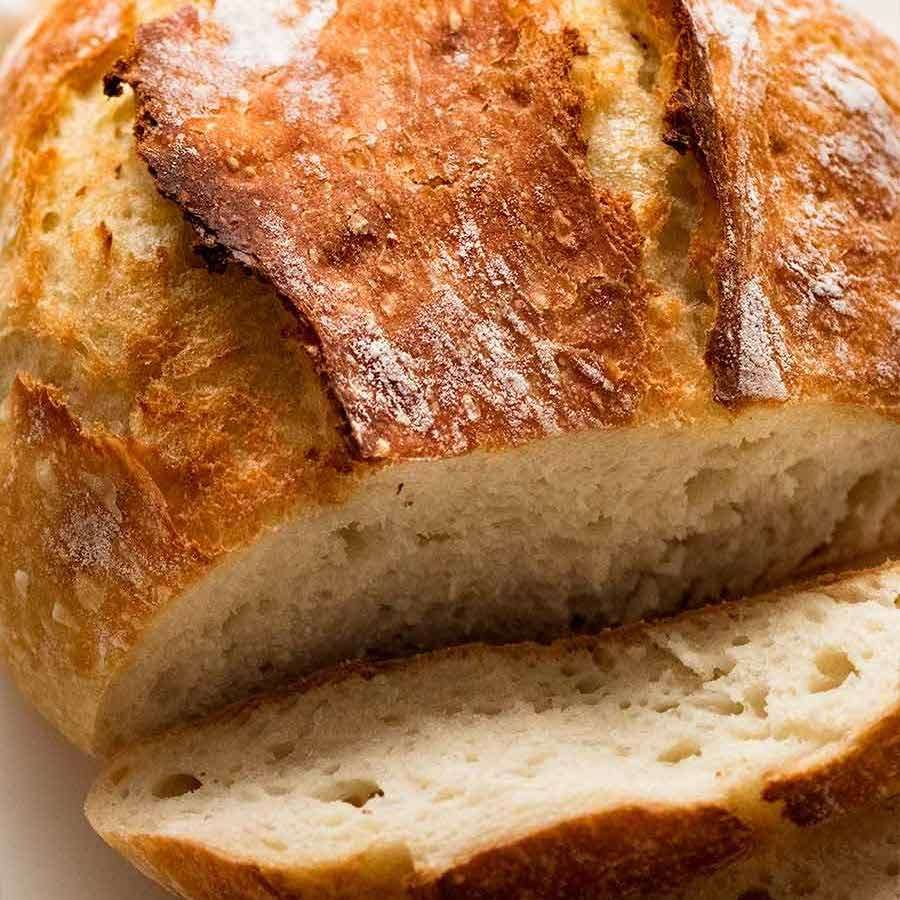
The World's Easiest Yeast Bread recipe uses bread or all-purpose flour, instant yeast, kosher salt, and warm water to make a wet, sticky dough that doesn't require kneading. After mixing, the dough rises for 2 to 3 hours at room temperature until doubled and bubbly. Optionally, the dough can be refrigerated for up to three days to enhance flavor. Before baking, the dough is shaped into a round, placed on parchment paper, and baked in a preheated Dutch oven, which traps steam to produce a crisp crust and tender crumb.
The resulting bread has a chewy texture with a golden-brown crust from the steaming effect in the covered pot. The simple method suits various flour types, with slight adjustments for wholemeal flours and yeast types as detailed in the notes. The recipe is forgiving and flexible, accommodating different rise times and temperatures.
The bread is best eaten fresh within two days, or warmed or toasted afterward. It can be stored airtight for up to three days or frozen baked for up to three months. Using bread flour results in a chewier texture and longer freshness compared to all-purpose flour.
Ingredients
- 3 cups (450g) flour , bread or plain/all purpose (Note 1)
- 2 tsp instant yeast Note 2 for normal / active dry yeast, or rapid rise yeast
- 2 tsp kosher salt NOT table salt (Note 3, cooking salt
- 1 1/2 cups (375 ml) tap water NOT boiling or super hot (ie up to 55°C/130°F) (Note 4, very warm
Dough shaping
- 1 1/2 tbsp flour , for dusting
Instructions
- Mix Dough: Mix flour, yeast and salt in a large bowl. Add water, then use the handle of a wooden spoon to mix until all the flour is incorporated. Dough will be wet and sloppy – not kneadable, but not runny like cake batter. Adjust with more water or flour if needed for right consistency (see video at 17 sec, Note 5).
- Rise: Cover with cling wrap or plate, leave on counter for 2 - 3 hours until it doubles in volume, it’s wobbly like jelly and the top is bubbly (see video at 24 seconds). If after 1 hour it doesn’t seem to be rising, move it somewhere warmer (Note 6).
- Optional – refrigerate for flavour development (Note 9): At this stage, you can either bake immediately (move onto Step 5) or refrigerate for up to 3 days.
- Take chill out of refrigerated dough – if you refrigerated dough per above, leave the bowl on the counter for 45 - 60 minutes while the oven is preheating. Cold dough does not rise as well.
- Preheat oven (Note 7) - Put dutch oven in oven with lid on (26cm/10" or larger). Preheat to 230°C/450°F (220° fan) 30 minutes prior to baking. (Note 8 for no dutch oven)
- Shape dough: Sprinkle work surface with 1 tbsp flour, scrape dough out of bowl. Sprinkle top with 1/2 tbsp flour.
- Using a dough scraper or anything of similar shape (cake server, large knife, spatula), fold the sides inwards (about 6 folds) to roughly form a roundish shape. Don’t be too meticulous here – you’re about to deform it, it’s more about deflating the bubbles in the dough and forming a shape you can move.
- Transfer to paper: Slide a large piece of parchment/baking paper (not wax paper) next to the dough, then flip the dough upside down onto the paper (ie seam side down, smooth side up). Slide/push it towards the middle, then reshape it into a round(ish) shape. Don't get too hung up about shape. In fact, lopsided = more ridges = more crunchy bits!
- Dough in pot: Remove piping hot dutch oven from oven. Use paper to place dough into pot, place lid on.
- Bake 30 minutes covered, then 12 minutes uncovered or until deep golden and crispy.
- Cool on rack for 10 minutes before slicing.
Notes
- Use bread flour for a chewier texture and longer-lasting freshness; all-purpose flour works but yields a different crumb.
- Adjust wholemeal flour amounts as it absorbs more liquid than white flour.
- Use instant or rapid rise yeast; dissolve active dry yeast in water before mixing.
- Use kosher or cooking salt; reduce amount if using finer table salt.
- Water should be warm (up to 55°C/130°F) but not hot enough to kill yeast.
- Dough consistency varies with flour brand and humidity; adjust water or flour as needed.
- Rising time depends on temperature; in cooler kitchens, keep dough warmer to promote rise.
- Refrigerate dough for up to 3 days after the first rise to enhance flavor, then bring to room temperature before baking.
- Baking in a Dutch oven traps steam for a crisp crust; if unavailable, use a pan with boiling water to mimic steam effect.
- Baked bread keeps fresh 2 days at room temperature or is suitable for freezing up to 3 months.
Nutrition Information
Show DetailsNutrition Facts
Serving: 10- 12 slices
Amount Per Serving
Calories 155 kcal
% Daily Value*
| Calories | 155cal | 8% |
| Carbohydrates | 32g | 11% |
| Protein | 5g | 10% |
| Fat | 1g | 2% |
| Saturated Fat | 1g | 5% |
| Sodium | 469mg | 20% |
| Potassium | 65mg | 1% |
| Fiber | 2g | 8% |
| Sugar | 1g | 2% |
| Calcium | 7mg | 1% |
| Iron | 2mg | 11% |
* Percent Daily Values are based on a 2,000 calorie diet.
User Reviews
Overall Rating
5
You'll Also Love