Yaki Udon (Japanese Stir-Fried Udon Noodles)
User Reviews
4.7
-
Prep Time
10 mins
-
Cook Time
15 mins
-
Total Time
25 mins
-
Servings
2 (could
-
Calories
976 kcal
-
Course
Main Course
-
Cuisine
Japanese
Yaki Udon (Japanese Stir-Fried Udon Noodles)
Description
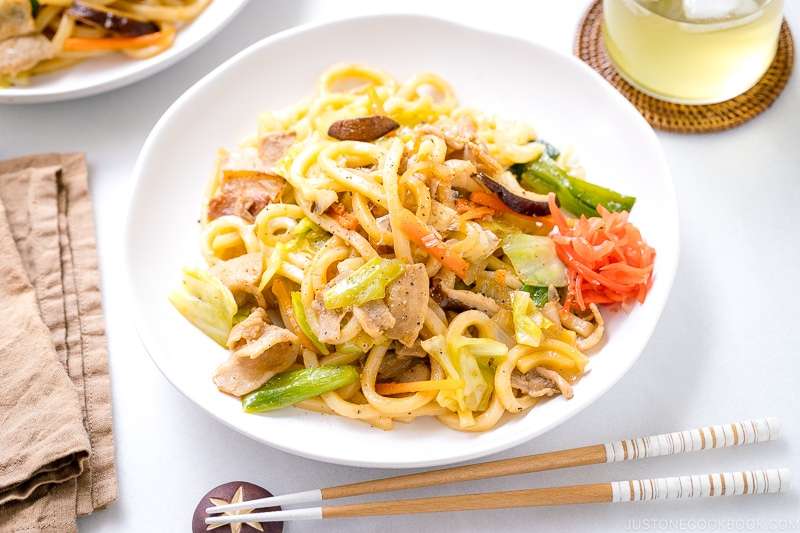
Yaki Udon starts with preparing fresh vegetables such as sliced onion, cubed cabbage, julienned carrot, and shiitake mushrooms, alongside diced pork belly cut into bite-size pieces. Udon noodles are briefly blanched to soften. The dish is cooked in a hot pan with neutral oil, beginning by sautéing the pork, followed by vegetables until they develop some color.
The pre-cooked noodles are then added and stir-fried with seasonings that may include soy sauce, dashi powder, sake, and mirin or alternatively mentsuyu soup base with soy sauce for deeper flavor. The ingredients meld together during a final brief stir-fry, coating the noodles with a savory, lightly sweet sauce. Optionally, dried bonito flakes and pickled ginger can be added as garnishes to enhance flavor and presentation.
This dish serves as a quick yet filling meal option, providing a balance of protein, vegetables, and carbohydrates in a single pan. It's versatile for different meats or vegetarian substitutions and showcases a typical Japanese comfort food style.
Ingredients
- ½ onion (3.5 oz, 100 g)
- 2–3 leaves green cabbage (8 oz, 227 g)
- 2 inches carrot (1.8 oz, 50 g)
- 2 shiitake mushrooms (0.7 oz, 20 g)
- 2 green onion or scallions
- 6 oz pork belly or use your choice of meat or seafood; substitute tofu, mushrooms, or extra vegetables for vegetarian/vegan, sliced
- 2 ervings udon noodles (1.1 lb/500 g frozen or parboiled udon noodles; 6.3 oz/180 g dry udon noodles)
- 1 Tbsp neutral oil (for cooking)
- ⅛ tsp kosher salt plus more to taste, Diamond Crystal brand
- ⅛ tsp black pepper plus more to taste, freshly ground
For the Seasonings: Option A
- ½ tsp dashi powder (use kombu dashi powder for vegetarian/vegan or skip)
- 2 Tbsp soy sauce
- 1 Tbsp sake
- 1 tsp mirin (or a pinch of sugar)
For the Seasonings: Option B
- 3 Tbsp mentsuyu for mentsuyu that is 3-times concentrated; if you use non-concentrated mentsuyu, please add more to achieve the same flavor; you can make my Homemade Mentsuyu, concentrated noodle soup base
- 1 tsp soy sauce
For the Garnish (optional)
- 3 Tbsp katsuobushi or 1-2 small packages of katsuobushi; skip for vegetarian/vegan, dried bonito flakes
- 2 Tbsp pickled red ginger aka beni shoga or kizami beni shoga
Instructions
- Gather all the ingredients. For this recipe demonstration, I used seasonings option A. Start bringing a large pot of water to a boil on medium-high heat for heating or cooking the udon noodles later.
To Prepare the Ingredients
- Slice ½ onion thinly.
- Remove the tough core of 2–3 leaves green cabbage. Then, cut the leaves into pieces about 1 inch (2.5 cm) square.
- Peel 2 inches carrot and cut it into thin slabs. Then, julienne them into strips 2 inches (5 cm) long.
- Discard the tough stems of 2 shiitake mushrooms and slice the mushroom caps.
- Cut 2 green onions/scallions into 2-inch (5 cm) pieces. Cut 6 oz sliced pork belly slices into 1-inch (2.5 cm) pieces.
- When the water is boiling, blanch 2 servings udon noodles (frozen) for 30–40 seconds or until it just starts to loosen up. If you‘re using dry udon noodles, boil them according to the package instructions. Transfer the noodles to a plate and set aside.
To Stir-Fry
- Preheat a large frying pan over medium heat. When the pan is hot, add 1 Tbsp neutral oil and spread it evenly. Add the pork belly and stir-fry.
- Season the pork with ⅛ tsp Diamond Crystal kosher salt and ⅛ tsp freshly ground black pepper. Cook until it‘s no longer pink.
- Add the onion slices and stir-fry until tender.
- Add the cabbage, carrot strips, shiitake mushrooms, and green onions. Mix it all together until the ingredients are coated with oil.
- Cover with a lid and reduce the stove‘s heat to low. Let the ingredients steam for 3 minutes, or until the ingredients are slightly wilted.
- Add the udon noodles to the pan and toss with a pair of tongs to combine (it‘s a lot easier to use tongs than two spatulas).
- Add the ingredients for either seasonings option A or B to the pan. For option A, add ½ tsp dashi powder, 2 Tbsp soy sauce, 1 Tbsp sake, and 1 tsp mirin. If you‘re using option B, add 3 Tbsp mentsuyu (concentrated noodle soup base) and 1 tsp soy sauce. Tip: If you have mentsuyu at home, definitely try my go-to seasonings option B because it‘s easy and delicious!
- Mix it all together. Taste and adjust the seasoning, adding more ground black pepper and salt to your liking.
To Serve
- Transfer the Yaki Udon to individual plates. Optionally, sprinkle 3 Tbsp katsuobushi (dried bonito flakes) on top and garnish with 2 Tbsp pickled red ginger (beni shoga or kizami beni shoga) on the side.
To Store
- You can keep the leftovers in an airtight container and store in the refrigerator for up to 3–4 days and in the freezer for a month.
Nutrition Information
Show DetailsNutrition Facts
Serving: 2(could
Amount Per Serving
Calories 976 kcal
% Daily Value*
| Calories | 976kcal | 49% |
| Carbohydrates | 59g | 20% |
| Protein | 26g | 52% |
| Fat | 67g | 103% |
| Saturated Fat | 23g | 115% |
| Polyunsaturated Fat | 10g | 59% |
| Monounsaturated Fat | 30g | 150% |
| Trans Fat | 1g | 50% |
| Cholesterol | 82mg | 27% |
| Sodium | 938mg | 39% |
| Potassium | 445mg | 9% |
| Fiber | 6g | 24% |
| Sugar | 6g | 12% |
| Vitamin A | 5228IU | 105% |
| Vitamin C | 7mg | 8% |
| Calcium | 51mg | 5% |
| Iron | 2mg | 11% |
* Percent Daily Values are based on a 2,000 calorie diet.
User Reviews
Overall Rating
4.7
You'll Also Love