Gochujang Noodles
User Reviews
5
Gochujang Noodles
Description
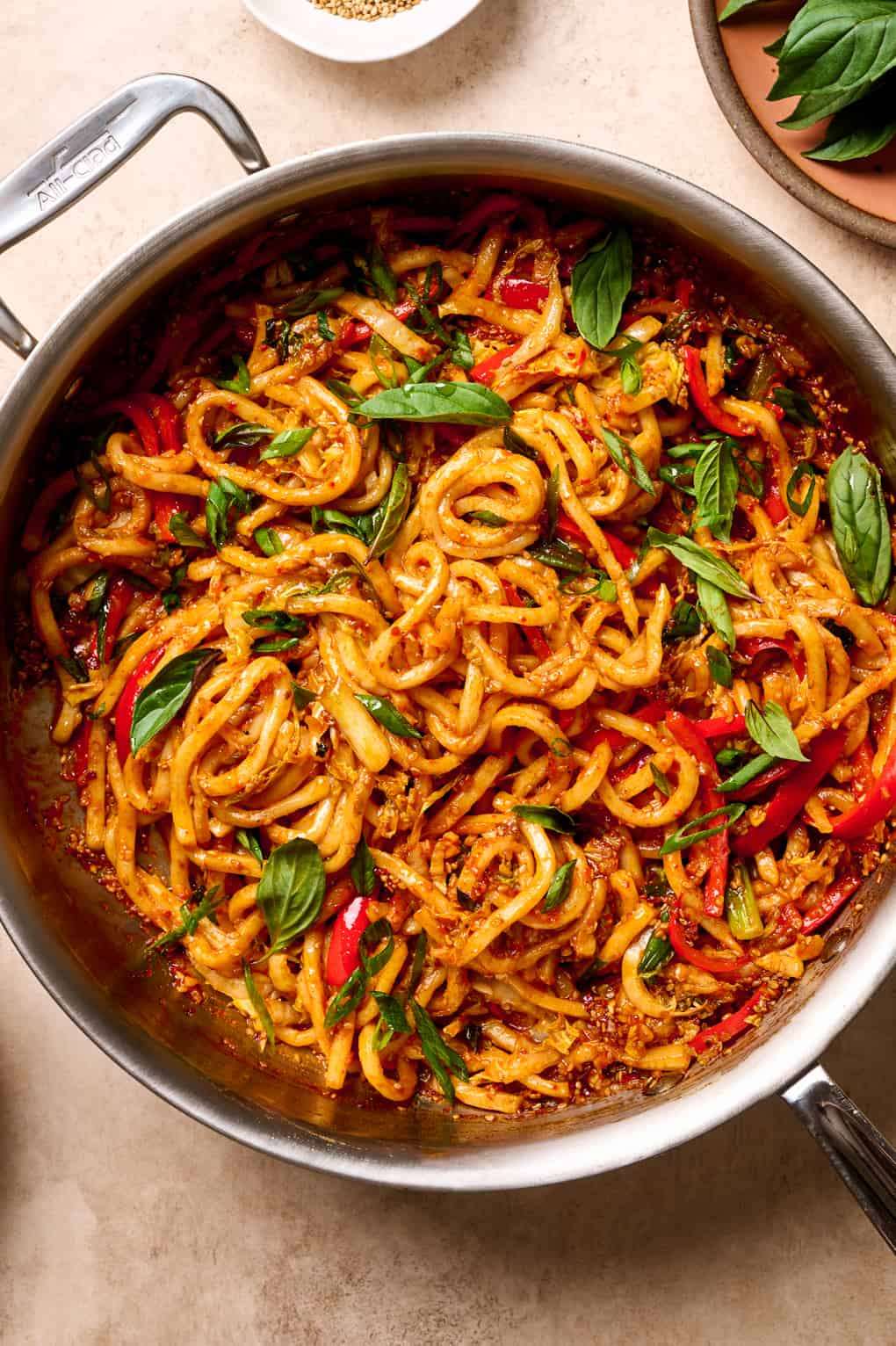
This Gochujang Noodles recipe uses fresh udon or dried wheat noodles cooked briefly to maintain slight bite. The sauce balances heat and sweetness through gochujang, toasted sesame oil, soy sauce, mirin or vinegar, and brown sugar, with optional chili flakes adding extra spice. Aromatics such as scallions, garlic, and ginger are stir fried in neutral oil to create a fragrant base.
Thinly sliced Napa cabbage or bell peppers are cooked briefly to keep texture, then combined with the sauce and noodles. Toasted white sesame seeds add nuttiness and texture, while fresh Thai basil or cilantro provides herbal freshness. The dish has a harmonious blend of spicy, savory, and slightly sweet flavors with varied textures making it satisfying and flavorful.
Use moderate heat with 2 tablespoons of gochujang if preferred. Sesame seeds are ideally toasted before use for best flavor. Substitutions for vinegar or sugar amounts are noted to keep sauce balance. This recipe yields a vibrant noodle bowl good as a main or side.
Ingredients
- 16 ounces udon noodles see Note 1 for subs, 450g, fresh
Gochujang sauce
- 3 tablespoons gochujang (see Note 2)
- 1 tablespoon sesame oil toasted
- 2 tablespoons soy sauce (use tamari for GF)
- 2 tablespoons mirin (or rice vinegar)
- 1 ½ tablespoons brown sugar see Note 3, organic
- 1 tablespoon gochugaru (optional)
Aromatics and vegetables
- 1 heaping tablespoon neutral-flavored oil
- 1 bunch scallions dark green tops sliced thinly on a bias, reserved for garnish, about 6, whites and light greens chopped into 1-inch pieces
- 4 garlic finely chopped, cloves
- 1- inch ginger grated or minced, piece
- 6 to 8 cups Napa cabbage thinly sliced 250g (or handfuls) or 2 medium bell peppers thinly sliced
- ¼ cup white sesame seeds 32g, roasted
Finishing
- Thai basil or fresh cilantro, chopped, few handfuls, leaves
- sesame oil toasted, a drizzle
Instructions
- Cook the noodles according to the package, but cook for a minute less to avoid a soggy dish. For fresh udon noodles, add to a pot of boiling water and cook for 1 minute; use a chopstick to loosen the noodles from their bundle and cook for another 30 seconds.
- Scoop out some noodle water, then drain the noodles.
- Make the sauce. Whisk together the gochujang, toasted sesame oil, soy sauce, mirin or vinegar, sugar, and gochugaru if using. Set aside.
- Cook the aromatics. Heat the oil in a large frying pan over medium-high heat. Once shimmering, add the scallion whites and greens, garlic, and ginger (and bell pepper, if using). Season with a pinch of salt and cook for 1 to 2 minutes over medium-high heat. If using Napa cabbage, add it now; season with a pinch of salt, and stir-fry for 3 minutes, or until it reduces in size and is tender but not soft.
- Add in the gochujang sauce and the sesame seeds and allow to sizzle. Add in the cooked noodles and use tongs to coat them in the sauce. If it feels dry, add a spoon or two of noodle water to bring the sauce together (more likely the case when using dry noodles; fresh udon noodles usually don’t need the water). Cook for 1 to 2 minutes, or until the sauce clings to the noodles.
- Off the heat, stir in the Thai basil and a drizzle of toasted sesame oil.
Notes
- Use about 24 ounces (680g) frozen udon, or 8-9 ounces (230-250g) dried wheat noodles for best results.
- For milder flavor, reduce gochujang to 2 tablespoons instead of 3.
- If using rice vinegar instead of mirin, increase sugar to 2 tablespoons to balance acidity; coconut sugar may substitute, but avoid liquid sweeteners that thin the sauce.
- Combine Napa cabbage and bell peppers for varied texture; for example, 4 cups shredded Napa cabbage plus 1 sliced bell pepper.
- Toast sesame seeds in a dry pan over medium heat until golden, about 3-4 minutes, to enhance their flavor.
Nutrition Information
Show DetailsNutrition Facts
Serving: 3Serving
Amount Per Serving
Calories 437 kcal
% Daily Value*
| Calories | 437kcal | 22% |
| Carbohydrates | 69g | 23% |
| Protein | 12g | 24% |
| Fat | 15g | 23% |
| Saturated Fat | 2g | 10% |
| Polyunsaturated Fat | 6g | 35% |
| Monounsaturated Fat | 5g | 25% |
| Sodium | 895mg | 37% |
| Potassium | 611mg | 13% |
| Fiber | 8g | 32% |
| Sugar | 13g | 26% |
| Vitamin A | 861IU | 17% |
| Vitamin C | 50mg | 56% |
| Calcium | 278mg | 28% |
| Iron | 3mg | 17% |
* Percent Daily Values are based on a 2,000 calorie diet.
User Reviews
Overall Rating
5
You'll Also Love