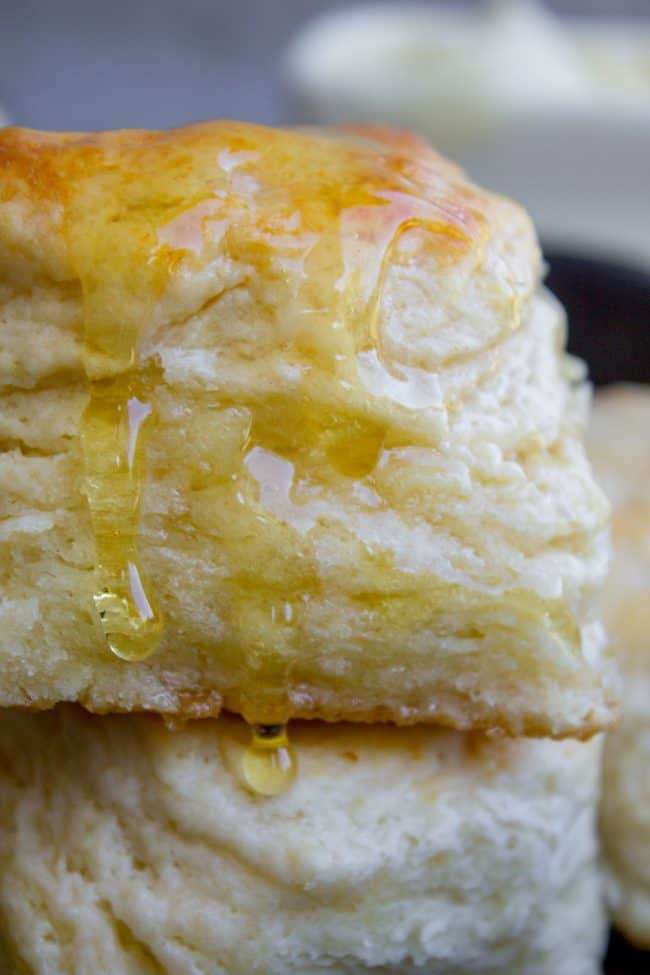
How to Make Flaky Buttermilk Biscuits
User Reviews
4.9
How to Make Flaky Buttermilk Biscuits
Description
This recipe for flaky buttermilk biscuits calls for flour, kosher salt, sugar, baking powder, cold butter, egg, chilled buttermilk, and optional ice water to hydrate the dough just enough. The cold butter is incorporated into the flour mixture using a pastry cutter or fingers, preserving pea-sized chunks. This is key for achieving flaky layers once baked. The buttermilk and egg moistening mix is added carefully to avoid overworking the dough, and a bit of ice water helps form the dough's proper consistency.
Biscuits are typically baked at a high temperature for a golden crust. The result is a biscuit with a tender, flaky crumb and a subtle richness from butter and buttermilk. The recipe suggests greasing the pan with softened butter or using a cast iron skillet to encourage a crisp bottom crust, but a standard baking sheet works well too.
These flaky biscuits can be enjoyed warm with honey, butter, or cinnamon honey butter as the recipe notes. They are versatile enough to complement meals or be used for breakfast sandwiches. The dough also can be made ahead and frozen shaped, baked directly from frozen with a longer bake time, offering flexibility for meal planning.
Ingredients
- 3 cups flour spooned and leveled
- 1 & 1/2 teaspoons kosher salt
- 2 teaspoons sugar
- 2 tablespoons baking powder 1 teaspoon
- 3/4 cup butter COLD or frozen (1 and 1/2 sticks)
- 1 large egg
- 3/4 cup buttermilk cold
- 1 to 2 tablespoons water ice
- 1 tablespoon butter softened (for greasing pan)
- buttermilk for brushing, more
- honey for serving, or this Cinnamon Honey Butter ∞
- butter for serving, or this Cinnamon Honey Butter ∞
Instructions
- Preheat the oven to 425 degrees F.
- In a large bowl combine flour, kosher salt, sugar, and baking powder.
- Use a pastry cutter to cut the butter into the flour. You can also use a fork, a butter knife, or your hands to work the butter into the dough. It should be crumbly with pea-size chunks. Stick the bowl in the fridge if you have any delays.
- Use a pastry cutter to cut the butter into the flour. You can also use a fork, a butter knife, or your hands to work the butter into the dough. It should be crumbly with pea-size chunks. Stick the bowl in the fridge if you have any delays.
- In a small bowl combine the egg and buttermilk. Beat with a fork. Add ice and water to a small bowl, and set a tablespoon nearby so it's ready to go.
- Add the buttermilk mixture to the flour mixture. Use a fork to hydrate the flour. Do NOT over work the dough.
- Add ice water 1 tablespoon at a time. You don't need much, this is just to help the flour absorb into the wet ingredients.
- Make as few strokes as possible to get your result: a very thick, slightly sticky dough. Switch to using flour-dusted hands for the last few kneads.
- Turn the dough out onto a lightly floured work surface (a pastry cloth works great, if you have one.) Use your hands to pat the dough into a rectangle, then use a rolling pin to roll the dough into a roughly 12×8 inch rectangle. It doesn’t have to be perfect.
- Fold the short sides of the dough into the middle, like a business letter. See photos.
- Turn the dough over (flouring your surface again if necessary) so that the seam of your business letter is down.
- Use your hands or the rolling pin to flatten the dough. This is the last step before cutting. Don't roll it too thin! You want THICK biscuits. Think like at least an inch if not more. Flatten the dough enough to where you will be able to cut at least 6-8 biscuits on the first go.
- Use a 3-inch biscuit cutter (<these are the ones I wish I had!) to cut the dough. Do NOT twist the cutter. Firmly push it straight down, then pull up. Use your fingers to gently loosen the dough from the cutter.
- Continue with the rest of the dough until there are only scraps. Gather the scraps in your hands, gently press them together, then roll out again, remembering to keep the dough thick. Continue until the dough is gone.
- Prepare a 12-inch cast iron skillet** with 1 tablespoon softened butter (or melted.) Make sure to grease the sides.
- Place the biscuits in the pan. They should be touching each other, as this helps them rise in the oven.
- At this point, if you have time and space, I highly recommend freezing or at least refrigerating the pan of biscuit dough for 15-20 minutes. The butter in the dough has warmed up from your hands, and you want it hitting the oven as cold as possible to achieve Ultimate Flakiness Levels.***
- Just before you put it in the oven, brush the top of each biscuit with buttermilk. This helps it to get that pretty brown topping.
- Bake at 425 for 15-20 minutes, or until the tops are golden. If the tops are brown but you suspect they are not done, lift the edge of one biscuit to check the bottom. They are done when the bottoms are brown.
- If desired, brush the biscuits with melted butter. Or you could just eat them immediately, serving with soft butter, honey, jam, and/or this Cinnamon Honey Butter (<< I’m telling you guys, this stuff is legendary.)
Notes
- Make cheater buttermilk by mixing 2 teaspoons vinegar or lemon juice with dairy to the 3/4 cup line when real buttermilk isn't available.
- Cast iron pans give biscuits a crispier bottom but a greased baking sheet or silicone mat can be used as alternatives.
- Dough can be shaped and frozen ahead; bake from frozen with extra baking time for convenience.
Nutrition Information
Show DetailsNutrition Facts
Serving: 9biscuits
Amount Per Serving
Calories 324 kcal
% Daily Value*
| Serving | 1biscuit | |
| Calories | 324kcal | 16% |
| Carbohydrates | 35g | 12% |
| Protein | 6g | 12% |
| Fat | 18g | 28% |
| Saturated Fat | 11g | 55% |
| Polyunsaturated Fat | 1g | 6% |
| Monounsaturated Fat | 5g | 25% |
| Trans Fat | 1g | 50% |
| Cholesterol | 67mg | 22% |
| Potassium | 85mg | 2% |
| Fiber | 1g | 4% |
| Sugar | 2g | 4% |
| Vitamin A | 575IU | 12% |
| Calcium | 220mg | 22% |
| Iron | 2mg | 11% |
* Percent Daily Values are based on a 2,000 calorie diet.
User Reviews
Overall Rating
4.9
You'll Also Love