Pressure Cooker Nikujaga
User Reviews
4.8
Pressure Cooker Nikujaga
Description
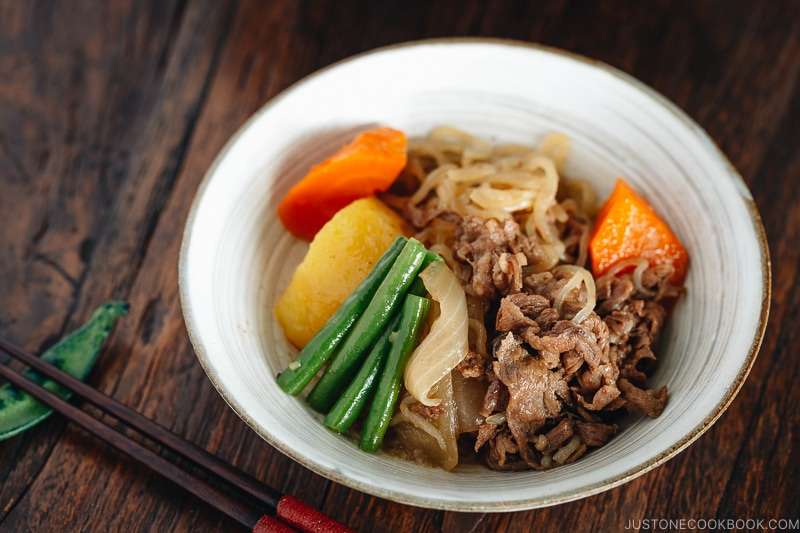
Pressure Cooker Nikujaga combines familiar ingredients including thinly sliced beef, Yukon gold potatoes, carrots cut in rolling wedges, onions, green beans, and shirataki noodles into a single dish. The vegetables are prepared with specific cuts for texture: rangiri carrots and quartered potatoes soaked beforehand to reduce starch. After sautéing onions and beef, all ingredients cook together under pressure in a broth made from dashi, soy sauce, mirin, sake, and sugar. This creates a stew with tender, flavorful components and a slightly sweet-savory broth characteristic of nikujaga.
The dish is a hearty meal suitable for colder days or whenever you want a homestyle Japanese stew. Portions accommodate several servings and can be paired with steamed rice or eaten as is.
Ingredients
- 10 green beans
- 1 onion
- 1 carrot
- 2 potato I use Yukon gold potatoes as they don‘t break easily compared to russet potatoes
- 1 package shirataki noodles (7 oz, 198 g)
- ½ lb beef chuck thinly sliced, or ribeye as alternative
- 1 Tbsp neutral oil
- ⅛ tsp kosher salt Diamond Crystal brand
For the Seasonings
- 1 Tbsp sugar
- 1 cup dashi use standard Awase Dashi, dashi packet or powder, or Vegan Dashi, Japanese soup stock
- 3 Tbsp mirin
- 2 Tbsp sake
- 3 Tbsp soy sauce
Instructions
- Gather all the ingredients.
- Cut 10 green beans in half or thirds. Bring water to a boil in a small saucepan.
- Blanch the green beans for a few minutes until tender. Drain and set aside.
- Cut 1 onion into wedges, then cut them in half.
- Peel and cut 1 carrot into rolling wedges (we call this cutting technique rangiri).
- Peel and cut 2 potatoes into quarters and soak them in water for 10 minutes to remove the starch.
- Open 1 package shirataki noodles and drain the liquid. Cut the shirataki noodles into thirds (or shorter length).
- Cut ½ lb thinly sliced beef (chuck or ribeye) into smaller pieces.
- Press the Sauté button on your Instant Pot (I use 6 QT Instant Pot) and heat 1 Tbsp neutral oil.
- When the pot is hot, sauté the onion. When the onion is coated with oil, add the meat and stir all together.
- Add the potatoes and carrots. Then, add the shirataki noodles.
- Add 1 Tbsp sugar, 1 cup dashi (Japanese soup stock), 3 Tbsp mirin, 2 Tbsp sake, and 3 Tbsp soy sauce.
- Cover and lock the lid. Make sure the steam release handle points at Sealing and not Venting. Press the Keep Warm/Cancel button on the Instant Pot to stop sautéing. Press the Meat/Stew button to switch to the pressure cooking mode. Press the - (minus) button to change the cooking time to 15 minutes.
- If you’re using a stove-top pressure cooker, you won’t have the buttons to press. Just cook on high heat until high pressure is reached. Then, reduce the heat to low but maintain high pressure for about 15 minutes.
- When it is finished cooking, the Instant Pot will switch automatically to the Keep Warm mode. Slide the steam release handle to the Venting position to let out steam until the float valve drops down, OR let the pressure release naturally (takes about 15 mins).
- Unlock the lid and taste the Nikujaga. If necessary, season with ⅛ tsp Diamond Crystal kosher salt. Toss in the blanched green beans to heat up a little, and transfer to a serving dish.
To Store
- You can keep the leftovers in an airtight container and store in the refrigerator for up to 3 days and in the freezer for a month. Potatoes will change their texture, so I recommend removing them first before freezing.
Nutrition Information
Show DetailsNutrition Facts
Serving: 4Serving
Amount Per Serving
Calories 272 kcal
% Daily Value*
| Calories | 272kcal | 14% |
| Carbohydrates | 29g | 10% |
| Protein | 16g | 32% |
| Fat | 8g | 12% |
| Saturated Fat | 4g | 20% |
| Polyunsaturated Fat | 1g | 6% |
| Monounsaturated Fat | 4g | 20% |
| Cholesterol | 35mg | 12% |
| Sodium | 571mg | 24% |
| Potassium | 721mg | 15% |
| Fiber | 4g | 16% |
| Sugar | 8g | 16% |
| Vitamin A | 2654IU | 53% |
| Vitamin C | 26mg | 29% |
| Calcium | 34mg | 3% |
| Iron | 2mg | 11% |
* Percent Daily Values are based on a 2,000 calorie diet.
User Reviews
Overall Rating
4.8
You'll Also Love