Takikomi Gohan (Japanese Mixed Rice)
User Reviews
4.7
Takikomi Gohan (Japanese Mixed Rice)
Description
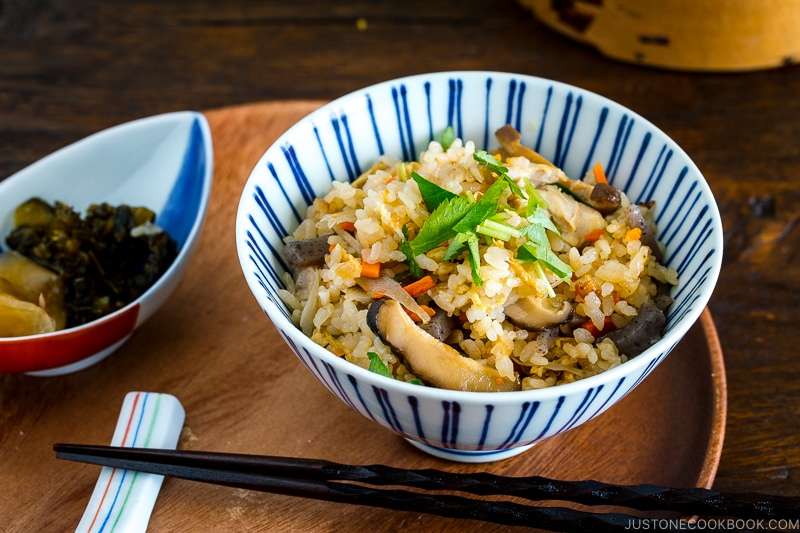
Takikomi Gohan starts with washing and soaking Japanese short-grain rice properly to ensure optimal water absorption and texture. Dried shiitake mushrooms are soaked separately, providing a concentrated mushroom dashi broth that enhances the rice's flavor. Konnyaku, tofu pouch (aburaage), burdock root, carrot, and chicken thigh are prepared and added to the rice cooker along with the dashi broth and seasonings including mirin and soy sauce.
The dish is cooked in a rice cooker on a setting suited for mixed rice, creating a caramelized layer of rice called okoge at the bottom. This slightly charred rice adds a nutty aroma and textural contrast enjoyed by many. The ingredients infuse the rice with subtle earthiness and sweetness from vegetables and stock, while chunks of tender chicken add protein and substance.
Takikomi Gohan can be served as a standalone meal or alongside other Japanese dishes. It offers a balance of soft rice, flavorful broth, and varied ingredient textures. For best results, avoid opening the rice cooker early to allow proper steaming and developing of okoge. This dish can be garnished simply with mitsuba or green onions for added freshness.
Choosing the Mixed Rice setting on the rice cooker helps achieve the signature caramelized rice on the bottom, which is traditional and appealing to many enthusiasts of this dish.
Ingredients
- 1½ cups Japanese short-grain white rice or 2 rice cooker cups, uncooked
- 3 dried shiitake mushrooms (0.5 oz, 15 g)
- ½ cup water (for soaking the shiitake and making shiitake dashi)
- ⅓ package konnyaku 3 oz, 85 g, aka konjac
- 1 piece tofu pouch ¾ oz, 20 g, deep-fried, aka aburaage
- 1 oz burdock root 4 inches, 10 cm, aka gobo
- 2 oz carrot (3 inches, 7.5 cm)
- 1 chicken thigh 4.8 oz, 135 g, boneless, skinless
- 1½ cups dashi use the shiitake dashi you made from soaking the mushrooms plus standard Awase Dashi, dashi packet or powder, or Vegan Dashi, Japanese soup stock
- 1½ Tbsp mirin
- 1½ Tbsp soy sauce
For the Garnish
- mitsuba or substitute green onion/scallion, Japanese parsley
Instructions
- Prepare all the ingredients. For the Japanese short-grain rice, 1½ US cups or 2 rice cooker cups (360 ml, 300 g) of uncooked rice yields roughly 4 servings (3½ US cups, 660 g) of cooked rice.
To Prepare the Ingredients
- Wash 1½ cups uncooked Japanese short-grain white rice in a large bowl. Rice absorbs water very quickly when you start washing, so don‘t let the rice absorb the opaque water. Gently wash the rice in a circular motion, add water, and discard it. Repeat this process about 3–4 times.
- Let the rice soak in water for 20–30 minutes. Then, transfer the rice into a sieve and drain completely for at least 15 minutes. Tip: It's important to soak the short-grain rice. Why not soaking in the seasoning? Soy sauce and other seasonings actually prevent the rice from absorbing water.
- Soak 3 dried shiitake mushrooms in ½ cup water for 15 minutes. I place a smaller bowl on top to keep the mushrooms submerged in the water at all times.
- In a small saucepan, bring 2 inches (5 cm) of water to a boil. Place ⅓ package konnyaku (konjac) in the boiling water and cook for 1 minute to get rid of any odor. Transfer the konnyaku to a plate to cool. Add 1 piece aburaage (deep-fried tofu pouch) to the same pot of boiling water and cook for 1 minute. This removes the excess oil from the aburaage. Transfer the aburaage to a plate to cool. Discard the water.
- Scrape the skin of 1 oz gobo (burdock root) with the back of your knife. The earthy flavor and aroma of the gobo is right underneath the skin; therefore, you only need to scrape off the outer skin. Do not use a peeler. Then, make a cross incision at the thick end of the gobo about 1 inch (2.5 cm) deep. This helps make shaving the gobo easier.
- Shave the gobo from that end while constantly rotating the root with the other hand, as if you were sharpening a pencil with a knife. Soak the shaved gobo in a bowl of water to prevent discoloration.
- Cut 2 oz carrot in half lengthwise and cut diagonally into thin slices. Then, cut the slices into julienned or smaller pieces.
- Cut the aburaage and konnyaku into thin small strips.
- Cut 1 boneless, skinless chicken thigh into ¾-inch (2-cm) slanted pieces. Hold your knife at 45-degree angle and slice the chicken. This sogigiri cutting technique gives the chicken more surface area so it will cook faster and soak up flavors quickly.
- Squeeze the liquid from the rehydrated shiitake mushrooms and save the soaking liquid (this is called Shiitake Dashi). Remove the stems and cut the caps into thin slices.
- Strain the shiitake dashi into a bowl through a fine-mesh strainer to get rid of any dirty particles. In a measuring cup, add all the shiitake dashi plus enough additional dashi to make 1½ cups dashi (Japanese soup stock).
To Cook the Takikomi Gohan
- Now your ingredients are ready to cook.
- Place the drained rice in the rice cooker. Add 1½ Tbsp mirin and 1½ Tbsp soy sauce to the rice in the rice cooker pot.
- Pour the dashi and shiitake dashi mixture into the rice and mix well. Level the rice with your fingers or chopsticks.
- Next, place the chicken pieces evenly on top of the rice. Do NOT mix the chicken or other ingredients into the rice. (Tip: The rice won‘t cook properly if you mix in the ingredients at this stage. It won‘t absorb enough water and will end up with a hard texture.) Continue scattering the rest of the ingredients on top of the rice, starting with the hard ingredients and ending with the softer ingredients. Without mixing it all up, close the rice cooker lid. Tip: The seasoning will separate into layers if you leave it too long; therefore, it's best to start cooking immediately after you add the seasonings and toppings.
- Start cooking the rice. Use the Mixed Rice setting if your rice cooker has that option (see Notes below). Once the rice is done cooking, use a rice paddle to stir the rice and vegetables with a light slicing and tossing motion to distribute the ingredients evenly into the rice. The rice at the bottom of the pot gets slightly caramelized; this is called okoge and it‘s especially tasty.
To Serve
- Serve the rice hot or at room temperature. Sprinkle chopped mitsuba or green onion on top.
To Store
- You can keep the leftover rice in the freezer for up to a month. I don‘t recommend storing it in the refrigerator as the rice gets too dry and hard.
Notes
- Use the Mixed Rice setting on your rice cooker to create the distinctive caramelized okoge rice layer favored in this dish.
- Do not open the rice cooker immediately after cooking; let it rest for an additional 5 minutes to ensure proper steaming and texture.
- The soy sauce in the seasoning contributes to the caramelization of the rice bottom, enhancing flavor and aroma.
- Mitsuba or green onions make suitable garnishes, adding a fresh contrast to the savory rice.
Nutrition Information
Show DetailsNutrition Facts
Serving: 4Serving
Amount Per Serving
Calories 371 kcal
% Daily Value*
| Calories | 371kcal | 19% |
| Carbohydrates | 70g | 23% |
| Protein | 14g | 28% |
| Fat | 2g | 3% |
| Saturated Fat | 1g | 5% |
| Polyunsaturated Fat | 1g | 6% |
| Monounsaturated Fat | 1g | 5% |
| Trans Fat | 1g | 50% |
| Cholesterol | 32mg | 11% |
| Sodium | 405mg | 17% |
| Potassium | 267mg | 6% |
| Fiber | 4g | 16% |
| Sugar | 3g | 6% |
| Vitamin A | 2376IU | 48% |
| Vitamin C | 2mg | 2% |
| Calcium | 29mg | 3% |
| Iron | 4mg | 22% |
* Percent Daily Values are based on a 2,000 calorie diet.
User Reviews
Overall Rating
4.7
You'll Also Love