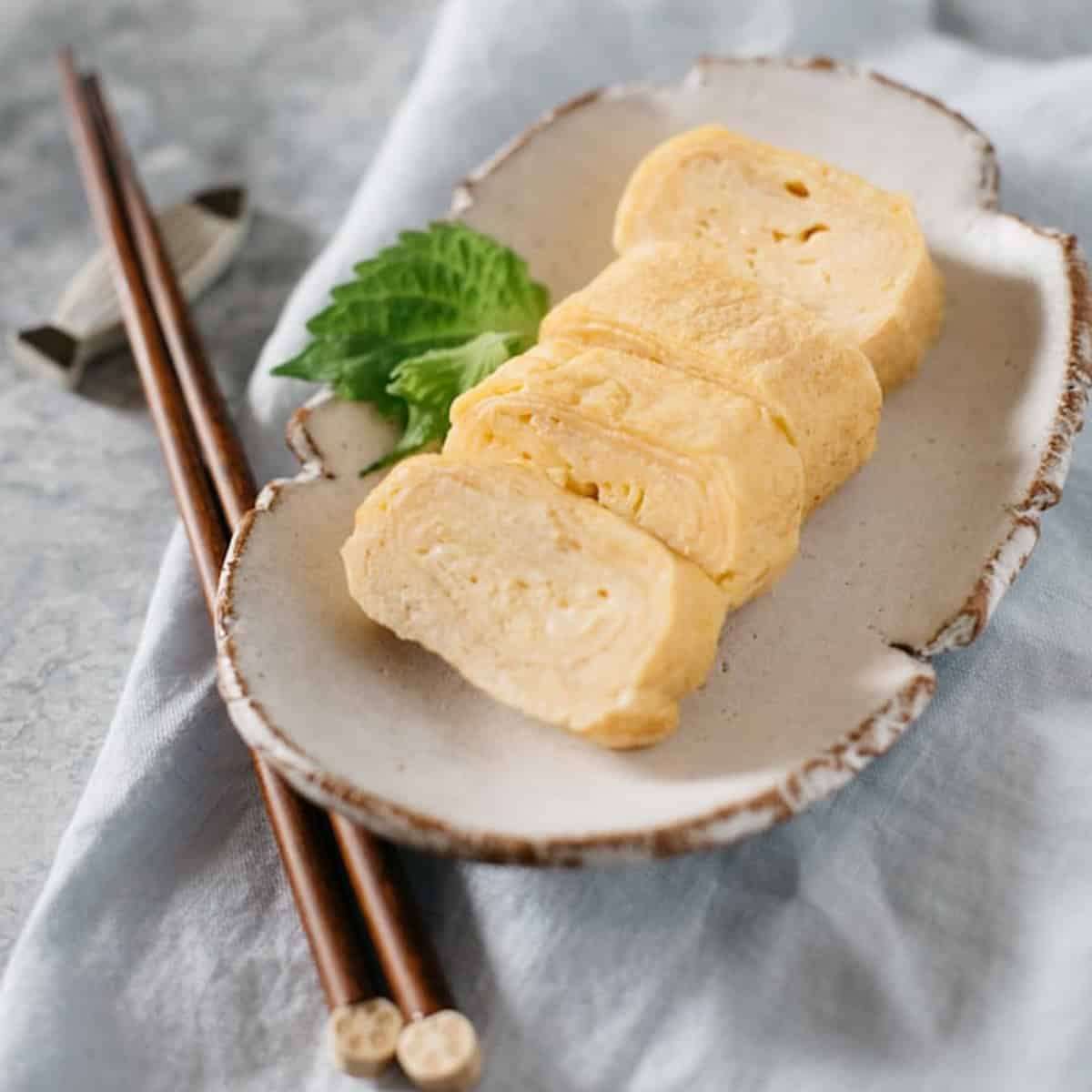
Tamagoyaki 卵焼き
User Reviews
4.8
Tamagoyaki 卵焼き
Description
This recipe instructs cracking eggs and mixing with different seasonings depending on the style. For Dashimaki, shirodashi and water are added; for Atsumaki, sugar, salt, and water season the eggs. The mixture is gently combined and strained several times to ensure smoothness.
Olive oil is heated in a pan, and the egg mixture is poured in small portions to cook thin layers. While cooking, any bubbles are gently broken and the partially set eggs are folded and rolled toward one side using chopsticks. Between layers, the pan is wiped with oil-soaked paper to prevent sticking, and subsequent layers are poured in, running under the rolled omelette. This layering creates a delicate, soft texture.
The technique is similar for both styles; the main difference lies in the seasoning which affects sweetness and umami. The rolled omelette is often served sliced and is a staple in Japanese cuisine, especially sushi and bento boxes.
Note that if shirodashi is unavailable, a mixture of mirin, light soy sauce, and salt may substitute. A sushi rolling mat can be used to help shape the egg and avoid sogginess from steam.
Ingredients
Dashimaki tamagao
- 3 egg
- 2 tsp shirodashi *1
- 2 tbsp water
- 1 tsp olive oil
Atsumaki Tamago
- 3 egg
- 2 tsp sugar
- 1/2 tsp salt
- 2 tbsp water
- 1 tsp olive oil
Instructions
- Crack the eggs into a medium size mixing bowl.
- Add seasoning (add shirodashi and water for dashimaki or add sugar, salt and water for atsumaki) and mix them all together gently to avoid too much bubble forming.
- Strain the egg mixture through a sieve a few times.
- Pour about 2tbsp oil (*not listed in the ingredients) in a small bowl and soak kitchen paper and set aside.
- Heat 2 tsp olive oil in the frying pan over medium heat till you can feel the heat when you hover your hand over the pan.
- Pour 1/3 of egg mixture into the pan (you should hear a sizzling sound).
- Break any bubbles that have formed with the edge of the chopsticks and scramble gently and slightly .
- When the surface is solidified a little, fold and push the egg to one end of the pan with chopsticks *2
- Wipe the empty side of the pan with oil-soaked kitchen paper and pour another 1/3 of the egg mixture into the empty space of the pan.
- Lift the folded egg up to let the egg mixture run under it.
- Fold and roll the egg from one side of the pan and wipe the empty space of the pan with the oil-soaked kitchen paper.
- Pour the last 1/3 of egg mixture and repeat fold and roll.
- Turn the heat off and wrap the rolled egg with thin kitchen towel.
- Roll the wrapped egg roll with a sushi mat to shape and rest to cool down.*3
- Once it is cool down slice it 2cm (7.9inch) thick and serve.
Notes
- If shirodashi is unavailable, substitute with 1 tsp mirin, 1 tsp usukuchi soy sauce, and a pinch of salt.
- Do not worry if the egg is half cooked when folded; residual heat will finish cooking as it rests in the sushi mat.
- Using a sushi rolling mat propped on chopsticks allows air circulation to prevent sogginess from steam.
- The cooking process is the same for both Atsumaki and Dashimaki; only the seasonings differ.
- Nutrition information provided is per serving of Atsumaki Tamago.
- You can make dashi broth from scratch if preferred for authentic flavor.
Nutrition Information
Show DetailsNutrition Facts
Serving: 2Serving
Amount Per Serving
Calories 130 kcal
% Daily Value*
| Calories | 130kcal | 7% |
| Carbohydrates | 4g | 1% |
| Protein | 8g | 16% |
| Fat | 8g | 12% |
| Saturated Fat | 2g | 10% |
| Cholesterol | 245mg | 82% |
| Sodium | 1256mg | 52% |
| Potassium | 91mg | 2% |
| Sugar | 4g | 8% |
| Vitamin A | 355IU | 7% |
| Calcium | 37mg | 4% |
| Iron | 1.2mg | 7% |
* Percent Daily Values are based on a 2,000 calorie diet.
User Reviews
Overall Rating
4.8
You'll Also Love