The Best Githeri Recipe
User Reviews
5
The Best Githeri Recipe
Description
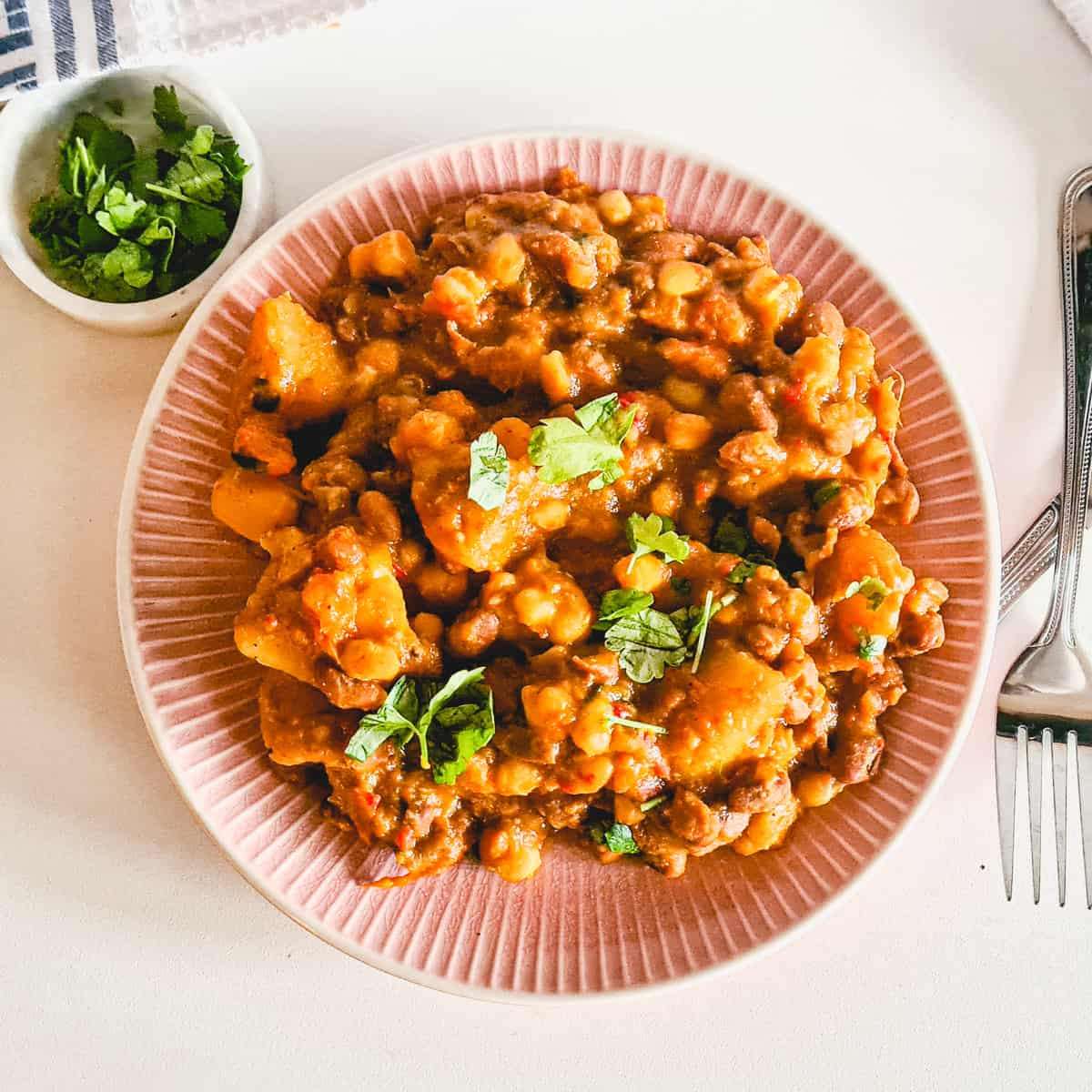
This Githeri recipe combines boiled maize and beans with sautéed garlic, ginger, and onion, creating a savory foundation. Diced tomatoes, tomato paste, curry powder, and optional spices like cumin and turmeric are added to develop a thick, spiced sauce. Cubed potatoes, carrots, and bell peppers cook with the mixture until tender but not mushy. A stock cube enhances umami, and garam masala is stirred in at the end for layered warmth and complexity.
The dish is traditionally garnished with fresh chopped coriander to add brightness and herbaceous notes. Githeri serves as a filling main or side, offering both protein and starch in a balanced, flavorful preparation rooted in Kenyan culinary tradition with slight adaptations like specific spice blends.
Bean choice influences texture and cooking time: smaller varieties like red kidney beans are recommended for boiling dark and uniform doneness. Variations allow swapping vegetables or spices to personal preference. This dish keeps well refrigerated for several days and freezes well up to a year, making it convenient for batch cooking.
Use small to medium dark-boiling beans such as red kidney beans for best texture.Opt for ripe, fleshy tomatoes for quicker cooking and better flavor.Substitute or add vegetables like cabbage, sukuma wiki, boiled peanuts, or green peas according to preference.Cooked Githeri stores up to 5 days refrigerated and freezes well for up to 12 months.Adjust spices to taste for desired heat and flavor balance.
Ingredients
- 3 tablespoon neutral cooking oil use your favorite cooking oil, generic cooking oil
- 2 cups corn kernels boiled maize
- 4 cups bean see the recipe notes below, boiled
- 5 cloves garlic crushed
- 1 tablespoon ginger crushed
- 1 onion use yellow or red onion, large, chopped
- 3 tomato diced
- 1 tablespoon tomato paste
- 1 teaspoon curry powder (use more, or less, to taste)
- ½ teaspoon cumin powder (optional)
- ¾ teaspoon salt (or more to taste)
- ½ teaspoon turmeric powder (optional)
- 5 potato cubed, large
- 1 carrot chopped
- 2 bell pepper also known as pili pili hoho, in Swahili, paprika, chopped
- 1 stock cube (such as Maggi or Knorr)
- ½ cup water
- 1 teaspoon garam masala
- 1 Coriander to garnish, aka cilantro, chopped small bunch
Instructions
- Heat cooking oil in a medium-sized pot or pan. Add the garlic and fry until fragrant. Fry for about one minute, taking care not to burn then stir in the ginger.
- Add the chopped onion and cook until it is slightly browned and fragrant then add in the diced tomatoes, tomato paste, curry powder, cumin powder, salt, and turmeric. Stir to combine.
- Next, add the potatoes, paprika (bell pepper), stock cube, and water, then stir. Cover and allow it to cook for about 10 minutes, or until the potatoes are slightly tender, but not entirely cooked through. Make sure to stir from time to time.
- Finally, add the boiled corn kernels (or maize), boiled beans, and garam masala. Garnish with some chopped coriander (cilantro), serve and enjoy while still hot!
Notes
- Use small to medium dark-boiling beans such as red kidney beans for best texture.
- Opt for ripe, fleshy tomatoes for quicker cooking and better flavor.
- Substitute or add vegetables like cabbage, sukuma wiki, boiled peanuts, or green peas according to preference.
- Cooked Githeri stores up to 5 days refrigerated and freezes well for up to 12 months.
- Adjust spices to taste for desired heat and flavor balance.
Nutrition Information
Show DetailsNutrition Facts
Serving: 5Serving
Amount Per Serving
Calories 439 kcal
% Daily Value*
| Calories | 439kcal | 22% |
| Carbohydrates | 76g | 25% |
| Protein | 14g | 28% |
| Fat | 10g | 15% |
| Saturated Fat | 1g | 5% |
| Polyunsaturated Fat | 1g | 6% |
| Monounsaturated Fat | 6g | 30% |
| Trans Fat | 0g | 0% |
| Cholesterol | 1mg | 0% |
| Sodium | 720mg | 30% |
| Potassium | 1670mg | 36% |
| Fiber | 12g | 48% |
| Sugar | 10g | 20% |
| Vitamin A | 700IU | 14% |
| Vitamin C | 15mg | 17% |
| Calcium | 27mg | 3% |
| Iron | 1mg | 6% |
* Percent Daily Values are based on a 2,000 calorie diet.
User Reviews
Overall Rating
5
You'll Also Love