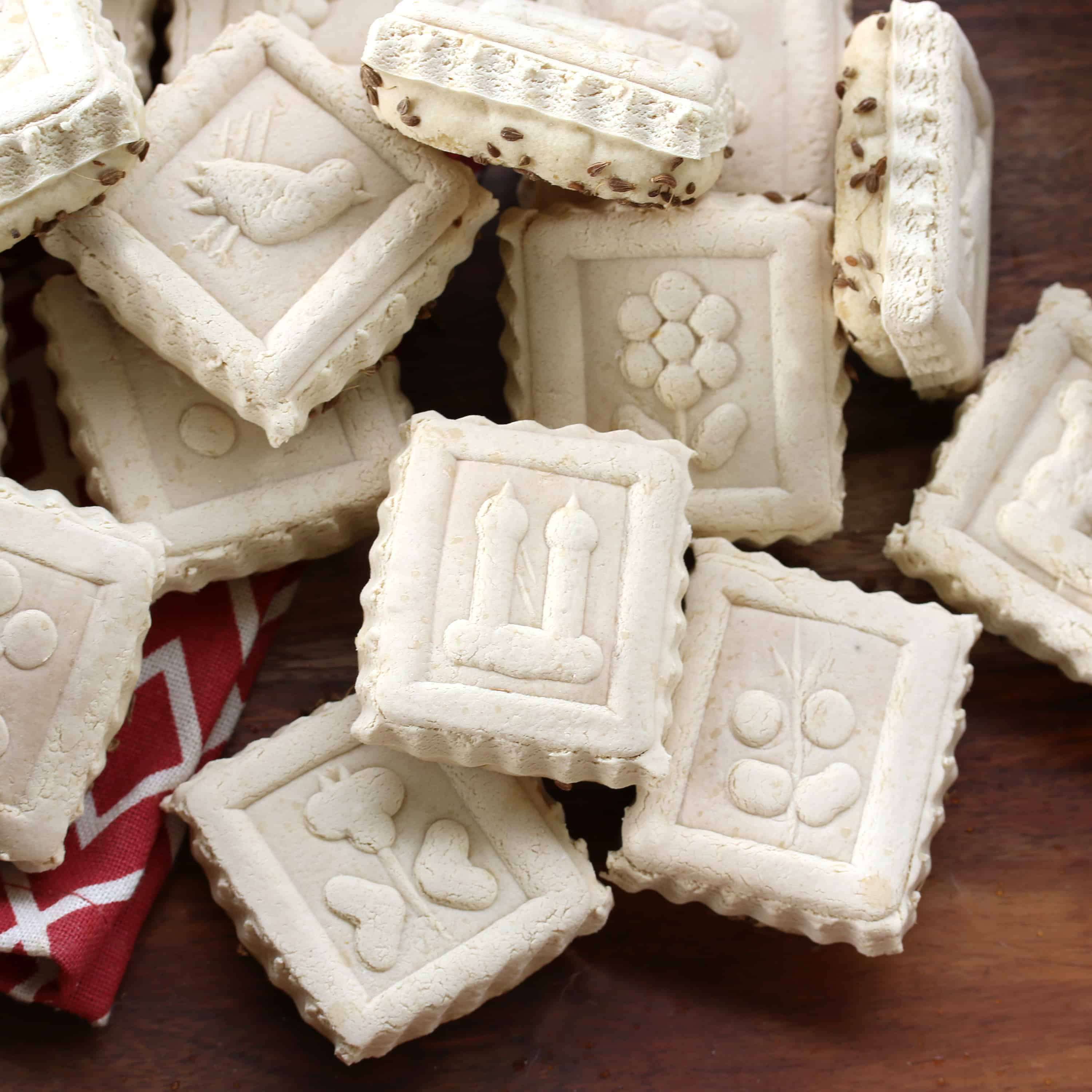
Authentic German Springerle Cookies
User Reviews
5
Authentic German Springerle Cookies
Description
Authentic German Springerle Cookies rely on a batter whipped thoroughly with eggs, sugar, vanilla, and anise oil to create an aerated base. This light mixture then receives flour combined with baker's ammonia and salt, along with lemon zest and anise seeds, which enhance the complex flavor. The dough is soft but workable, allowing for intricate embossed patterns typical of Springerle. The use of baker's ammonia helps develop a tender crumb and a crisp surface. Mixing times are strict to achieve the correct dough consistency and to activate the leavening. The lemon zest provides a fresh counterpoint to the dominant anise flavor.
The cookies are prized for their dense but airy texture and their unique sweet-spicy flavor profile, with the anise seed adding occasional bursts of licorice aroma. Proper preparation avoids dryness or stiffness that can come from skipping mixing steps or mismeasuring flour and moisture. The dough's texture is sensitive to environmental humidity, so adjustments to flour quantity may be necessary. These cookies are traditionally made and enjoyed during holidays but can be appreciated anytime for their distinctive flavor combination.
Following the exact mixing protocol is essential: initial egg and sugar beating, gradual flour incorporation, and final mixing stages ensure light yet firm dough. The inclusion of lemon zest brightens the flavor, while the anise oil's amount can be adjusted for desired intensity. The dough should not be sticky or too dry to ensure the molded designs hold well during baking.
Ingredients
- 3 egg room temperature (the eggs must be large; if you are using medium add an additional egg, large
- 3 cups powdered sugar if using cups start with slightly less flour, 2-3 tablespoons, and add the rest as needed, aka confectioner's sugar
- 1 teaspoon vanilla extract or 2 packets of vanilla sugar, quality pure
- 1/4 to 1/2 teaspoon anise oil not extract), how much you use depends on how strong of an anise flavor you want, quality 100% pure
- 3 cups all-purpose flour (if measuring in cups start with slightly less flour and add the rest as needed if the dough is too soft/sticky)
- 1/4 teaspoon baker's ammonia *slightly less than 1/4 teaspoon (see blog post for explanation about baker's ammonia)
- 1/4 teaspoon salt
- lemon zest of one
- 2 tablespoons anise seed whole
Instructions
- Place the eggs in a stand mixer with the whisk attachment in place. Beat the eggs until foamy. Add the powdered sugar, a little at a time along with the vanilla extract and anise oil.Once all the powdered sugar has been added continue to beat the mixture for 10 minutes. Yes, that's 10 full minutes, do not reduce the time. The batter needs to be very loose and airy. Note: Follow the instructions on your stand mixer to give your machine a rest after the suggested amount of time so as not to overwork your mixer.
- Combine the flour, baker's ammonia and salt in a bowl. Add HALF of the flour mixture to the wet mixture along with the lemon zest and beat it for a full 15 minutes, do not reduce the time (if the mixture is too dry for your whisk attachment, use the paddle attachment).Attach the paddle attachment, add the remaining flour and beat for another 5 minutes.The dough should be very soft but not wet and sticky. If the dough is too dry or stiff mix in a little more lightly beaten egg.Form the dough into a ball, flatten it to an inch-thick disk, wrap it in plastic wrap and refrigerate for at least an hour or overnight.
- The next day roll out the cold dough to about 1/3 inch thick (1 cm) on a floured work surface (if the dough chilled for several hours and is very firm, let it sit at room temperature until soft enough to work with). Use your molds or rolling pin to make the shapes and cut them out with sharp knife or pastry cutter. If you're using molds lightly dust them with flour to prevent the dough from sticking.Toast the whole anise seeds in a dry pan over medium-high heat until aromatic, being careful not to let them scorch. Place the anise seeds on a lined cookie sheet, spreading them out evenly.Lay the Springerle on top of the anise seeds on the baking sheet. Let them dry at room temperature for a full 24 hours, longer if you're in a place with high humidity. The outside of the Springerle should be dry.
- After the cookies have dried for at least 24 hours, lay a damp towel on the counter and gently press the Springerle down onto it to very lightly and evenly moisten the bottoms. Return the Springerle back to the cookie sheet.In an oven preheated to 300 degrees F with the rack positioned in the middle, bake the cookies for 20-30 minutes. Do not let the cookies turn golden, they're supposed to stay very pale, basically the same color as when you put them in the oven.
- The Springerle should have risen evenly to create their characteristic "feet" or platform underneath. Let the cookies cool off completely. They will become very hard as they cool. Springerle are traditionally stored in airtight containers with half of an apple next to them inside the container to create a little bit of moisture to gradually soften the cookies over time. Periodically change out the apple. Once the Springerle have slightly softened you can remove the apple and then continue storing them in the airtight container waiting for the flavor to develop. Most Springerle bakers agree that waiting 3-4 weeks before eating them is best to allow the texture and flavor to develop.Enjoy these Springerle on their own or, as is tradition, enjoy them with a hot beverage and dip them.Makes about 34 Springerle depending on their size.
Notes
- Follow all mixing times precisely to prevent dough dryness or stiffness.
- Measure ingredients by weight when possible for best accuracy and results.
- Adjust flour quantity slightly in dry climates to maintain proper dough moisture.
User Reviews
Overall Rating
5
You'll Also Love