Authentic Homemade Japanese Miso Soup
User Reviews
5
Authentic Homemade Japanese Miso Soup
Description
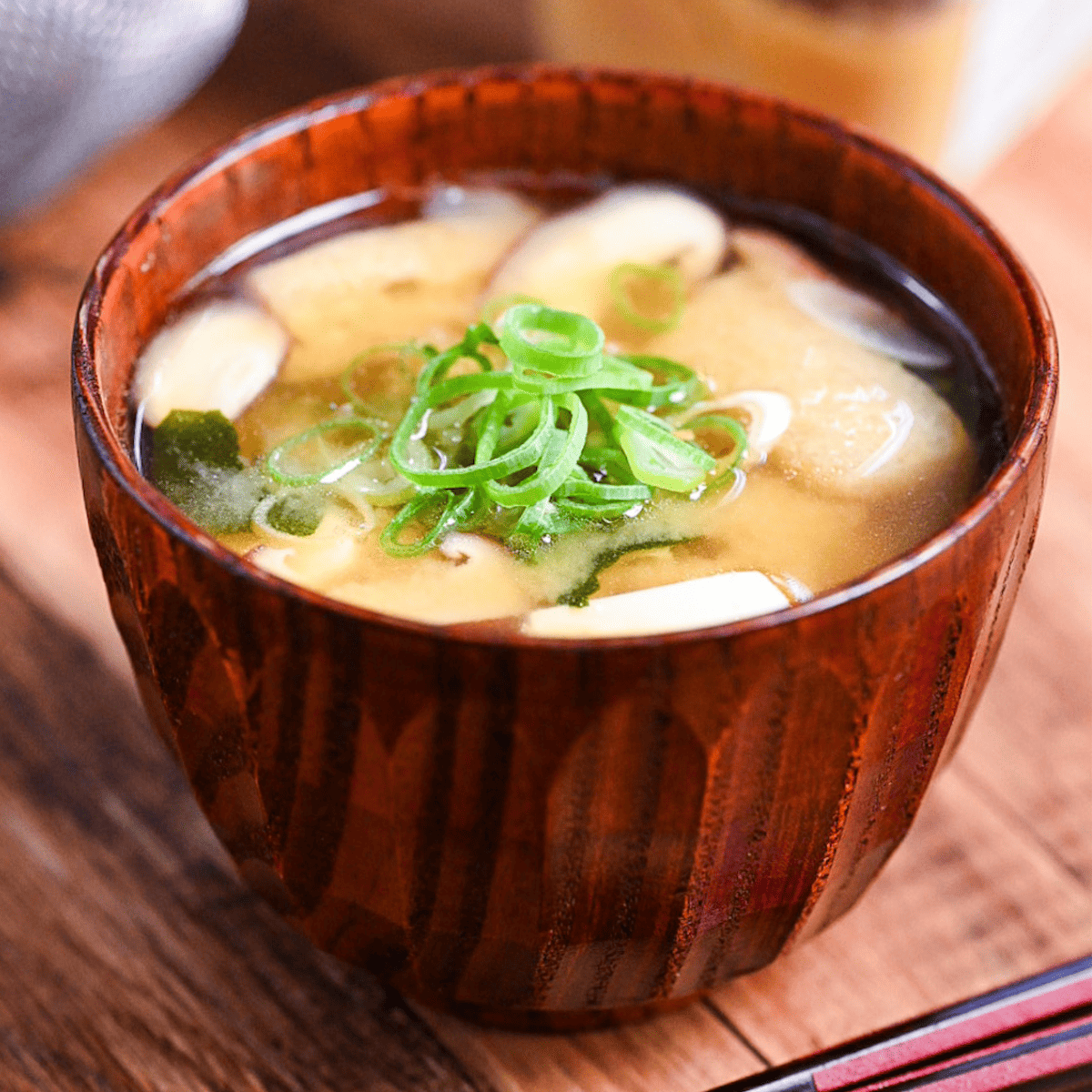
Authentic Homemade Japanese Miso Soup begins with homemade dashi broth, created by soaking dried kelp in cold water before gently heating it to just below boiling. Adding bonito flakes and straining the liquid results in a clear stock with a subtle smoky umami character. Into this broth, cubed tofu, thinly sliced fried tofu pouch (aburaage), fresh shiitake mushrooms, and sliced green onions are added, contributing varied textures and flavors. Dried wakame seaweed softens in the broth, providing additional earthiness and a signature appearance. The addition of yellow miso paste (awase miso) balances the broth with salty, fermented depth.
The soup is heated gently without boiling to maintain the delicate taste of miso and preserve tofu texture. It is typically served immediately to enjoy its fresh flavor. A light soy sauce adds subtle seasoning when needed. Optional garnishing with finely chopped green onion enhances aroma and presentation. This miso soup fits well as a warming starter or accompaniment in a Japanese meal.
Leftover miso soup should be cooled promptly and refrigerated, as reheating is not recommended to prevent flavor degradation. Consume within 24 hours for best quality.
Ingredients
Homemade Dashi
- 10 g dried kelp kombu
- 1 liter water cold
- 15 g bonito flakes (katsuobushi)
Miso Soup
- 150 g tofu firm or silken - cubed
- 30 g fried tofu pouch thinly sliced, aburaage
- 30 g green onion thinly sliced
- 30 g shiitake mushroom thinly sliced, fresh
- 1 tbsp dried wakame seaweed
- ¼ tsp soy sauce
- 4 tbsp yellow miso paste awase miso
- green onion optional garnish, finely chopped
Instructions
Making Dashi
- Add 10 g dried kelp (kombu) and 1 liter cold water to a large pot and soak for 30 minutes.
- Once rehydrated, place the pot on the stove and bring to a simmer over a medium heat. (Don't let it boil.)
- Once small bubbles start to appear around the edges, remove the kombu, increase the heat to medium-high and bring it to a boil. Once boiling, turn off the heat and add the 15 g bonito flakes. Allow the katsuobushi to soak for 5 minutes.
- After 5 minutes, line a sieve with kitchen paper and place it over a large heatproof bowl.
- Pour the dashi through the sieve, the kitchen paper will catch the small pieces of katsuobushi, leaving you with a clear broth.
Making Miso Soup
- Thinly slice 30 g fried tofu pouch (aburaage), 30 g green onion and 30 g fresh shiitake mushroom. Cut 150 g tofu into cubes.
- Pour the dashi into a pot and heat on medium. Once it's almost boiling, add the ingredients (except the firm tofu) to the pot along with 1 tbsp dried wakame seaweed.
- Adding ingredients lowers the heat, so wait for the broth to bubble again. Once it's almost boiling, lower the heat to a simmer and add ¼ tsp soy sauce.
- Scoop 4 tbsp yellow miso paste (awase miso) onto a mesh spoon or ladle. Dip the miso paste into the dashi and whisk it in the spoon to loosen it up. Keep whisking, gradually allowing more dashi to seep into the mesh spoon/ladle each time until the miso paste has dissolved into the mixture.
- Add 150 g tofu (cubed) to the miso soup and stir gently. Allow to simmer on low for 2-3 minutes to heat the tofu through.
- Divide the miso soup into bowls and garnish with finely finely chopped green onions.
- Serve and enjoy!
Notes
- Miso soup is best enjoyed immediately after cooking to preserve its flavor and texture.
- If stored, cool the soup to room temperature and refrigerate; consume leftovers within 24 hours only.
- Reheat gently on the stove without boiling to avoid altering the taste and texture.
User Reviews
Overall Rating
5
You'll Also Love