Chinese Swiss Roll
User Reviews
4.8
Chinese Swiss Roll
Description
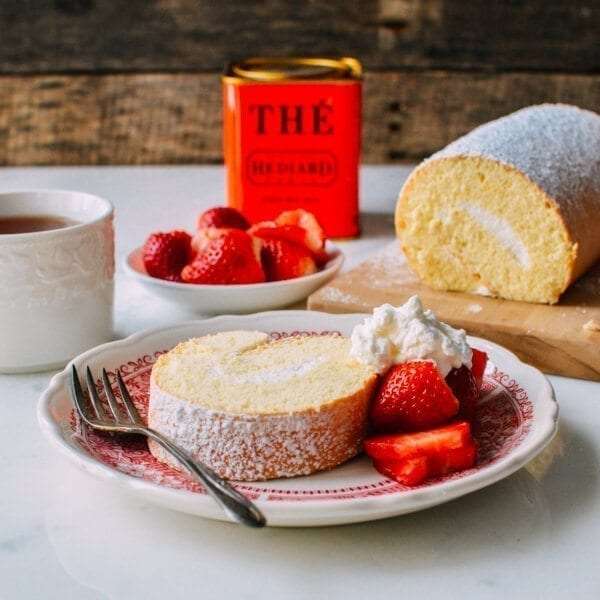
The Chinese Swiss Roll relies on a flour blend of cake flour, cornstarch, and baking powder sifted twice to produce a light crumb. Egg yolks are whisked with sugar, oil, and milk until emulsified, then combined with the sifted dry ingredients. Separately, egg whites are whipped with sugar to stiff peaks, and gradually folded into the yolk mixture to retain airiness. The batter is evenly spread in a prepared pan and baked at 350 degrees until set. This method yields a tender, fine-textured sponge cake suitable for rolling and filling.
Though this recipe does not specify fillings, the light sponge pairs well with whipped cream or sweet bean pastes often used in Asian desserts. The even batter spreading and gentle folding are key to achieving the soft, airy texture that distinguishes this roll.
Ingredients
- 1/2 cup cake flour
- 1 tablespoon cornstarch
- ¼ teaspoon baking powder
- 3 egg separated
- 5 tablespoons sugar (divided, plus 1 teaspoon)
- 2 ½ tablespoons vegetable oil (or canola oil)
- 2 tablespoons milk
- 1/3 cup heavy cream cold
- 2 tablespoons powdered sugar (optional)
Instructions
- Preheat the oven to 350 degrees. Sift together the cake flour, cornstarch, and baking powder. Sift them twice. Sounds kind of fussy, but it’s a necessary step to making this cake light and airy.
- In a large bowl, whisk together the 3 egg yolks and 2 ½ tablespoons sugar. Whisk in the oil and the milk until it’s light yellow and fully emulsified. Thoroughly fold in the sifted dry ingredients until there are no lumps. Set aside.
- Using an electric mixer with the whisk attachment, whip the egg whites until you get soft peaks. Add another 2 ½ tablespoons of sugar to the egg whites and whip until you get stiff peaks.
- Taking 1/3 of the egg white mixture at a time, fold it into the egg yolk mixture create a light and airy batter. Make sure everything is thoroughly combined. Line your baking pan with parchment paper. You can cut the four corners of the paper and overlap it to create smooth corners.
- Pour the mixture in the pan and smooth it out so it’s completely even. It’s crucial that the batter be evenly distributed in the pan. Knock the bottom of the pan on a tabletop a few times (you can cover the table’s surface with a kitchen towel to make sure you don’t break anything) to get rid of any large air bubbles.
- Place the pan onto a rimmed baking sheet and pour a cup of water into the baking sheet, so your pan is sitting in a shallow water bath. Place your whole apparatus on the middle rack of your oven and bake for 15 minutes.
- Remove from the oven and let it just cool enough to handle . Flip the pan out onto another piece of parchment paper. Carefully peel off the parchment paper that the cake baked with.
- In a mixer, whip the cream along with a teaspoon of sugar until you get stiff peaks. When the cake is still warm enough to be pliable but not warm enough to melt your cream, spread the whipped cream evenly onto the cake.
- To roll the cake up, taking out a rolling pin and place it underneath the parchment paper your cake is sitting on. Slowly roll the parchment paper onto the rolling pin one side as you roll up the cake on the other. Essentially, you’re using the rolling pin to push the cake forward as you roll. At the same time, you’re using the pin to roll up the loose parchment paper. Once rolled, dust with powdered sugar if you like, slice, and serve. It goes great with fruit!
Nutrition Information
Show DetailsNutrition Facts
Serving: 8Serving
Amount Per Serving
Calories 167 kcal
% Daily Value*
| Calories | 167kcal | 8% |
| Carbohydrates | 17g | 6% |
| Protein | 3g | 6% |
| Fat | 10g | 15% |
| Saturated Fat | 6g | 30% |
| Cholesterol | 75mg | 25% |
| Sodium | 29mg | 1% |
| Potassium | 56mg | 1% |
| Fiber | 1g | 4% |
| Sugar | 10g | 20% |
| Vitamin A | 235IU | 5% |
| Calcium | 25mg | 3% |
| Iron | 0.4mg | 2% |
* Percent Daily Values are based on a 2,000 calorie diet.
User Reviews
Overall Rating
4.8
You'll Also Love