Coconut Ladoo Recipe | Nariyal ke Laddu Made In 3 Unique Ways
User Reviews
4.7
Coconut Ladoo Recipe | Nariyal ke Laddu Made In 3 Unique Ways
Description
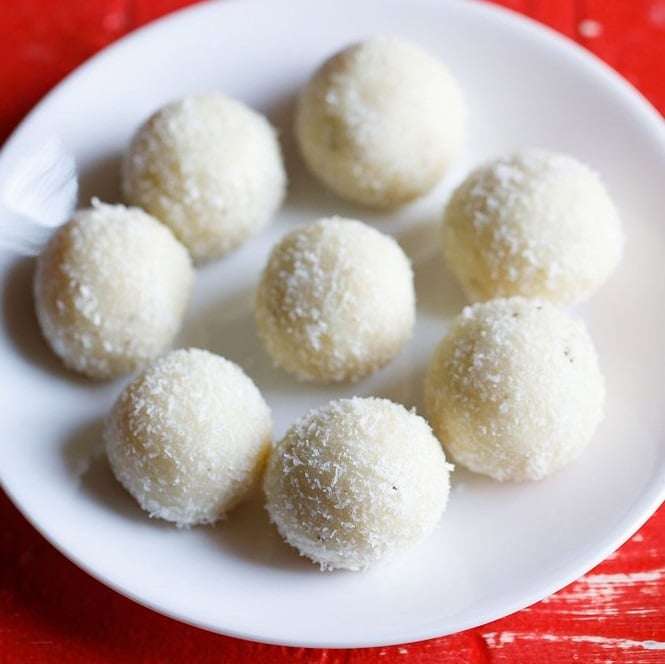
This recipe includes three coconut ladoo variations. The first uses fresh grated coconut lightly roasted in ghee, then cooked with sweetened condensed milk and cardamom powder until thickened, then shaped into balls rolled in desiccated coconut. The second variation uses dry desiccated coconut combined with condensed milk and cooked to a thick consistency before forming the ladoos, often coated again in coconut for texture. The third involves cooking desiccated coconut in a sugar syrup flavored with cardamom until the mixture thickens and binds, then forming into ladoos.
The cardamom adds a distinctive warm aroma, important in Indian sweets. Some recipes allow addition of chopped nuts or dry fruits for variation and texture. These ladoos are commonly served during festivals and religious events, and the recipes can be scaled for larger batches.
Preparation involves careful cooking to prevent burning while ensuring the mixture is firm enough to shape. Cooling before shaping is important. Rolling the ladoos in coconut gives a pleasant outer texture and appearance.
Overall, these ladoos offer traditional Indian coconut confections with flexibility in ingredients and preparation style.
Ingredients
For fresh coconut ladoo with milkmaid
- 1.5 cups coconut - fresh, grated and tightly packed
- 1 teaspoon ghee (clarified butter)
- ½ teaspoon cardamom powder or 4 to 5 green cardamoms crushed in a mortar-pestle
- ½ can sweetened condensed milk or milkmaid - 200 grams
- ⅓ cup desiccated coconut or fresh grated coconut - for rolling
- nuts of your choice, optional, or dry fruits, chopped
For desiccated coconut laddu with condensed milk
- 2.5 cups desiccated coconut unsweetened, powder
- 1 cup sweetened condensed milk or milkmaid
- ⅓ teaspoon cardamom powder
- 1 tablespoon ghee
- 3 tablespoons desiccated coconut - for coating ladoo
For nariyal ke laddu with sugar syrup
- 1.5 cups desiccated coconut unsweetened, powder
- ⅔ cup sugar or raw sugar
- ½ cup water
- ½ teaspoon cardamom powder or 3 to 4 green cardamoms husked and powdered in a mortar-pestle, optional
Instructions
Making Coconut Ladoo with milkmaid
- Heat ghee in a heavy frying pan or kadai. Keep flame to a low.
- Add 1.5 cups tightly packed coconut.
- Stir and roast the coconut on a low flame for 3 to 4 minutes. The roasting is to just get rid of some moisture. Don't brown the coconut.
- If using desiccated coconut, then no need to roast it in ghee. Simply mix the desiccated coconut with condensed milk and heat the mixture.
- Now add the sweetened condensed milk and cardamom powder.
- Mix thoroughly and cook this mixture on a low heat.
- When you see that the mixture has begun to thicken, then keep stirring nonstop.
- When the mixture begins to leave the sides of the pan and when you see some coconut fat at the sides, switch off the heat.
- Pour the ladoo mixture in another bowl or pan. Allow it to cool at room temperature.
- When the mixture has cooled completely, pinch small to medium balls from the mixture and form ladoo.
- Roll the coconut ladoo in desiccated coconut or in fresh coconut evenly.
- You can also make all the ladoo at once and then roll in the desiccated coconut.
- Place them in small muffin liners or just place them in a tray.
- Serve coconut ladoo straight away or refrigerate and serve them later.
- This ladoo stay good for a week in the fridge.
Making desiccated coconut ladoo with condensed milk
- Keep a heavy bottomed pan or kadai on stove top. Add ghee and let it melt on a low heat.
- Keeping the heat to a low add the desiccated coconut powder. Mix and sauté the for 1 minute.
- Then add the condensed milk and mix it thoroughly with the coconut.
- On a low to medium-low heat with non stop stirring sauté the mixture till it starts to leave sides of pan. Then switch off the heat and add cardamom powder. Mix very well.
- Let the mixture become warm or cool at room temperature. With a spoon, scoop the ladoo mixture and shape in round balls.
- In a plate spread the desiccated coconut evenly. Roll each ladoo in the desiccated coconut. Make all ladoo this way. Scrape off all the mixture from the pan with a spoon and use them too to make ladoo.
- Serve as a sweet. Refrigerate any leftovers and these stay good for about 10 to 12 days in the fridge.
Making Nariyal ke Laddu with sugar syrup
- Mix the sugar with the water and dissolve it. If there are impurities than strain the sugar solution.
- The sugar can be adjusted as per your sweet likings. For a less sweet taste you can use ½ cup sugar and for a more sweeter taste use ¾ cup sugar.
- Keep the sugar solution on the stove-top and on a low heat. Cook the solution. The solution will start to thicken. Continue to simmer till you get a one thread consistency in the sugar syrup.
- Turn off the heat and add the desiccated coconut powder and cardamom powder to the sugar syrup.
- Quickly stir and make small balls from the mixture. If the heat is too much too handle, wait for a few minutes till you are comfortable in shaping the laddu.
- The mixture should be hot or warm while making the coconut laddu. If the mixture becomes cold, then shaping the ladoo is impossible. In this case, return the pan or bowl on the fire and slightly warm the mixture and continue to make the laddu.
- Serve these tasty nariyal ke laddu.
Notes
- Adding nuts or dry fruits is optional and can enhance texture and flavor.
- Cardamom powder can be omitted if a milder taste is preferred.
- All three recipes can be scaled up for large batches often needed during festivals or religious occasions.
- The provided serving size and approximate nutrition info relate specifically to the recipe using fresh coconut and sweetened condensed milk.
Nutrition Information
Show DetailsNutrition Facts
Serving: 14Coconut Ladoo
Amount Per Serving
Calories 100 kcal
% Daily Value*
| Calories | 100kcal | 5% |
| Carbohydrates | 11g | 4% |
| Protein | 2g | 4% |
| Fat | 6g | 9% |
| Saturated Fat | 5g | 25% |
| Polyunsaturated Fat | 1g | 6% |
| Monounsaturated Fat | 1g | 5% |
| Cholesterol | 6mg | 2% |
| Sodium | 23mg | 1% |
| Potassium | 103mg | 2% |
| Fiber | 1g | 4% |
| Sugar | 10g | 20% |
| Vitamin A | 44IU | 1% |
| Vitamin B1 (Thiamine) | 1mg | |
| Vitamin B2 (Riboflavin) | 1mg | |
| Vitamin B3 (Niacin) | 1mg | |
| Vitamin B6 | 1mg | |
| Vitamin B12 | 1µg | 42% |
| Vitamin C | 1mg | 1% |
| Vitamin D | 1µg | 5% |
| Vitamin E | 1mg | |
| Vitamin K | 1µg | |
| Calcium | 49mg | 5% |
| Vitamin B9 (Folate) | 4µg | |
| Iron | 1mg | 6% |
| Magnesium | 9mg | 2% |
| Phosphorus | 55mg | |
| Zinc | 1mg |
* Percent Daily Values are based on a 2,000 calorie diet.
User Reviews
Overall Rating
4.7
You'll Also Love