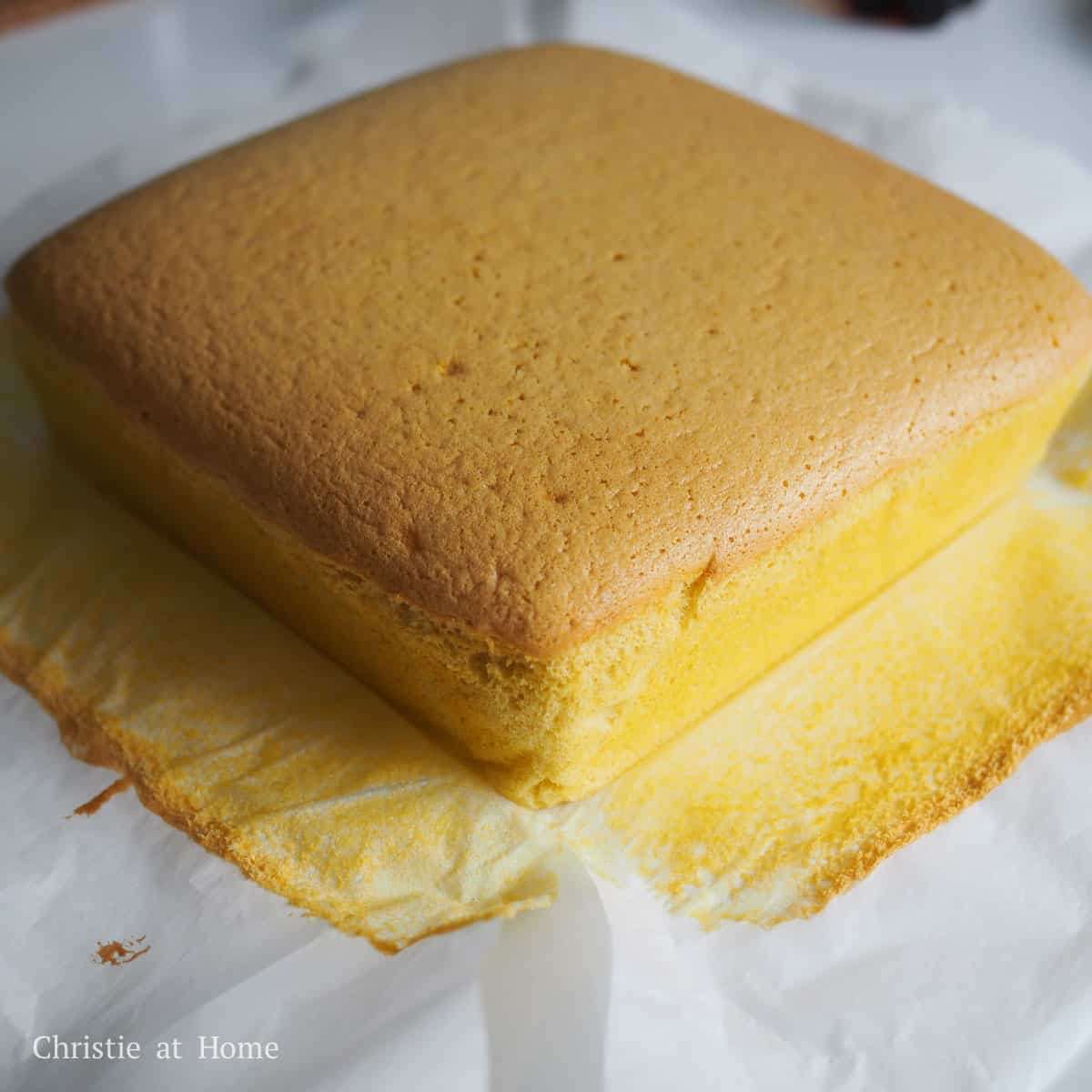
Dairy-Free Castella Cake
User Reviews
5
Dairy-Free Castella Cake
Description
Dairy-Free Castella Cake uses large eggs separated into yolks and whites, combined with sifted flour and cornstarch, vegetable oil heated until warm, and oat or almond milk. The oil is mixed into the flour to create a smooth batter before adding egg yolks and milk. The egg whites are beaten separately and folded gently into the batter to keep it light. Baking at 300°F yields a softly textured cake with a moist crumb despite the absence of dairy.
The cake is made in a tall parchment-lined pan to shape its rise. The use of cornstarch alongside flour lightens the texture, while oil replaces butter for moisture. This cake is a suitable option for those avoiding dairy but still desiring a classic Castella's soft crumb and gentle sweetness.
Ingredients
Note: Use a kitchen scale to measure in Ounces (not fluid oz) or in Grams where applicable
- 8 large egg
- 3.70 oz all-purpose flour
- 0.529 oz cornstarch aka cornflour
- 3.35 oz vegetable oil or avocado oil
- 3.15 oz oat milk or plain almond milk (or sub with regular dairy milk if you're not dairy-free)
- 3 oz granulated sugar white
Instructions
- Preheat the oven to 300 degrees F. Then line a seamless 20-cm / 8-inch square baking pan with a large sheet of parchment paper so the paper sits a few inches taller than the pan. This will shape the cake as it rises.
- Separate the egg yolks from the egg whites. Place the egg whites in a larger mixing bowl for later. The egg yolks can be placed in a smaller bowl. Set aside.
- In another large mixing bowl, sift together all-purpose flour and cornstarch. Whisk until well combined. Set aside.
- Heat vegetable oil in a heatproof bowl in the microwave for 80 seconds until it's 90 degrees C using digital instant read thermometer or heat the oil in a small pot until it reaches the same temperature. Then immediately pour the hot oil into the flour mixture and mix well. Add in half the portion of the milk into the flour mixture and mix until combined.
- Next mix in your egg yolks into the batter, followed by the rest of the milk. The batter should be a bit runny. Set aside.
- Beat egg whites with an electric hand mixer and gradually add the white granulated sugar in three equal portions. The meringue should reach a soft peak, not a stiff peak or this will cause large cracks in your cake. If you under whisk, you cake will have dents. In order to tell if it's a soft peak, stir the meringue with the whisk and lift it up. If it forms a wiggly tail at the end of your whisk that doesn't fall, the meringue is ready.
- Gently whisk a large dollop of the meringue into the batter until combined to loosen it up. Then add another dollop and whisk again. Then pour the rest of the meringue in and gently whisk until it's just combined. Don't over mix.
- Now switch to a spatula to mix and gently fold the batter, scraping the base of the bowl to ensure it's thoroughly mixed.
- Pour the cake batter into the lined baking pan. Tap the pan on a flat surface to release any bubbles and smooth out the top with a spatula.
- Then fill a larger baking pan filled with 70 degrees C hot water and then place the square cake pan into the larger one.
- Bake the cake in the middle rack for 85 minutes until you poke it with a toothpick and it comes out clean.
- Carefully remove the cake from the pan and peel away the sides of the parchment paper. While the cake is hot, slice into squares. This cake can be served warm or cold.
Nutrition Information
Show DetailsNutrition Facts
Serving: 9pieces
Amount Per Serving
Calories 240 kcal
% Daily Value*
| Calories | 240kcal | 12% |
| Carbohydrates | 21g | 7% |
| Protein | 6g | 12% |
| Fat | 14g | 22% |
| Saturated Fat | 2g | 10% |
| Trans Fat | 1g | 50% |
| Cholesterol | 145mg | 48% |
| Sodium | 61mg | 3% |
| Potassium | 72mg | 2% |
| Fiber | 1g | 4% |
| Sugar | 10g | 20% |
| Vitamin A | 232IU | 5% |
| Calcium | 38mg | 4% |
| Iron | 1mg | 6% |
* Percent Daily Values are based on a 2,000 calorie diet.
User Reviews
Overall Rating
5
You'll Also Love