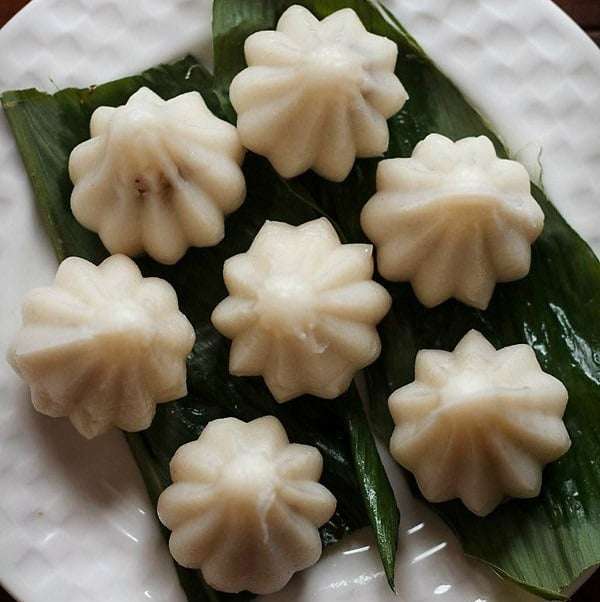
Dry Fruit Modak
User Reviews
5
Dry Fruit Modak
Description
The recipe begins by boiling salted water and gradually adding rice flour, stirring to form a smooth dough that rests under a damp cloth to retain moisture. The filling blends grated fresh coconut, finely chopped dry fruits such as almonds, cashews, pistachios, chironji seeds, and dates with khoya for richness, flavored with sugar and optionally poppy seeds for a mild nuttiness.
The dough is shaped by hand or with molds into small dumplings packed with the dry fruit mixture. The modaks are then steamed over boiling water, optionally on a turmeric leaf or a greased surface, to produce soft, tender exteriors with moist, flavorful fillings. They are best consumed fresh as the texture and taste are most enjoyable right after steaming.
Ghee or neutral oil may be used in the filling and for greasing to enhance richness and prevent sticking. Freshness of the khoya is important to maintain flavor. Variations in shaping and moulding can affect presentation but not the essential texture and flavor of this traditional preparation.
Ingredients
For the outer covering
- 1 cup rice flour
- 1.5 cups of water
- ¼ teaspoon salt
For the dry fruits stuffing
- 1 to 2 tablespoon ghee or any neutral oil
- 100 gram mawa (khoya)
- 1 teaspoon poppy seeds poppy seeds) - optional, khus khus
- ¼ cup almonds or about 16 medium sized almonds, chopped finely
- 2 tablespoons cashews - chopped finely
- 1.5 tablespoons pistachio chopped finely
- 1 tablespoon chironji (charoli)
- 4 to 5 dates - seedless, chopped finely
- 1 tablespoon golden raisins
- ¼ cup coconut fresh grated
- ¼ cup sugar
Other ingredients
- 2.5 cups water for steaming modak in a steamer pan
- 1 turmeric leaf - optional
- 1 to 2 teaspoon ghee or oil for greasing the steamer pan or idli moulds if not using turmeric leaf
Instructions
Prepping dry fruits and preparing the rice dough
- Keep all the ingredients ready for the dry fruit modak. Chop all the dry fruits, nuts and keep aside.
- In a pan or vessel add 1.5 cups of water. Place it on a stovetop on medium to high flame. Sprinkle ¼ teaspoon salt.
- Let the water to come to a rolling boil.
- Reduce the heat and then add the rice flour gradually.
- Quickly stir and mix the rice flour with water.
- Mix very well and switch off the heat.
- Cover the mixture with a lid and keep aside for 4 to 5 mins.
- Then transfer the mixture to a thali or plate.
- Allow the dough to slightly cool down. Knead the dough while its still warm but take care not to burn your fingers.
- The dough should be soft and smooth.
- Cover the dough with a damp muslin or cotton cloth. Now allow the dough to rest for 10 to 12 mins.
Preparing dry fruits stuffing
- Meanwhile prepare the stuffing for the modaks. Heat a shallow frying pan and add 1 tablespoon of ghee.
- Add all the chopped almonds, pistachios, cashews, dates, chironji and raisins.
- Keep stirring on low heat.
- After 1 to 2 mins the dry fruits will be fragrant and partly roasted. Remove them on a plate and set aside.
- In the same pan add 1 teaspoon ghee. Add poppy seeds and saute them till they crackle on low heat.
- Then remove the poppy seeds and also the ghee. Place aside with the roasted dry fruits and nuts.
- Then add grated or chopped mawa.
- When the mawa begins to melt, then add ¼ cup sugar.
- Mix very well. Keep stirring the mixture.
- The mixture will start bubbling. Then add ¼ cup fresh grated coconut.
- Stir again on low heat for a minute.
- Add the roasted dry fruits and poppy seeds.
- Keep stirring and mixing for a minute more on low heat.
- Switch off the flame.
- Transfer the mixture to another plate.
- If you are using turmeric leaves then cut them. Place the leaves on individual idli moulds or line them on a baking pan or steaming pan. Or else simply grease the moulds or steamer pan with oil or ghee.
Assembling & shaping
- Grease the modal moulds with little ghee or oil.
- Make small balls from the dough. They should be smooth and have no cracks.
- Close or lock the mould gently. Put a small ball in the mould. Press the dough along the surface of the mould, so that a cavity or space is made.
- Add the dry fruit mixture. Then cover with small piece of dough on top. Press to even it.
- Now open or unlock the mould.
- Gently remove the modak from the mould. Alternatively you could flatten the ball. Then place the modak filling in the center. Make small pleats bring all the edges together and join.
- Keep the modak over the turmeric leaves or on greased idli moulds or steamer pan.
- Either you could use a steamer pan or you could steam the modaks in a pressure cooker for 8 to 10 mins on low heat without the whistle and vent. If using a steamer pan then add 2 and ½ cup of water to the pan. Let the water come to a boil.
- Now carefully place the moulds into the steamer pan taking care that the water does not touch the idli moulds or baking pan on which the modaks are kept. Cover the pan with a lid and steam for 10 to 15 minutes on a low heat.
- Once the modaks are steamed gently remove and keep aside.
- The Dry Fruit Modak are ready to be offered to Bhagwan Ganesha. You can sprinkle some ghee or saffron infused milk on the modaks prior to offering it to Bhagwan Ganesha.
Notes
- You may substitute ghee with a neutral flavored oil in the filling and for greasing.
- Modaks can be shaped by hand or using molds, depending on preference.
- Consume modaks on the day they are made for the best texture and taste.
- Use fresh khoya (mawa) to ensure optimal flavor and avoid rancidity.
Nutrition Information
Show DetailsNutrition Facts
Serving: 18Dry Fruit Modak
Amount Per Serving
Calories 116 kcal
% Daily Value*
| Calories | 116kcal | 6% |
| Carbohydrates | 14g | 5% |
| Protein | 3g | 6% |
| Fat | 6g | 9% |
| Saturated Fat | 2g | 10% |
| Polyunsaturated Fat | 1g | 6% |
| Monounsaturated Fat | 2g | 10% |
| Trans Fat | 0.01g | 1% |
| Cholesterol | 4mg | 1% |
| Sodium | 51mg | 2% |
| Potassium | 63mg | 1% |
| Fiber | 32g | 128% |
| Sugar | 5g | 10% |
| Vitamin A | 29IU | 1% |
| Vitamin B1 (Thiamine) | 0.03mg | |
| Vitamin B2 (Riboflavin) | 0.03mg | |
| Vitamin B3 (Niacin) | 0.4mg | |
| Vitamin B6 | 0.1mg | |
| Vitamin C | 0.2mg | 0% |
| Vitamin E | 1mg | |
| Vitamin K | 1µg | |
| Calcium | 54mg | 5% |
| Vitamin B9 (Folate) | 3µg | |
| Iron | 0.5mg | 3% |
| Magnesium | 16mg | 4% |
| Phosphorus | 79mg | |
| Zinc | 0.3mg |
* Percent Daily Values are based on a 2,000 calorie diet.
User Reviews
Overall Rating
5
You'll Also Love