Easy Pate Sucree
User Reviews
5
Easy Pate Sucree
Description
Easy Pate Sucree is a classic French sweet pastry dough used as a base for tarts. The recipe blends softened butter with sugar, then incorporates flour, egg yolk, vanilla, and a pinch of salt for balanced flavor. The dough is pulsed in a food processor until it forms coarse crumbs and then lightly combined to hold together when pinched. This approach prevents overworking, which maintains a tender, crumbly texture once baked.
The dough can be rolled out or pressed into tart molds to form a delicate crust that supports various fillings. Its texture is buttery and crisp without toughness. Baking produces a versatile shell suitable for both baked fruit tarts and chilled cream pies.
Making Pate Sucree ahead saves time since the dough can be refrigerated or frozen up to several days or months. Once baked, the tart shells keep well at room temperature or refrigerated. The recipe includes cold water and vanilla which enhance the dough’s flavor and pliability. Handling the dough gently preserves its tender crumb after baking, making it suitable for elegant desserts.
Ingredients
- 113 g unsalted butter 1 stick (½ cup), room temperature
- ⅓ cup powdered sugar or granulated sugar
- 1¼ cup all-purpose flour spooned into measuring cup and leveled-off
- 1 egg lightly beaten, large, yolk
- 1 teaspoon vanilla extract pure
- ¼ teaspoon kosher salt
- 2 teaspoons water or as needed, ice-cold
Instructions
- Lightly beat the yolk, one teaspoon vanilla, and two teaspoons cold water in a small bowl until combined; keep in the refrigerator until needed.
- In the bowl of a food processor, add flour, powdered sugar, and kosher salt and pulse a few times to combine about four times.
- Next, add butter and quick pulse times until it resembles coarse crumbs, about 1o to 15 seconds; you don't want them smaller than that as the butter will further be broken up in the next step.
- Next, with the machine running, add the yolk mixture in a slow, steady stream. Process just until the dough holds together, about 8 to 15 pulses; the dough should not come together entirely into a ball. Instead, it should look loose but holds together when pinched.
- Alternatively, you can make it in a stand mixer fitted with a paddle attachment, cream the butter, sugar, salt, and vanilla for 2 to 3 minutes, or until pale and creamy; scrape down the sides and bottom of the bowl, and the paddle with a rubber spatula. Add the flour and mix on low speed for about 30 seconds or until the flour is fully incorporated; the mixture will look like wet sand.
- Add the egg yolk and mix until the dough comes together; do not mix for more than 30 seconds. Or mix by hand; combine dry ingredients in a large mixing bowl; using a pastry blender or fork, cut in butter until mixture resembles a coarse meal.
- Remove the dough from the bowl, and press it into a disk. If you're rolling it, wrap it tightly in a double layer of plastic wrap, and let it rest in the refrigerator for about 1 hour or overnight. Otherwise, if it's not too hot, immediately press it into a 10x 1-inch high fluted tart with a removable bottom (it is easier to handle). But if too hot, then press it into a disk, wrap it tightly in a double layer of plastic wrap, and let it rest in the refrigerator for a least 30 minutes to relax the dough.
- Use your fingers and the heel of your hand or a flat-bottomed measuring cup to press the dough firmly and evenly into an even layer on the bottom and up the sides, making sure not to let the crust thicken at the corners of a 10-inch tart pan with a removable bottom. (It may seem like you won't have enough dough, but it will come together; be patient)
- Trim off any excess with a paring knife, so the dough is perfectly even with the rim of the pan. If there are any bare spots, patch them up using the trimmed-off dough. ( If the pastry dough softens too quickly, refrigerate for 2 to 5 minutes). Finally, dock the bottom of the crust with a fork to keep bubbles from forming during baking. Cover with a plastic wrap and refrigerate them for 1-½ hours to let the dough rest.
- For Rolling Method: Remove dough from the refrigerator and let it thaw slightly to make it malleable if stiff for about 5 to 10 minutes. Dust a clean work surface and a rolling pin with flour. Roll the pastry dough into a flat circle by applying even pressure and rotating the dough between passes.
- Use a bench scraper to lift the dough and gently lay it inside a 10x 1-inch high fluted tart with a removable bottom. Trim off any excess with a paring knife, so the dough is perfectly even with the rim of the pan. If there are any bare spots, patch them up using the trimmed-off dough. Dock the bottom of the crust with a fork.
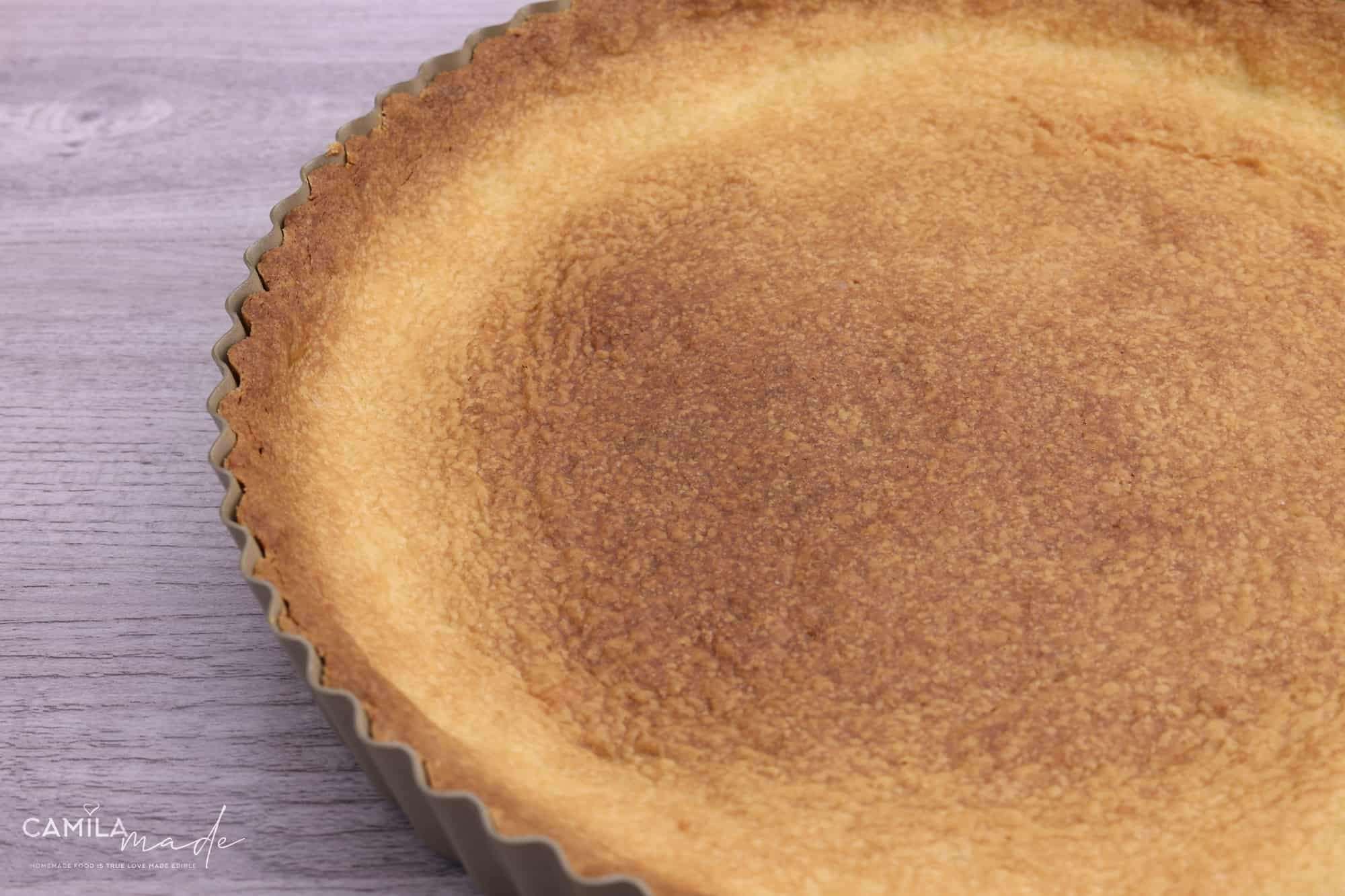
- Preheat the oven to 350 degrees F and place a rack in the center of the oven. Place the pate sucree on a baking sheet and bake for 25 to 30 minutes or until golden brown. Remove from the oven and let cool completely on a wire rack. Gently remove the tart ring and transfer the shell to a serving platter. Fill as desired.
Notes
- Pate Sucree dough can be made up to 2 days ahead and refrigerated or frozen up to 2 months for convenience.
- Once baked and cooled, tart shells should be stored airtight in the refrigerator for 2 to 3 days to maintain freshness.
- Filled tarts are best consumed within 1 to 2 days and should be refrigerated and properly covered.
- To reheat baked tart shells, warm in a 300°F (150°C) oven for 10 to 15 minutes, avoiding overheating that could alter texture.
- Baked shells can also be enjoyed at room temperature as the delicate texture of Pate Sucree is preserved.
User Reviews
Overall Rating
5
You'll Also Love