Fogatsa (Sweet Easter Bread from Corfu, Greece)
User Reviews
4.9
Fogatsa (Sweet Easter Bread from Corfu, Greece)
Description
Fogatsa combines cake flour, milk, sugar, yeast, butter, citrus zests (orange and lemon), vanilla, and finely chopped or candied bergamot for aromatic enrichment. After activating the yeast in lukewarm milk with some flour and sugar, the dough is mixed slowly with softened butter, liqueur, eggs, and the citrus elements. The resulting soft dough is gently kneaded until elastic yet not sticky. The dough's citrus and vanilla notes provide a bright, fragrant aroma characteristic of this festive bread.
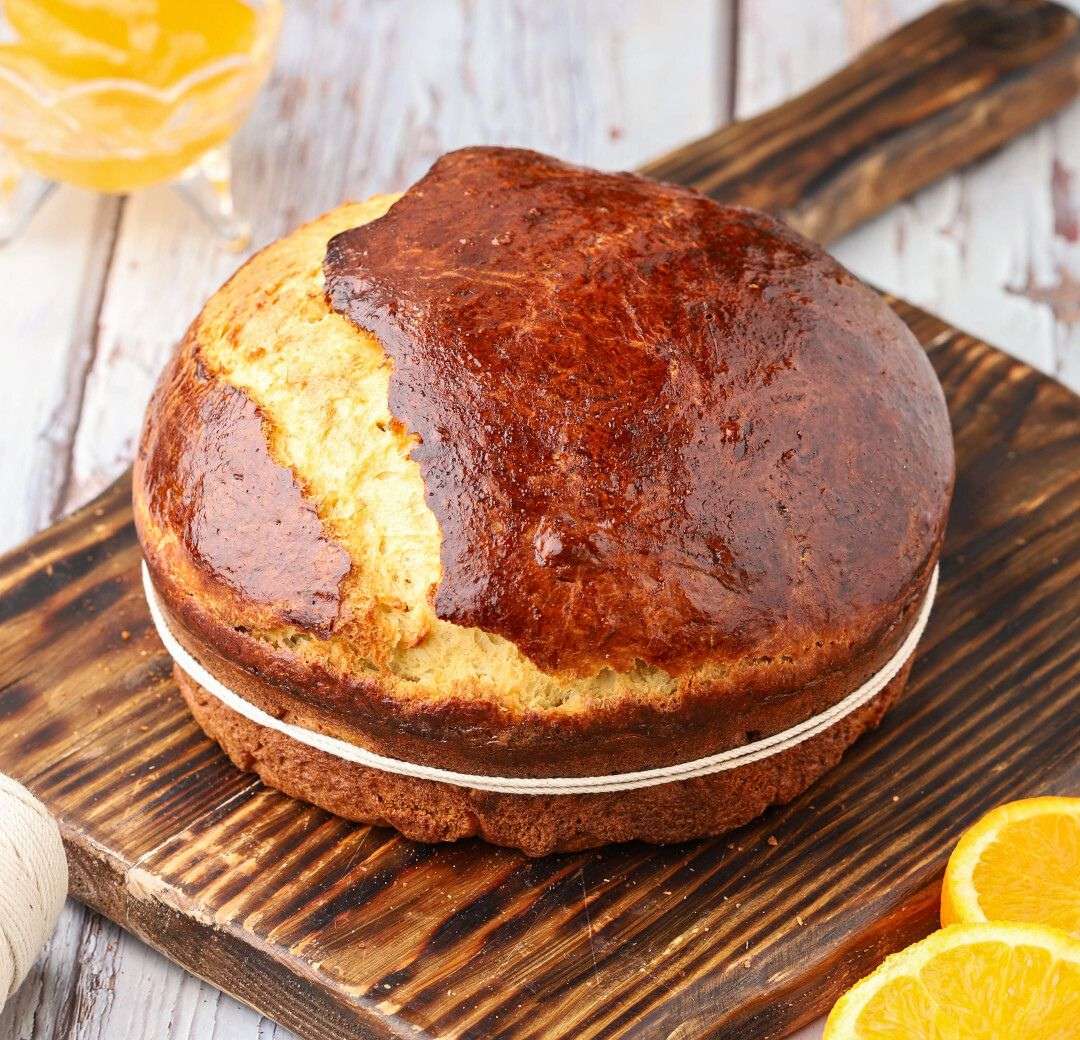
The bread is baked at a moderate oven temperature to develop a golden crust without over-browning. The tenderness and softness of the crumb make it suitable for enjoying fresh with tea or coffee, reflecting its role as a celebratory sweet bread. Its citrus and bergamot flavors distinguish it from more common sweet breads.
The recipe advises minimal kneading to keep the crumb light and elastic, avoiding extra flour during kneading which would toughen the dough. A warm environment helps leavening and texture development. This care in preparation yields a soft, aromatic bread that balances sweet and citrus notes delicately to mark Easter festivities.
Ingredients
- 500 g cake flour sifted
- 160 ml milk
- 90 g granulated sugar
- 7 g active dry yeast
- 90 g butter at room temperature
- 1 orange grated zest and juice
- 1/2 lemon grated zest
- 1 capsule vanillin (vanilla extract or vanilla sugar)
- 1 pinch salt
- 60 g bergamot finely chopped or candied fruit, sweet
- 50 ml kumquat liqueur or orange liqueur
- 2 egg lightly beaten
- 1 egg diluted with a little water, for egg wash, yolk
- 50 g flour
Instructions
- Preheat oven to 180° C/356° F fan assisted.
- Place a pot over medium heat. Add 60 ml/¼ cup of the milk and heat until lukewarm. Do not allow to get too hot.
- In a bowl, add the lukewarm milk, 40 g / ¼ cup of the sugar, yeast and 50 g / ⅖ cup of the flour. Whisk thoroughly. Cover with a towel and set it aside for 40-45 minutes, to activate.
- Place a pot over low heat. Add the butter, the rest of the sugar, orange juice, orange zest, lemon zest, the rest of the milk, vanilla and salt. Mix until the butter melts.
- Remove from the heat, transfer to a bowl, and add the liqueur and lightly beaten eggs.
- Add the flour in batches and mix continuously. Add the butter mixture and the bergamot and mix very slowly, until you create a soft dough.
- Gently knead with your palms, folding the dough inward and on itself, until you create a soft and elastic dough. It should not stick to your hands too much but it should be soft and easy to spread out.
- If the dough seems a bit too sticky and you can’t knead it properly, coat your hands with melted butter to make the kneading easier.
- Cover the bowl with a kitchen towel dampened with hot water. Set aside in a warm place for 1 hour to allow it to rise.
- When the dough has risen, knead it into the shape of a round loaf and place it in a 20 cm / 8-inch round baking pan. Brush with the egg wash and bake for 40-45 minutes, until golden.
- When ready, remove from oven and serve on a wooden chopping board for a more rustic look.
Notes
- Limit kneading to preserve the bread's soft texture; avoid adding flour during kneading to prevent toughness.
- Ensure the dough stays warm to properly activate and rise for optimal leavening.
User Reviews
Overall Rating
4.9
You'll Also Love