Gajar Ka Halwa | How to make Carrot Halwa
User Reviews
4.8
Gajar Ka Halwa | How to make Carrot Halwa
Description
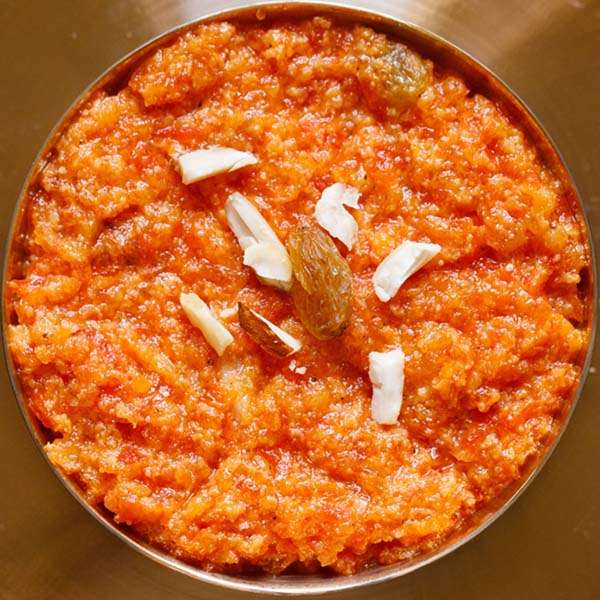
This traditional Indian carrot halwa starts by grating about 4 to 4.5 cups of fresh, tender carrots. They are cooked in full-fat milk over low to medium heat with frequent stirring to prevent burning, allowing the milk to reduce significantly as the carrots soften. Once the milk is mostly evaporated, ghee, sugar, and ground cardamom are incorporated to infuse richness and sweetness.
Towards the end of cooking, chopped cashews, almonds, golden raisins, and optional saffron strands are added. These ingredients provide a blend of textures — crunch from nuts, chewiness from raisins, and aroma from saffron. The final halwa should be moist but not liquid, with the milk fully absorbed.
Gajar Halwa can be served hot, warm, or cold, garnished with additional dry fruits. It is versatile for different occasions and can be stored refrigerated for up to 10 to 12 days. Stirring often during cooking is essential to avoid burning and ensure an even texture.
The recipe can be scaled up or down, keeping in mind increased cooking times with larger batches. Using full-fat or whole milk is recommended for best flavor and consistency.
Ingredients
- 8 to 9 carrot medium, juicy, tender - 650 grams or about 4 to 4.5 cups grated carrots
- 4 cups milk or full fat organic milk, whole
- 4 tablespoons ghee (clarified butter)
- 10 to 12 tablespoons sugar or raw sugar - 180 to 190 grams - add as required
- ½ to 1 teaspoon cardamom powder or 5 to 6 green cardamoms powdered finely in a mortar-pestle
- 10 to 12 cashews - chopped
- 10 to 12 almonds - sliced or chopped
- 2 tablespoons golden raisins
- 1 pinch saffron optional, strands
Instructions
Preparation
- First rinse, peel and then grate the carrots (8-9 medium sized tender juicy carrots), either with a hand held grater or in a food processor.
- You need approx 4 to 4.5 cups grated carrots.
Making carrot halwa
- In a kadai or deep thick bottomed pan combine milk and grated carrots.
- On a low to medium flame, bring the whole mixture to a boil and then simmer.
- While the mixture is simmering on a low flame, keep on stirring in between.
- The grated carrots will cook in the milk and the milk will start to reduce and evaporate.
- When the milk has 75% reduced, add the ghee, sugar and powdered cardamom to the mixture.
- Stir well and continue to simmer and cook on a low flame.
- Do keep on stirring the halwa in between.
- Towards the end, add the cashews, almonds, saffron and raisins. Simmer the halwa till all the milk is evaporated. Switch off the burner.
- Serve gajar halwa hot, warm or you can also serve it cold. garnish with some chopped dry fruits while serving.
Notes
- Use fresh, tender carrots for optimal taste and texture.
- Full-fat or whole milk improves the richness and consistency of the halwa.
- Frequent stirring during cooking prevents burning and ensures even texture.
- The recipe scales well but larger quantities require longer simmering.
- Store halwa covered in the refrigerator for 10 to 12 days.
- Add nuts and dried fruits according to preference for texture and flavor.
Nutrition Information
Show DetailsNutrition Facts
Serving: 6Serving
Amount Per Serving
Calories 328 kcal
% Daily Value*
| Calories | 328kcal | 16% |
| Carbohydrates | 42g | 14% |
| Protein | 7g | 14% |
| Fat | 16g | 25% |
| Saturated Fat | 9g | 45% |
| Polyunsaturated Fat | 1g | 6% |
| Monounsaturated Fat | 2g | 10% |
| Cholesterol | 38mg | 13% |
| Sodium | 128mg | 5% |
| Potassium | 560mg | 12% |
| Fiber | 3g | 12% |
| Sugar | 35g | 70% |
| Vitamin A | 13856IU | 277% |
| Vitamin B1 (Thiamine) | 1mg | |
| Vitamin B2 (Riboflavin) | 1mg | |
| Vitamin B3 (Niacin) | 1mg | |
| Vitamin B6 | 1mg | |
| Vitamin B12 | 1µg | 42% |
| Vitamin C | 5mg | 6% |
| Vitamin D | 2µg | 10% |
| Vitamin E | 1mg | |
| Vitamin K | 12µg | |
| Calcium | 224mg | 22% |
| Vitamin B9 (Folate) | 24µg | |
| Iron | 1mg | 6% |
| Magnesium | 43mg | 11% |
| Phosphorus | 197mg | |
| Zinc | 1mg |
* Percent Daily Values are based on a 2,000 calorie diet.
User Reviews
Overall Rating
4.8
You'll Also Love