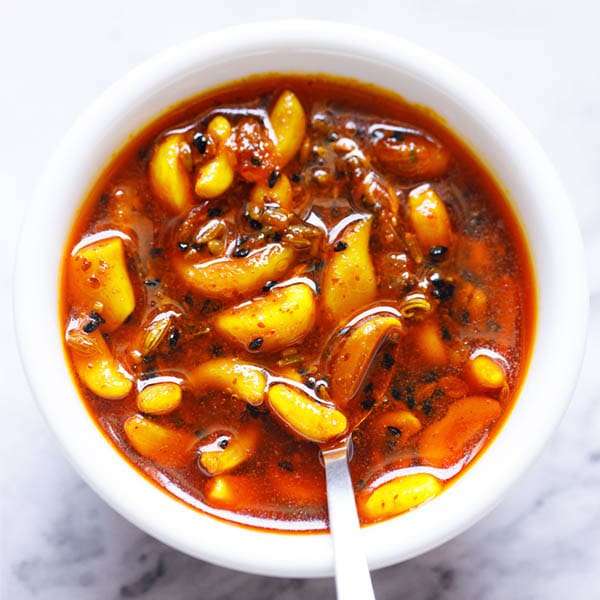
Garlic Pickle
User Reviews
5
-
Prep Time
40 mins
-
Cook Time
5 mins
-
Pickling Time
3 d
-
Total Time
3 d 45 mins
-
Servings
40 teaspoons
-
Calories
28 kcal
-
Course
Condiments
-
Cuisine
Indian
Garlic Pickle
Description
The Garlic Pickle features whole or halved garlic cloves soaked in hot water for easier peeling, then dried completely to avoid spoilage. The garlic is combined with freshly ground spices — mustard seeds, fenugreek, fennel, nigella seeds, turmeric, and chili powder — creating a complex spice blend. Rock salt and apple cider vinegar balance and preserve the mixture. Mustard oil provides a sharp, aromatic base and coats the pickle for flavor and shelf life.
This preparation results in a spicy, tangy, and aromatic condiment often enjoyed in small portions to complement Indian meals. The pungent flavor of raw garlic softens after curing, while the spices add warmth and depth. Asafoetida is an optional addition to prevent spoilage but should be used cautiously by those avoiding gluten.
The recipe notes emphasize using fresh, unblemished garlic cloves and quality spices, along with completely dry garlic before mixing. Substitutes for mustard oil include neutral oils if unavailable. Variations in vinegar and salt type are possible without affecting the pickle's characteristic texture and flavor.
Ingredients
- ¼ cup mustard oil
- 1 cup garlic 130 grams, peeled cloves
- 1 teaspoon mustard seeds - black or yellow
- 1 teaspoon fenugreek seeds
- 2 teaspoon fennel seeds
- 2 teaspoons nigella seeds (kalonji)
- ½ teaspoon turmeric powder (ground turmeric)
- ⅛ teaspoon asafoetida (hing) or about 2 to 3 pinches - optional
- 2 teaspoons kashmiri red chilli powder
- 2 teaspoons rock salt (food grade, edible) or pink salt or white salt - add as needed
- 2 tablespoons apple cider vinegar or white vinegar
- 3 tablespoons mustard oil at room temperature, added later to cover the pickle
Instructions
Prep Garlic
- Peel about 1 cup of garlic, approximately 3 to 4 heads worth.
- TIP: For easy peeling, separate garlic cloves from the heads. Measure in a cup. Add them to a bowl of hot water. Cover and soak for 30 minutes. Drain and peel garlic. The skins come off easily after soaking! Rinse thoroughly in water again. Drain all water. Spread on a plate. Let dry naturally or wipe dry with clean kitchen towel.
- Note that the garlic has to be completely dry before you begin with the recipe. Any moisture on the garlic will spoil the pickle.
- If the garlic cloves are large, chop them in half, otherwise you can keep them whole.
- Ensure that your use the garlic cloves which do not have any fungal spots on them and are clean, shiny to look at. Slice and discard of the parts which have any brown spots or marks.
- Throw away the garlic cloves where you can see a layer of fungi or where the cloves have become powdery.
Coarsely Powder Spices
- In a smaller mixer or spice grinder take the mustard seeds (black or yellow) and fenugreek seeds.
- Crush the seeds to a coarse or semi-fine mixture. Do not make a fine powder. Set aside.
Fry Garlic
- Once you are sure the garlic is well dried, heat mustard oil in a frying pan or skillet on medium heat.
- When oil is medium-hot, reduce the heat to lowest setting. Add the peeled and dried garlic cloves.
- Stir, mix and fry them in the oil for 3 to 4 minutes or until pale golden. Do not brown garlic, as the cloves become dense and chewy when pickled. They should only be partially cooked.
- Place pan on countertop. The oil will stop sizzling gradually.
Add Spices and Salt
- First add the coarsely ground mustard seeds and fenugreek seeds. Add fennel seeds and nigella seeds (kalonji).
- Then add the turmeric powder, asafoetida (hing), Kashmiri red chili powder and edible food grade rock salt or pink salt. TIP: If using red chili powder or cayenne start by adding 1 to 1.5 teaspoons as it can make for a spicy pickle. Instead of Kashmiri red chili powder, you can also use sweet paprika.
- For the salt, start with 1 teaspoon. Mix well and check taste. If needed, add ½ to 1 teaspoon more salt. TIP: If using regular white salt, you will need to add less - about 1 to 1.5 teaspoons total.
- Asafoetida is optional and you could skip adding. Check the notes section below for more info.
- Mix and combine very well.
- Add 2 tablespoons apple cider vinegar or white vinegar. Mix well. Check taste and, if needed, add more salt or red chili powder.
Pickle Garlic
- Transfer pickle to a clean, dry, sterilized glass or ceramic jar.
- Lastly, cover the top layer of pickle with 3 tablespoons mustard oil. The oil should be at room temperature.
- Tightly cover garlic pickles with lid and place in sunlight for 2 to 3 days. Lightly shake the jar everyday without opening the lid.
- I keep the jar on a window sill which gets plenty of sunlight. If you do not get sunlight, place it in a dry place in your kitchen, though the flavor will not be as intense as the sunlight steeped achaar.
Storage
- After the pickling process is over, place the jar in a dark, dry place. At room temperature, this garlic pickle stays good for about 2 weeks.
- If you have any pickle remaining after 2 weeks, refrigerate it. Or you could keep it in the refrigerator all the time. It stays good in the refrigerated for about a month.
- If the top oil layer is removed as you eat the pickles, add 1 to 2 tablespoons of mustard oil again to cover the top layer. This will prevent the cloves from coming into contact with air and spoiling.
Serving Suggestions
- Remove the pickle with a clean dry spoon every time. Do not add water logged spoon into the pickle.
- Serve about ½ to 1 teaspoon of the garlic pickle with any Indian main course meal for one. This pickle tastes good with any Indian lunch or dinner be it North, South, East or Western Indian.
- We like it with a simple Khichdi, Dal Fry served with basmati rice, Sambar and rice, or Pulao. I also like to have it with Paratha, Aloo Paratha and Gobi Paratha.
Notes
- Ensure garlic cloves are clean, shiny, and free from brown spots or fungal growth before using.
- Soak garlic in hot water for 30 minutes to ease peeling, then dry completely to prevent spoilage.
- Use fresh spices to maintain the pickle's robust flavor and aroma.
- Mustard oil is traditional, but neutral oils like sunflower or grape seed can substitute if needed.
- Asafoetida is optional and helps preserve the pickle, but check for gluten content if sensitive.
- Use food-grade rock salt, pink salt, or kosher salt as preferred for preservation and taste.
Nutrition Information
Show DetailsNutrition Facts
Serving: 40teaspoons
Amount Per Serving
Calories 28 kcal
% Daily Value*
| Calories | 28kcal | 1% |
| Carbohydrates | 1g | 0% |
| Protein | 1g | 2% |
| Fat | 2g | 3% |
| Saturated Fat | 1g | 5% |
| Sodium | 120mg | 5% |
| Potassium | 19mg | 0% |
| Fiber | 1g | 4% |
| Sugar | 1g | 2% |
| Vitamin A | 30IU | 1% |
| Vitamin B1 (Thiamine) | 1mg | |
| Vitamin B2 (Riboflavin) | 1mg | |
| Vitamin B3 (Niacin) | 1mg | |
| Vitamin B6 | 1mg | |
| Vitamin C | 1mg | 1% |
| Vitamin E | 1mg | |
| Vitamin K | 1µg | |
| Calcium | 8mg | 1% |
| Vitamin B9 (Folate) | 1µg | |
| Iron | 1mg | 6% |
| Magnesium | 2mg | 1% |
| Phosphorus | 7mg | |
| Zinc | 1mg |
* Percent Daily Values are based on a 2,000 calorie diet.
User Reviews
Overall Rating
5
You'll Also Love