Gond Ke Laddu | Nutritious Gond Laddu
User Reviews
5
Gond Ke Laddu | Nutritious Gond Laddu
Description
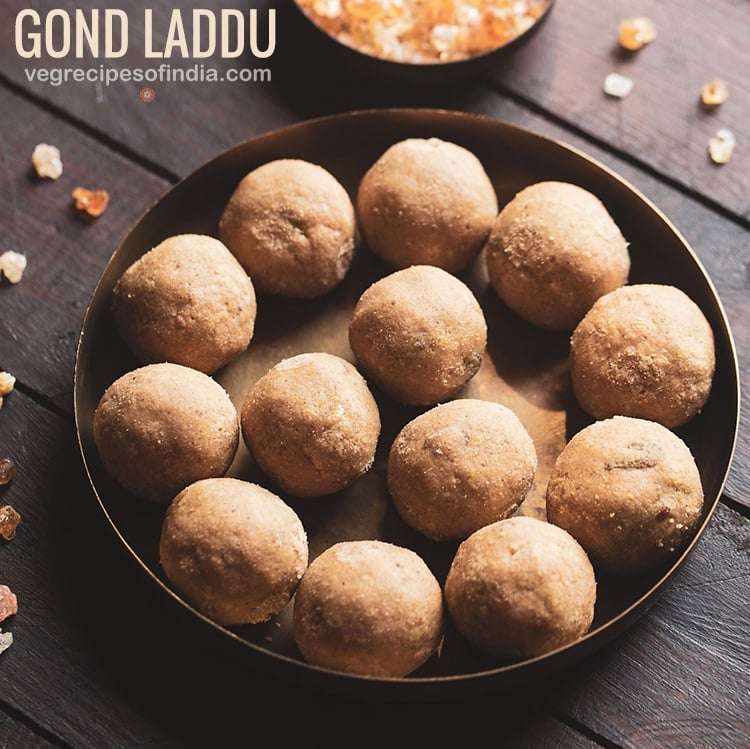
This traditional recipe uses whole wheat flour and gond (edible gum) fried separately in desi ghee to develop nutty, resinous flavors and a crispy texture. Almonds, cashews, pistachios, and raisins are fried in ghee until lightly golden, then combined with powdered sugar freshly ground from granulated sugar. The mixture is flavored optionally with green cardamom powder. Finally, the ingredients are mixed and shaped into firm laddu (round sweets).
The laddu have a rich, nutty, and sweet flavor with chewy raisins and crunchy nuts, bound with ghee for a moist, tender texture. The fried gond adds a distinctive slightly crisp chewiness that distinguishes them from regular wheat-based sweets.
These laddus are energy-dense and nutritious, often consumed as a special treat or during festivals. They can be prepared in varying quantities, shaped when the mixture cools, and stored at room temperature.
Adjusting the amount of ghee during shaping is important; too little causes crumbling, too much results in flattening. The recipe provides guidelines to add ghee accordingly. Powdered sugar is best prepared fresh for smooth texture and sweetness balance.
Ingredients
- 250 grams whole wheat flour or 2 heaped cups whole wheat flour
- 100 grams gond or ½ cup gond
- 200 grams sugar or 1 heaped cup sugar or 200 grams powdered sugar or 1 cup grated or chopped jaggery
- 2 tablespoons almonds
- 2 tablespoons cashews
- 2 tablespoons pistachio optional
- 2 tablespoons raisins
- 1 teaspoon green cardamom powder – optional
- ½ cup ghee + 4 tablespoons at room temperature or 175 grams, desi variety
Instructions
Making powdered sugar
- Take sugar in a high-speed grinder or blender.
- Grind to a fine powder. Remove in a plate and set aside.
Frying nuts
- Keep all the ingredients ready before you begin. Heat desi ghee in a heavy kadai. Please do not use a non-stick kadai. A heavy iron kadai or aluminium kadai works best for frying gond.
- Let the ghee melt. Keep heat to medium-low.
- Add almonds. stirring often fry almonds till their color changes and then remove with a slotted spoon. Keep aside.
- Now add cashews. stirring often fry cashews till they become light golden or golden. Remove with a slotted spoon and keep aside.
- Add pistachios. Fry for some seconds till their colour changes. remove and keep aside.
Frying gond
- Now in the same ghee, add one piece of gond.
- If the gond comes up gradually and puffs up, the oil is ready for the gond to be fried. If the gond settles down in the oil, then increase the flame and let oil become hot. If the gond comes up quickly, then oil is very hot. Reduce the flame to lower the oil temperature.
- Add gond in two batches. If you are an experienced cook, then add gond in a single batch.
- Stir non-stop and fry gond till all of them puff up.
- The gond pieces have to be fried evenly. So stir non-stop. Fry them well in ghee and do not burn them.
- Remove the puffed up gond in a slotted spoon. Keep the fried gond aside and let it cool.
Roasting wheat flour
- Reduce the heat to a low and then add 2 cups whole wheat flour in the same ghee.
- Mix flour very well with ghee. Begin to roast flour with the ghee.
- Meanwhile when atta is getting roasted, add fried nuts in a grinder jar or spice-grinder. Also add the fried gond in a dry grinder jar.
- Pulse and grind to a semi fine or coarse powder. You can keep the nuts whole if you prefer instead of powdering them.
- Do note that atta is getting roasted when you grind the fried gond. If you are not able to multitask then switch off heat after frying gond. Crush gond in grinder. Then switch on heat again and let ghee become slightly hot. Add atta and roast. You can also use a belan (rolling pin) and crush gond. Keep the powdered gond and nuts aside.
- Continue to keep on stirring and roasting the atta.
- Roast atta till its color changes and you get a nutty aroma.
- Then stir nonstop when you see the flour changing its color.
- Stir and roast till the atta becomes golden or brown. Overall it took me a total of 17 minutes for the atta to get roasted to perfection.Note that the timing will vary with the material, size and thickness of the kadai or pan. If you use steel kadai, then it will take less time.
Making gond ke laddu
- Switch off the heat. Keep the kadai down and raisins and cardamom powder.
- Next add the powdered sugar. add the crushed gond and nuts mixture.
- Begin to mix with a spoon. While mixing, break the sugar lumps if any in the ladoo mixture with a spatula or spoon. Mix very well.
- When the laddu mixture is still hot and the heat is tolerable to you, take a heaped size portion of it in a spoon or in your palms. Shape in a round ladoo.
- In case the heat is not tolerable, then do wait for some minutes. Avoid burning your hands. If the mixture does not hold shape, then add 1 to 2 tablespoons ghee. Note that the ghee should be in a semi-solid state at room temperature.
- Make medium sized ladoo from this whole mixture. Store them in an airtight steel container (steel dabba).
- They stay good for a couple of months. This recipe can be easily doubled or tripled. From this gond laddu recipe, you can make 17 to 18 laddu.
- Serve Gond ke Laddu just by itself or with some hot or warm milk.
Notes
- This recipe can be halved, doubled, or tripled to suit your needs.
- If the mixture crumbles and looks dry when shaping, add 1 to 2 tablespoons of room temperature ghee and mix well before forming laddus.
- If laddu flatten instead of holding shape, it indicates excess ghee; let the mixture cool completely before shaping to firm it up.
- The approximate nutrition data applies to one laddu.
Nutrition Information
Show DetailsNutrition Facts
Serving: 17Gond ke Laddu
Amount Per Serving
Calories 235 kcal
% Daily Value*
| Calories | 235kcal | 12% |
| Carbohydrates | 30g | 10% |
| Protein | 3g | 6% |
| Fat | 13g | 20% |
| Saturated Fat | 7g | 35% |
| Cholesterol | 26mg | 9% |
| Sodium | 1mg | 0% |
| Potassium | 100mg | 2% |
| Fiber | 2g | 8% |
| Sugar | 13g | 26% |
| Vitamin A | 5IU | 0% |
| Vitamin B1 (Thiamine) | 1mg | |
| Vitamin B2 (Riboflavin) | 1mg | |
| Vitamin B3 (Niacin) | 1mg | |
| Vitamin B6 | 1mg | |
| Vitamin C | 1mg | 1% |
| Vitamin E | 1mg | |
| Vitamin K | 1µg | |
| Calcium | 11mg | 1% |
| Vitamin B9 (Folate) | 8µg | |
| Iron | 1mg | 6% |
| Magnesium | 30mg | 8% |
| Phosphorus | 75mg | |
| Zinc | 1mg |
* Percent Daily Values are based on a 2,000 calorie diet.
User Reviews
Overall Rating
5
You'll Also Love