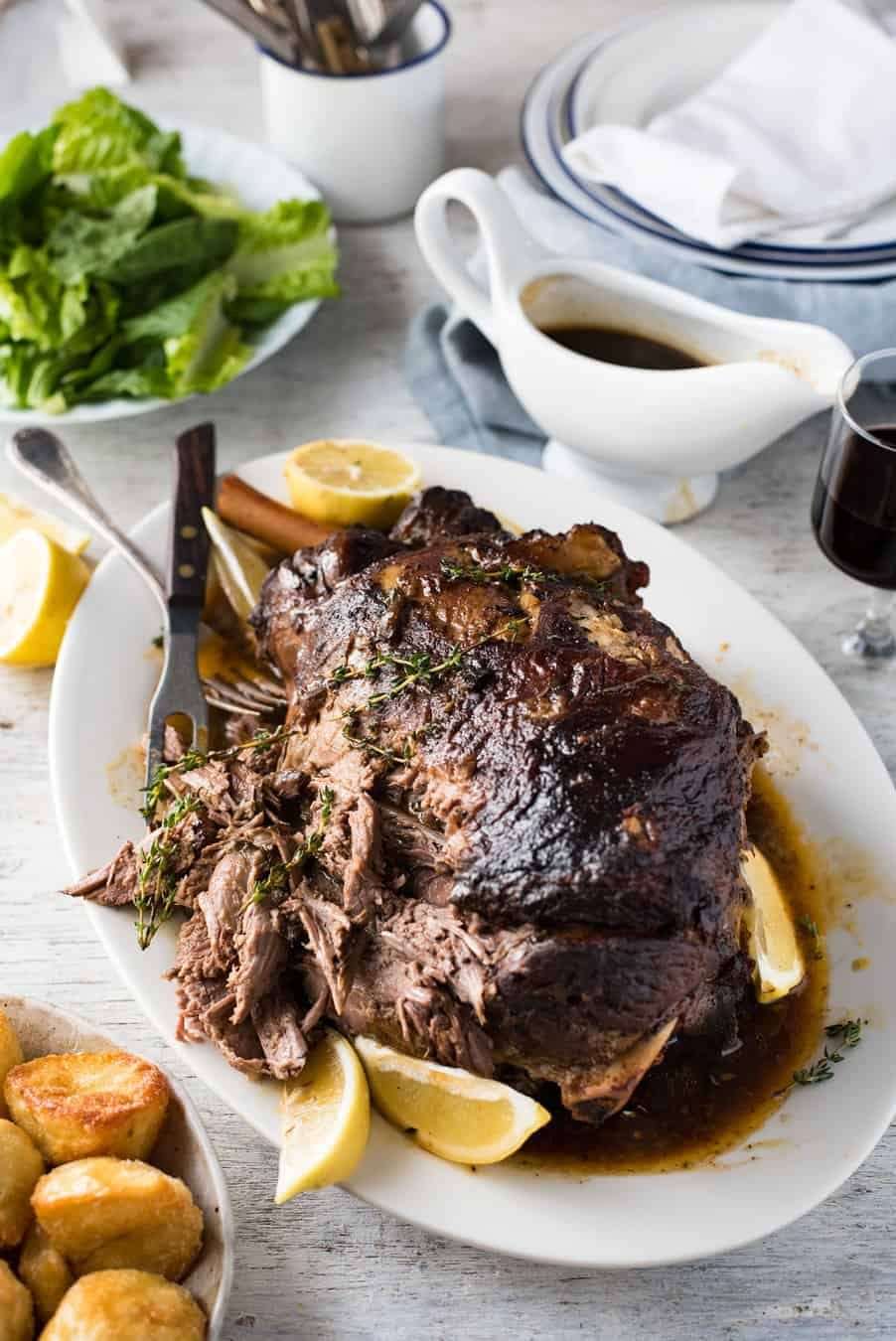
Greek Slow Roasted Leg of Lamb
User Reviews
4.9
Greek Slow Roasted Leg of Lamb
Description
This recipe begins by piercing the lamb with knife incisions that are stuffed with sliced garlic cloves. The leg is liberally seasoned with salt, pepper, paprika, and garlic powder, then rubbed with olive oil. The lamb is initially roasted at a high temperature to develop a browned crust. After turning the temperature down, the lamb is flipped and surrounded by quartered onions, fresh thyme, rosemary, oregano, bay leaves, lemon juice, white wine, and chicken broth in the roasting pan. Hot water is added to reach one-quarter to one-third of the lamb’s height to aid braising.
The roast is covered tightly with parchment paper and foil and slow-cooked at 350°F (160°C fan) for 3.5 hours until tender. Removing the cover near the end helps concentrate the juices and crisp the crust. This slow cooking method infuses the lamb with lemony, herby flavors and keeps the meat moist. The garlic embedded in the meat mellows and softens, adding sweet notes.
This leg of lamb makes a robust main course suitable for a special meal and can be served with the pan juices or alongside roasted vegetables or grains. It requires a large roasting pan and preparation to fit the meat properly for even cooking.
For best results, ensure the roasting pan lid or foil seal prevents drying out, and top up water if necessary during cooking. The recipe accounts for the common practice of folding the lamb bone to fit it flat in a pan.
Ingredients
- 12 cloves garlic peeled
- 7 lb / 3.5 kg lamb leg Note 1
- salt
- black pepper
- 3 tsp paprika powder
- 3 tsp garlic powder or sub with onion powder
- 2 tbsp olive oil
- 2 onion large, quartered (white, brown, yellow, red
- 10 thyme sprigs
- 3 rosemary sprigs
- 3 tsp oregano dried
- 3 bay leaves dried or 5 fresh
- 1/2 cup / 125 ml lemon juice from 2 - 3 lemons, plus more to taste
- 1 1/2 cups / 375 ml white wine or substitute with chicken broth/stock, low salt
- 2 cups / 500 ml chicken broth liquid chicken stock
Instructions
- Preheat oven to 240°C/465°F (220°C fan). (Note 2)
- Use a small knife to make around 25 incisions all over the lamb, with most on the top.
- Cut around 6 cloves into slivers and stuff them into the incisions.
- Sprinkle the lamb generously all over with salt, pepper, paprika and garlic powder. Drizzle with olive oil and rub all over the lamb.
- Place the lamb in a roasting pan and roast for 30 minutes or until it has a nice brown crust.
- Remove from the oven. Turn the oven down to 180°C/350°F (160°C fan).
- Turn the lamb upside down. Pour / place all the remaining ingredients in the pan around the lamb (including remaining garlic cloves). Fill the roasting pan with hot water so it comes up about 1/4 - 1/3 of the way up the height of the lamb.
- Cover with lid or with baking/parchment paper then 2 layers of foil. Bake for 3.5 hours. (Note 3) Top up water if it dries out (e.g. Might happen if your lid is loose)
- Remove the roast from the oven and remove the lid/foil. Turn the lamb over so it is the right side up.
- Cover again and roast for a further 2 1/2 hours, or until you can pull meat apart with forks.
- Remove cover and roast for a further 20 - 30 minutes (to brown). (Note 3)
- Remove from the oven and transfer lamb to serving platter. Cover loosely with foil and rest for 30 - 40 minutes.
- Strain liquid into a clear jug. The fat will rise to the top. Scoop/pour most of it off - I get 3/4 - 1 cup. There should be 2 - 3 cups of Sauce left. Adjust salt, pepper and lemon to taste.
- Serve lamb with the Sauce on the side and Truly Crunchy Roast Potatoes (heat oil while lamb is in the oven, then cook potatoes when the lamb is resting).
Notes
- Ask your butcher to shorten or fold the lamb leg bone so the roast fits flat in the pan.
- If your oven can't reach the initial high temperature, roast at the highest setting available to achieve a good crust.
- Slow roasting covered for 3.5 hours braises the lamb, resulting in tender, flavorful meat.
- Check and add water during roasting if the braising liquid reduces too much to prevent drying out.
- The recipe originates from adaptation of Kalofagas' Slow Roasted Leg of Lamb.
User Reviews
Overall Rating
4.9
You'll Also Love