How To Make Greek Yogurt
User Reviews
5
How To Make Greek Yogurt
Description
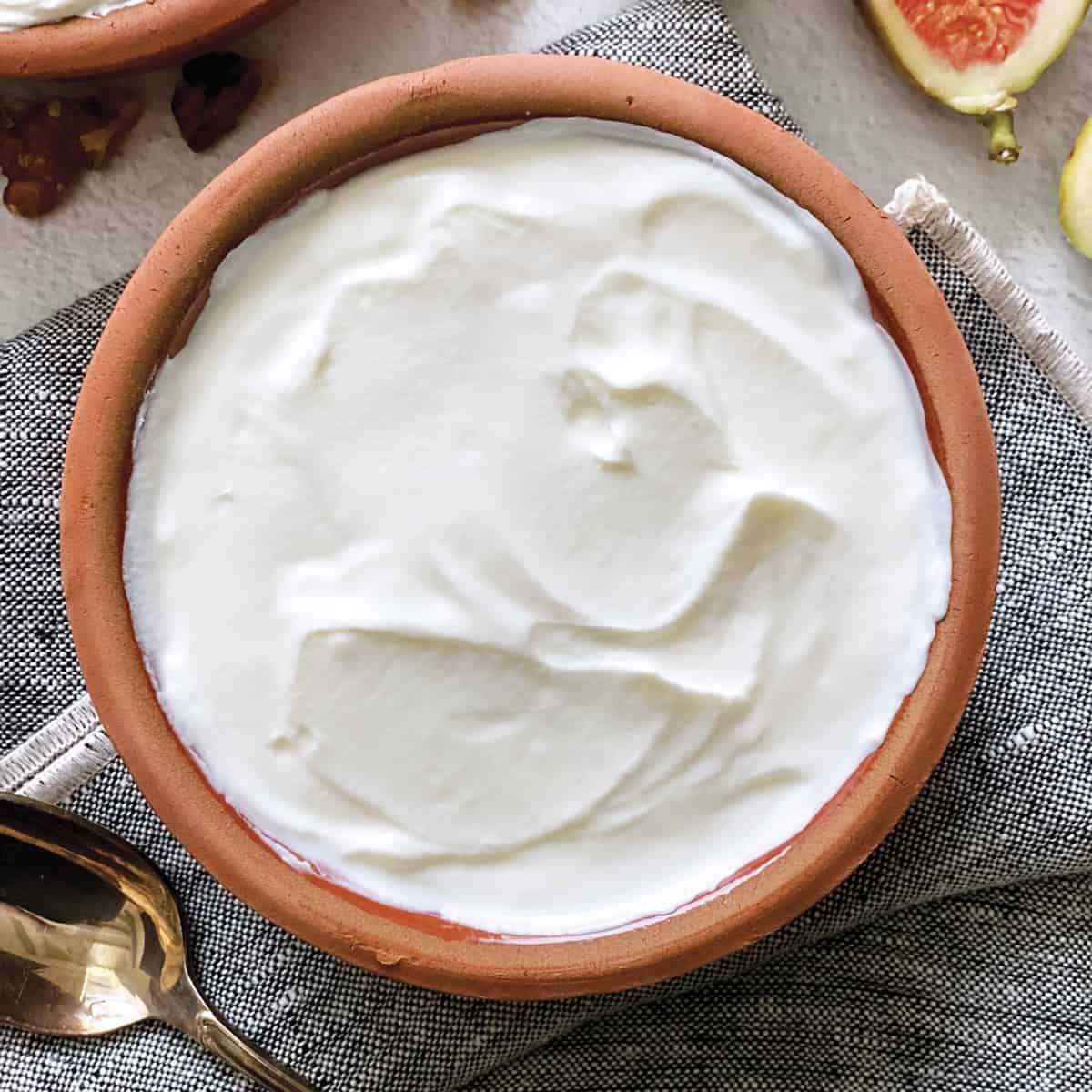
Whole milk is gently heated to about 185°F (85°C) to prepare it for fermentation. After cooling to around 113°F (45°C), a tablespoon of prepared Greek yogurt mixed with some warmed milk is whisked into the larger batch to introduce live cultures. The mixture then ferments in a warm environment such as a microwave with the light on or a low-temperature oven for several hours to develop acidity and thickness.
Once fermented, the yogurt can be strained using cheesecloth over a mesh sieve to obtain a thicker consistency characteristic of Greek yogurt by removing whey. The recipe yields creamy, tangy yogurt suitable for eating or cooking.
Using a fresh batch of this homemade yogurt as a starter culture helps continue the process for future yogurt-making. The recipe notes also advise selecting full-fat yogurt with live active cultures to ensure proper fermentation.
Ingredients
- 1000 ml whole milk about 4 cups, organic, grass-fed
- 1 tablespoon Greek yogurt full fat
Instructions
- Place milk in a pot with a thick bottom and place it on low to medium heat. Simmer milk for 18-20 minutes until milk temperature reaches 185° F / 85° C.Remove from the heat.
- Let the milk cool for 22-24 minutes until the milk temperature reaches 113°F / 45°C.
- Using a glass or bowl, add a full tablespoon of yogurt and half a cup of the warmed milk. Mix well with a whisk and add it to the pot with the rest of the milk. Mix well.
- Now the milk needs to ferment and thicken in a warm environment. Method A: Place milk in the microwave oven with the light on under it. Leave the pot in the microwave oven for 6-8 hours.Method B: Warm the oven to 113° F / 45° C and let milk rest in there. Check thickness after 3-4 hours.
- Line a mesh sieve with the cheesecloth. Place the mesh sieve over the tallest bowl or pot you own to allow the liquids to gather on the bottom without touching the strainer and cheesecloth.Pour the yogurt into the cloth. Tie the cloth loosely around yogurt and place it in the fridge for at least 3 hours.The yogurt is ready!
Notes
- Save a few tablespoons of your finished yogurt as a starter for your next batch.
- Use a good quality full-fat yogurt with live cultures to inoculate the milk.
- You may purchase freeze-dried starter cultures as an alternative to homemade yogurt starters.
Nutrition Information
Show DetailsNutrition Facts
Serving: 4Serving
Amount Per Serving
Calories 155 kcal
% Daily Value*
| Calories | 155kcal | 8% |
| Carbohydrates | 12g | 4% |
| Protein | 8g | 16% |
| Fat | 8g | 12% |
| Saturated Fat | 5g | 25% |
| Polyunsaturated Fat | 1g | 6% |
| Monounsaturated Fat | 2g | 10% |
| Cholesterol | 25mg | 8% |
| Sodium | 109mg | 5% |
| Potassium | 335mg | 7% |
| Sugar | 13g | 26% |
| Vitamin A | 405IU | 8% |
| Calcium | 287mg | 29% |
| Iron | 1mg | 6% |
* Percent Daily Values are based on a 2,000 calorie diet.
User Reviews
Overall Rating
5
You'll Also Love