Pastel de Nata or Portuguese Egg Tarts
User Reviews
5
Pastel de Nata or Portuguese Egg Tarts
Description
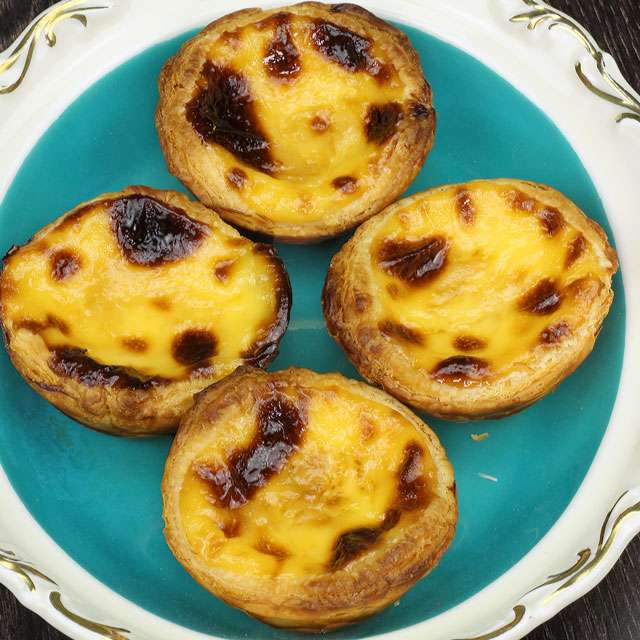
Pastel de Nata or Portuguese Egg Tarts use a puff pastry shell filled with a smooth egg custard consisting of heavy cream, egg yolks, sugar, milk, cornstarch, and vanilla extract. The custard mixture is cooked gently over a double boiler until it thickens to a crepe batter-like consistency, then cooled before filling the pastry shells. Baking begins at a high temperature to puff the pastry and finish with a golden, blistered custard surface.
The combination of flaky, buttery pastry and the creamy, slightly sweet custard creates a textural contrast and richness typical of these traditional tarts. The caramelized spots formed during baking add a slight bitterness that balances the sweetness. Cooling before baking ensures the custard holds its structure while baking.
This dessert is traditionally served warm or at room temperature and can be enjoyed on its own or with coffee. The recipe includes a tip for substituting a metal or glass bowl steaming method if a double boiler is unavailable, ensuring accessibility to this classic Portuguese dessert.
Ingredients
- 70 grams heavy cream (at least 30% fat)
- 70 grams sugar
- 3 egg yolk
- 1 ½ tablespoons cornstarch
- 200 ml milk fresh full-fat
- 1 teaspoon vanilla extract
- 1 heet puff pastry
- butter - for greasing the forms
Instructions
- Form the dough into pastry shells as I mentioned in my post above. Freeze them for some minutes while preparing the custard.
- In a bowl, whisk together the cream, sugar, egg yolks, cornstarch and milk until well combined and all lumps age gone.
- Using a double boiler, cook the egg mixture over medium-low heat while stirring continuously until it reaches the correct thickness, like that of a crepe batter. Remove from heat and place pot in a cold water bath to stop it from cooking further.
- Add the vanilla extract and stir until well mixed. Let it cool down to room temperature.
- Preheat oven to 250°C.
- Take the puff pastry shells from the fridge and fill them with the egg mixture leaving about 5-7mm of the top uncovered.
- Baked them at 250°C for 5 minutes or until the pastry starts to puff. Lower the temperature to 200°C and bake for another 15-20 minutes or until the top of the custard gets the burnt spots and the bubbling starts to subside. Rotate your tray several times throughout baking time to get the crust brown evenly.
- Remove from oven and place on the cooling rack. Portuguese Egg tarts are best eaten while still warm.
Notes
- If you lack a double boiler, a heat-resistant bowl over simmering water works to gently thicken the custard without curdling.
Nutrition Information
Show DetailsNutrition Facts
Serving: 10Serving
Amount Per Serving
Calories 222 kcal
% Daily Value*
| Calories | 222kcal | 11% |
| Carbohydrates | 20g | 7% |
| Protein | 3g | 6% |
| Fat | 14g | 22% |
| Saturated Fat | 4g | 20% |
| Cholesterol | 70mg | 23% |
| Sodium | 75mg | 3% |
| Potassium | 53mg | 1% |
| Fiber | 0g | 0% |
| Sugar | 8g | 16% |
| Vitamin A | 215IU | 4% |
| Calcium | 37mg | 4% |
| Iron | 0.8mg | 4% |
* Percent Daily Values are based on a 2,000 calorie diet.
User Reviews
Overall Rating
5
You'll Also Love