Pâte Sucrée Recipe (Sweet Pastry Dough)
User Reviews
5
Pâte Sucrée Recipe (Sweet Pastry Dough)
Description
The recipe begins by creaming room-temperature butter, powdered sugar, vanilla, and salt until pale and creamy. Egg and sifted all-purpose flour are added gradually to form a cohesive dough, which is handled minimally to avoid overworking. After forming into a ball, the dough is wrapped and chilled for at least an hour to relax gluten and solidify the butter.
Once chilled, the dough is rolled out on a lightly floured surface to about 3-4mm thick and fitted into tart pans or rings slightly larger than the baking vessel. This dough produces a rich, crumbly texture that holds shape well during baking and provides a buttery base for various fillings.
Pâte Sucrée is a versatile foundation for tarts, suitable for pastries featuring fruit, creams, or custards. It can be prepared in advance, stored chilled or frozen, and baked blind or filled as recipes require. The use of vanilla powder or extract adds aroma and a delicate sweetness differentiating it from savory doughs.
Substituting a fine cake flour or French T45 flour can yield a more delicate crust. An optional cocoa powder addition allows for chocolate-flavored variants. Proper chilling and gentle handling maintain the dough's texture and prevent toughness.
Ingredients
- 125 g (4.5oz/½ cup) butter at room temperature (not melted), cut into cubes. Chilled if mixing by hand, unsalted
- 75 g (2.75oz/½ cup) powdered sugar icing/confectioner's sugar
- ½ teaspoon salt fleur de sel, sea salt
- 1 medium egg organic (room temperature)
- ¼ teaspoon vanilla powder or extract
- 240 g (8.5oz /1.9 cups) all-purpose flour or plain (all-purpose) flour, sifted, T45 French, or cake flour
Instructions
- Using a stand mixer with a paddle beater (otherwise mix by hand with cold butter), mix the butter, sugar, vanilla and salt until pale and creamy.
- On low speed, gradually add the egg and flour and mix until combined. Half way during mixing, push the dough down the sides of the bowl and paddle with a spatula. Continue mixing just until the dough comes away from the sides of the bowl and stop.
- Form the dough into a ball. Wrap in cling film and chill in the fridge for an hour. Normally you will only need ⅔ of this dough quantity - either freeze the rest or keep it chilled for up to 3 days.
- Remove from the fridge and after 5 minutes (as easier to work with), roll out the pastry to 3-4mm (⅛ inch) thickness on a lightly floured surface. When completely rolled out about 3cm (about an inch) bigger than the tart tin/ring, transfer the dough by rolling around the pastry roller and cover the tart tin. If using a tart ring, place the ring on baking paper or a silicone mat.
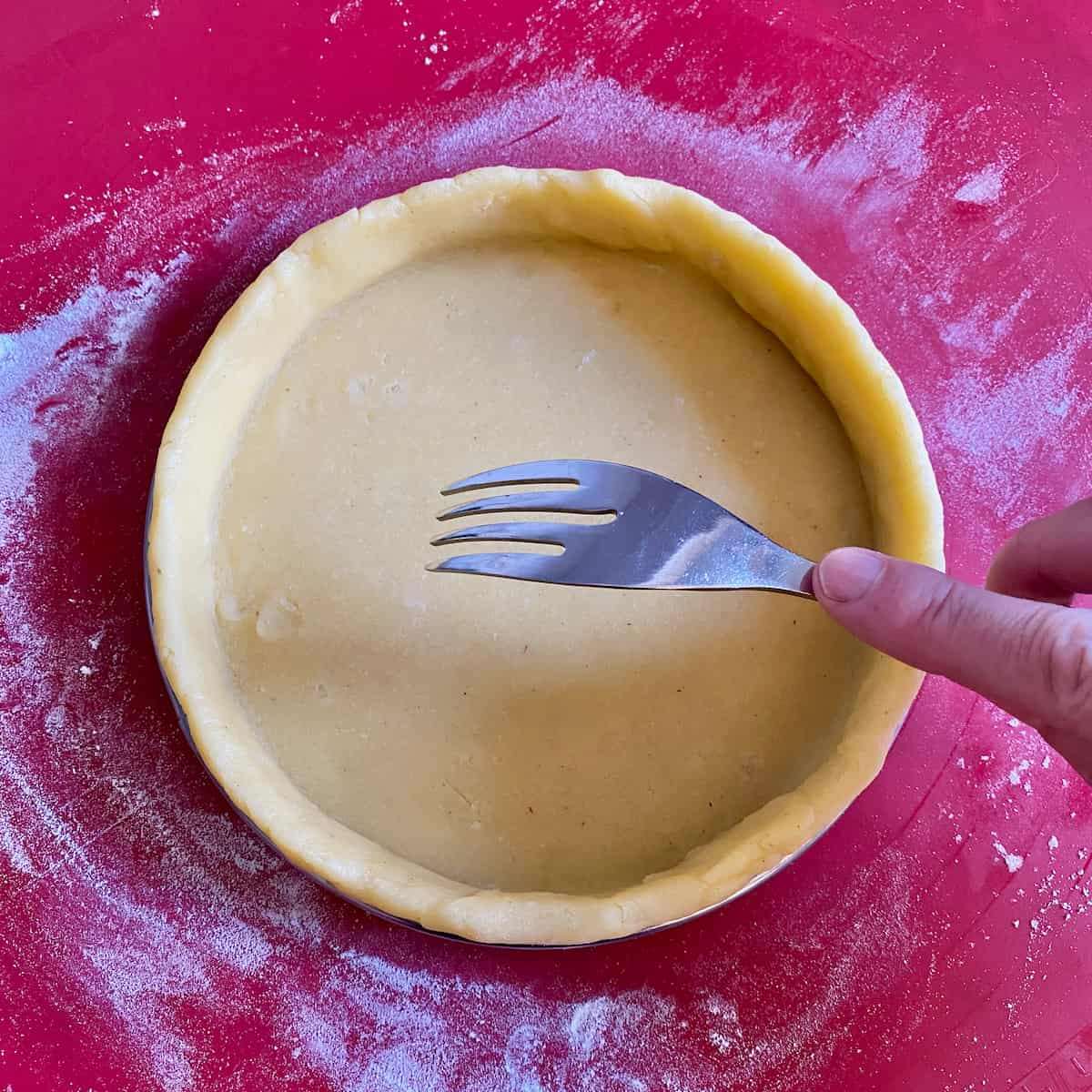
- Press well into the tart tin or ring, leaving no air holes around the edges. Trim off excess pastry by rolling over the edges with the rolling pin. Prick evenly with a fork.Leave to set in the fridge uncovered in the tin/ring for at least 20 minutes. Preheat the oven to 180°C/160°C fan/Gas 4/360°F.
- Blind bake (top with baking parchment and baking beans - see NOTES) for 15 minutes. Remove baking paper and beans.
- Bake uncovered for a further 5-10 minutes or until the pastry is golden. This step may be optional, depending on the recipe filling's instructions (such as this almond rum tart, which stays in the tin and is baked further with the filling in it).
- Leave to cool for about 5 minutes then remove from the tart tin/ring. Set aside on a wire rack to cool completely before filling.
Notes
- This dough can be prepared one to two days ahead and kept wrapped and chilled or frozen before rolling.
- Freeze raw dough or pre-baked tart shells for later use; thaw thoroughly before baking or filling.
- Using a fine flour like French T45 or cake flour produces a more tender tart shell.
- Adding cocoa powder to the flour mix creates a chocolate pastry variation.
- Refer to detailed tart recipes in the book 'Teatime in Paris' for more guidance and uses of this dough.
User Reviews
Overall Rating
5
You'll Also Love