Polish Cheesecake (Sernik)
User Reviews
5
Polish Cheesecake (Sernik)
Description
The crust is prepared by mixing flour, cocoa powder, powdered sugar, baking powder, and salt, then incorporating cold butter, egg yolk, sour cream, and vanilla. The dough is mixed until combined, then divided into two portions kept cold. The larger portion is pressed into a greased and parchment-lined springform pan to form the base. The smaller portion can be reserved or baked separately as topping.
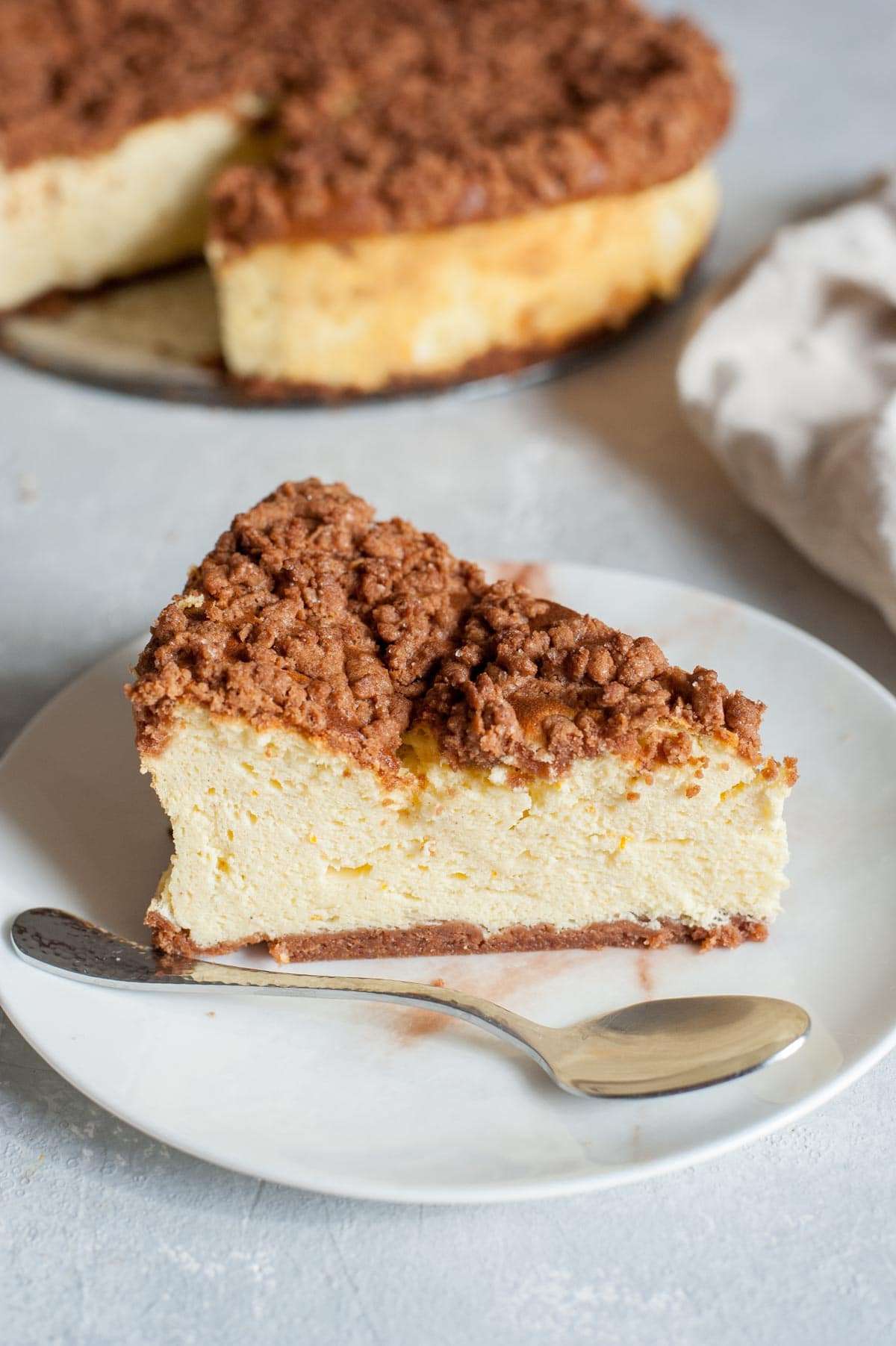
The cheesecake filling consists of twaróg cheese, eggs, granulated sugar, cornstarch, orange zest, vanilla extract, and soft butter. The combination creates a smooth, tangy, and sweet filling with a refined texture. After baking at 350°F, the cake sets with a lightly crispy crust and soft interior that firms and densifies over several days.
Serving this cheesecake plain allows the delicate flavors of the twaróg and citrus to stand out. The texture is light on the first day and becomes firmer yet still moist and enjoyable with time. Storing at room temperature for a few days or in the refrigerator is acceptable, with warming to room temperature before serving recommended.
Adjustment notes include substituting instant vanilla pudding powder with cornstarch and vanilla extract, and using various pan sizes to change crust proportion. Proper flour measurement through spooning and leveling ensures consistent results.
Ingredients
for the crust:
- 2 cups flour spooned and leveled, 280g
- 3 tablespoons cocoa powder I used Dutch-processed, 15g
- 1 cup powdered sugar 120g
- 1 teaspoon baking powder
- salt big pinch
- 1 ½ butter cold; 175g; sticks
- 1 egg yolk
- 2 tablespoons sour cream
- 1 teaspoon vanilla extract
for the cheesecake:
- 2.2 lbs twaróg cheese aka farmer's cheese; 1 kg
- 6 egg large
- 1 ¼ cups granulated sugar
- 3 tablespoon corn starch 28g
- 1 tablespoon orange zest grated
- 1 tablespoon vanilla extract
- 2 sticks - 2 tablespoons butter soft; 200g/7 ounces
Instructions
Make the crust:
- Stir the flour, cocoa powder, sugar, baking powder, and salt together.
- Add the egg yolk, sour cream, vanilla extract, and cold butter (cut into small cubes).
- Rub the ingredients between your fingers or mix with a stand mixer fitted with a paddle attachment until the dough comes together. It will look crumbly at first but it will soon form a smooth dough.
- Divide the dough into two parts. One part should be slightly bigger than the other part (about 3 Tbsp), flatten each part into a flat disc, wrap in plastic foil, and put in a fridge for 45 minutes.
Bake the crust:
- Preheat the oven to 350°F (175°C), Gas Mark 4, no fan.
- Grease a 10-inch (26cm) springform pan with butter (grease the sides generously) and line the bottom of the pan with parchment paper.
- Transfer the smaller part of the crust to the freezer. Take the larger part of the crust and tear it into pieces (or cut with a knife if it's too firm). Flatten the pieces and press them into the pan to cover its bottom.
- Prick the crust with a fork several times.
- Bake the crust for 20 minutes.
- While the crust is baking make the cheesecake batter.
Make the cheesecake:
- Process the cheese in a food processor until smooth (it doesn't have to be completely smooth, a couple of small lumps are fine). Alternatively, you can put the cheese two times through a meat grinder (use a plate with small holes).
- Separate the eggs into egg yolks and egg whites. Make sure there is no egg yolk in the egg whites or you won't be able to beat them properly.
- Beat the egg yolks with soft butter, 1/2 of the sugar, and orange zest until combined. Use an electric mixer or a stand mixer fitted with a whisk attachment.
- Add the cheese and vanilla extract, beat until combined.
- In a separate, very large and clean bowl, beat the egg whites (with a clean whisk attachment) until soft peaks form. Slowly add the remaining sugar and beat the egg whites until stiff. Add the corn starch and beat until combined.
- Add about 1/4 of the beaten egg whites to the cheese batter, fold in with a spatula until combined.
- Add the cheese batter to the remaining egg whites. Fold in gently with a spatula until combined and there are no white strikes of egg whites.
Bake the cheesecake:
- Pour the cheese batter onto the warm, baked crust. The batter will reach almost to the rim of the pan but don't worry, it won't overflow.
- Take the second part of the crust out of the freezer and grate it on the large holes of a box grater. Sprinkle the crust onto the cheesecake batter.
- Bake the cheesecake for 1 hour to 1 hour and 10 minutes. Turn off the oven and open the oven door slightly. Leave the cheesecake in the oven for 10 minutes then take it out and place on a cooling rack. It will be slightly jiggly in the middle but set. The cheesecake will rise and crack in the middle and then it will fall - it's just the nature of this cheesecake.
- Leave the cheesecake on the cooling rack to cool completely (in the springform pan), at least 3 hours (do not try to cut warm cheesecake) but preferably overnight (it has a better texture and flavor).
- Enjoy!
Notes
- Instant vanilla pudding powder can be substituted with cornstarch and 1 teaspoon vanilla extract.
- A 10-inch (26cm) springform pan is ideal, but a 9x13-inch pan can be used to increase crust-to-cheese ratio by making 50% more crust.
- This cheesecake is best served plain without fruit toppings to appreciate its delicate flavors.
- Store at room temperature up to 2-3 days, or refrigerate for up to 4-5 days, bringing to room temperature before serving; flavor and texture improve after resting.
- Measure flour by fluffing, spooning into the cup, and leveling with a knife for accuracy.
- Estimated serving size is one-twelfth of the cake.
Nutrition Information
Show DetailsNutrition Facts
Serving: 12servings
Amount Per Serving
Calories 477 kcal
% Daily Value*
| Calories | 477kcal | 24% |
* Percent Daily Values are based on a 2,000 calorie diet.
User Reviews
Overall Rating
5
You'll Also Love