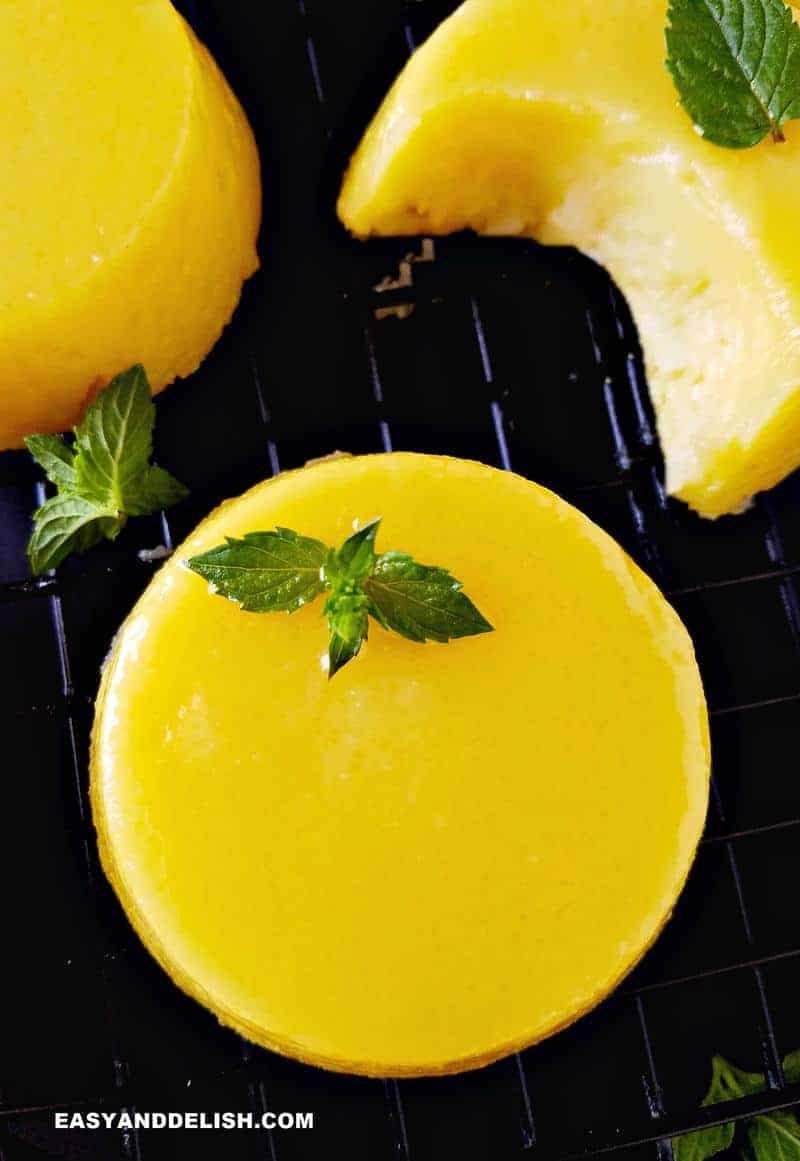
Quindim (Brazilian Coconut Egg Custard)
User Reviews
5
Quindim (Brazilian Coconut Egg Custard)
Description
The recipe uses egg yolks mixed with coconut milk, shredded coconut, sugar, and optional orange liqueur or vanilla extract, which is then baked in a bain-marie to achieve gentle, even cooking. Before baking, the molds are greased and coated in sugar to facilitate unmolding and add subtle caramelization. The custard is baked until set but still tender, confirmed by a clean toothpick test.
The texture is smooth and creamy with a firm exterior and a glossy surface, characteristic of quindim. The cooking method in a water bath helps prevent curdling or drying out. Once cooled slightly, the custards are inverted onto a serving plate to reveal their vibrant yellow tops and caramelized edges.
Quindim can be served as a sweet treat or dessert, often enjoyed at gatherings or celebrations. Its natural gluten-free composition lends to wider dietary suitability. The coconut flavor is central and enhanced by the richness of egg yolks and sugar.
Practical tips include passing egg yolks through a sieve to improve texture and reduce egginess, and the option to prepare a keto version substituting sugar with monk fruit sweetener. The dessert keeps for several days refrigerated but is not recommended for freezing as it affects custard texture.
Ingredients
- unsalted butter for the mold or tin
- cooking spray
- sugar
- 12 egg at room temperature, large yolks
- 2 oz coconut or 50 grams (for KETO, use unsweetened coconut flakes; otherwise, use the sweetened type, shredded
- 6.75 fl. oz coconut milk or 200 ml (About ¾ cup plus 2 Tbsp)
- 1 cup sugar FOR KETO, use monkey fruit (about 1 ½ cups)
- 1 teaspoon orange liqueur OPTIONAL, or vanilla extract
Instructions
- Preheat oven to 350 °F (180 °F). Grease with butter (or butter-flavor cooking spray) a 12 standard muffin tin or a 6-inch (15 cm) ring mold pan, and sprinkled with sugar (both bottom and sides). Reserve.
- Pass the yolks through a sieve to remove their skin. Then, in a large bowl, whisk together the egg yolks, both coconut milk and flakes, sugar, and also the liqueur/extract if desired until mixture is homogeneous. Pour into the prepared pan, about ¾ full.
- Bake for 25-30 minutes (muffin tin) or 50-60 minutes (medium ring mold pan for quindão) in a bain-marie, or until top is set and a toothpick inserted into the center comes out clean. For the bain-marie, place the pan in a larger pan with boiling water. Make sure water comes halfway up the side of the quindim pan.
- Remove from the oven and let the pan cool down a bit on a rack, about 5 minutes. Place a baking sheet (for quindins) or a platter (for quindão) over the tin or the ring pan and invert the warm custard onto it. It is crucial not to unmold the custard hot, because it will break, or cold, because it will not leave the pan easily. If needed, run a small knife gently around the edges to help unmold the custard. The coconut "crust" will be on the bottom of the dessert once inverted onto a plate.
- Let cool down completely and chill in the fridge. Serve chilled by itself or garnished with fresh mint leaves or a dash of grated coconut!
Notes
- For a keto version, replace sugar with monk fruit sweetener; each quindim then has about 122 calories and 2 grams net carbs.
- Pass egg yolks through a sieve before mixing to improve texture and reduce egg flavor.
- Use a bain-marie (water bath) with boiling water filled halfway up the mold for even, gentle cooking.
- Prepare quindim up to 3–4 days ahead; store in an airtight container in the refrigerator. Avoid freezing to preserve custard texture.
- As a substitute for coconut milk, use warm water and softened unsalted butter to create a glossier surface but slightly less coconut flavor.
Nutrition Information
Show DetailsNutrition Facts
Serving: 12quindins
Amount Per Serving
Calories 186 kcal
% Daily Value*
| Calories | 186kcal | 9% |
| Carbohydrates | 19g | 6% |
| Protein | 4g | 8% |
| Fat | 11g | 17% |
| Saturated Fat | 8g | 40% |
| Cholesterol | 195mg | 65% |
| Sodium | 13mg | 1% |
| Potassium | 82mg | 2% |
| Fiber | 1g | 4% |
| Sugar | 17g | 34% |
| Vitamin A | 260IU | 5% |
| Calcium | 27mg | 3% |
| Iron | 1mg | 6% |
* Percent Daily Values are based on a 2,000 calorie diet.
User Reviews
Overall Rating
5
You'll Also Love