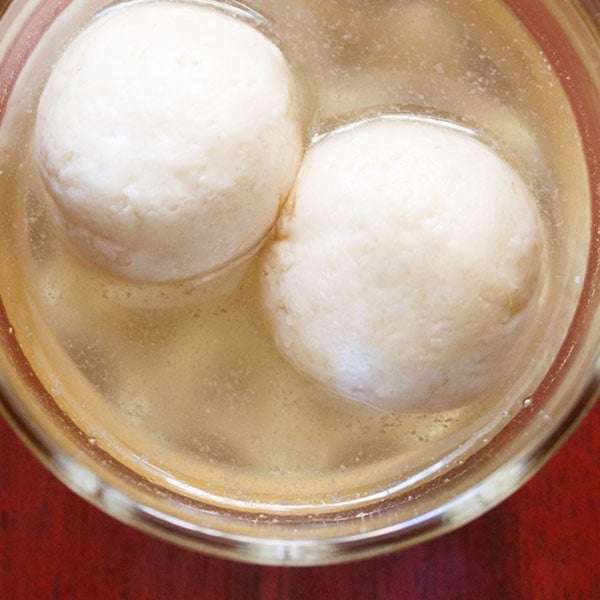
Rasgulla Recipe (Soft & Spongy)
User Reviews
4.8
Rasgulla Recipe (Soft & Spongy)
Description
This recipe for Soft & Spongy Rasgulla begins by boiling whole milk and curdling it with lemon juice or other acidic agents like vinegar or yogurt to separate the curds and whey. The curds are strained through cheesecloth or muslin and gently pressed to remove excess whey, producing chenna. The texture of the chenna is key – it should be smooth and lump-free to form soft balls.
The chenna is kneaded with a little milk and binding agent like semolina, all-purpose flour, or cornstarch to hold shape without hardening. The balls are then boiled in a sugar syrup made from equal parts sugar and water, often infused with rose water, kewra, or cardamom for fragrance. Cooking the balls in syrup until they double in size ensures a spongy, juicy texture.
This classic sweet is enjoyed chilled and works well for festive occasions or as a refreshing dessert. Using fresh, whole milk and proper acid ensures the right texture of chenna, while flavorings add aroma without overpowering the mild sweetness. The rising and soaking steps are critical to achieve the traditional light and spongy consistency.
Use cornstarch for a gluten-free binding alternative instead of semolina or all-purpose flour.Organic cow milk without excessive fat works well; if using buffalo milk, remove thick malai layer for proper curdling.Full-fat whole milk (homogenized or pasteurized) is essential; low-fat or toned milk will not produce desired results.Ensure milk freshness and within shelf-life for best quality chenna.The recipe's nutrition info refers to one serving of Rasgulla.
Ingredients
- 1 litre milk whole
- 2 to 3 tablespoons lemon juice or add as required
- 2 cups sugar or raw sugar
- 1 litre water
- 1 tablespoon milk - optional
- 1 teaspoon sooji (rava or cream of wheat) or all purpose flour or cornstarch
- 1 to 2 tablespoon rose water or kewra water or ½ teaspoon cardamom powder
Instructions
Making chenna
- Take whole milk in a pan and keep it to boil on a low to medium heat.
- So when the milk is heating up, line a strainer or bowl with a cheese cloth or muslin.
- Keep on stirring the milk at intervals so that the froth is not formed on top and the base does not get browned or the milk solids get stuck to the bottom.
- When the milk comes to a boil, then reduce the heat to its lowest. Add 1 to 3 tablespoons lemon juice. First add 1 tablespoon lemon juice and stir. If the milk has not curdled completely, then add 1 tablespoon more. Keep the lemon juice handy with you.
- Depending on the quality of milk, you may need to add 1 to 3 tablespoons of lemon juice. Stir after adding the lemon juice. Sometimes I have added 1 tablespoon lemon juice and the milk has curdled and sometimes I needed to add 3 tablespoons too. Vinegar also can be added instead of lemon juice.
- Another option is curd/yogurt. Add 4 to 5 tablespoons of yogurt or more if required. With yogurt you don't need to rinse the chenna in water later.
- As soon as the milk curdles, switch off the heat. The milk should curdle completely with the green watery whey. If the milk does not curdle, then add ½ to 1 tablespoon of lemon juice more.
- Now pour the curdled milk in the cheese cloth/muslin lined strainer or bowl.
- Gather the muslin from the sides and rinse the chenna or coagulated milk very well in running water. This brings down the temperature of chenna as well as removes the lemony flavor and tangy taste from the chenna.
- Now squeeze the muslin with your hands very well, so that excess water is drained from the chenna. Remember there should not be excess water or moisture in the chenna as then the rasgulla will break when cooking.
- Place a heavy weight on the chenna for 7 to 8 minutes. You can also hang the chenna for about 30 minutes.
Making chenna balls
- After 7 to 8 minutes, remove the cheesecloth from the chenna. Note that the chenna should not have too much moisture nor be too dry.
- Add 1 teaspoon sooji or rava or semolina. You can also add all purpose flour (maida). Adding either of them helps to bind the mixture.
- First mix the sooji with chenna and then begin to knead.
- With the heels of your palms mash the chenna and knead. Keep on collecting the chenna from the sides and continue to mash and knead.
- This kneading process is very important and also decides the texture of chenna. When you feel your palms becoming a bit greasy, its time to stop. Just a bit of greasiness is required.
- Avoid kneading to an extent where the whole chenna becomes greasy. I kneaded for about 10 minutes as I have very light hands. So depending on the quality of chenna and the pressure you apply while kneading, you can take more or less time. Note that the chenna should just begin to get greasy.
- Knead to a smooth ball of chenna.
- Now pinch small portions from the chenna and roll them between your palms to a smooth round ball.
- Prepare all small balls this way. Cover all the chenna balls with a moist muslin or kitchen towel and keep aside.
Making sugar syrup
- In a large pan, take 2 cups sugar and 4 cups water.
- You have to use a large pot or pan so that there is enough space for the rasgulla to cook and increase in size. You can also use a stovetop pressure cooker. I used a pot measuring 8.5 inches in diameter and 4.5 in height - a 3.4 litre stainless steel pot.
- Keep this pan on stovetop and heat the sugar solution. Stir so that the sugar dissolves. I kneaded the chenna and cooked the sugar syrup simultaneously. You can also do this way.
- Add 1 tablespoon milk and stir. Adding milk helps in removing impurities. If there are no impurities then you don't need to add milk and directly proceed to step 6.
- Once the sugar solution becomes hot, the impurities begin to float on the top.You can either remove it with a spoon. Or strain the impurities in a cheese cloth/muslin lined strainer.
- Now from the purified sugar solution, reserve ½ cup in a cup or mug. This ½ cup of sugar solution we will be adding to the cooking rasgulla.
- Reserve another 1 cup of the sugar solution in a serving bowl.
Making rasgulla
- The rest of the 2.5 cups of sugar solution you add it back to the same large pot and bring it to a boil on a medium high heat.
- Slid the rasgulla gently into the sugar solution.
- Once all the rasgulla have been added to the sugar solution, shake the pot. Don't stir the rasgulla with a spoon. Just gently shake the pot.
- Cover immediately with a lid and let them cook. Keep the heat to a medium or medium high.
- After 4 minutes, open the lid and add ¼ cup of the reserved sugar solution. Shake the pan. Adding this reserved sugar solution ensures that the temperature and consistency of the sugar solution is maintained and the sugar does not cook to its thread consistencies.
- Cover again and continue to cook.
- After 4 minutes, again add ¼ cup of the reserved sugar solution. Cover and again cook for 2 minutes. I cooked for 10 minutes. The timing will vary depending on the thickness & quality of pan, the depth of the pan and heat intensity.
To check the doneness
- There are two ways. First place the rasgulla in a bowl or cup of water. If the rasgulla sinks to the bottom its cooked.
- Second method is to press a small portion of the rasgulla with your finger. If the pressed portion bounces back to its original shape, its cooked
- Once they are cooked, switch off the heat and keep the pan down on the countertop.
Soaking in sugar syrup
- Now take each rasgulla with a spoon and place it in the bowl containing the 1 cup of sugar solution. Cover and keep aside.
- Let the sugar solution in which the rasgulla were cooked, become warm. Then add this to the serving bowl containing the rasgulla.
- Once the whole mixture has cooled down, add 1 to 2 tablelsoons rose water.
- If you don't have rose water you can also kewra water (pandanus extract) or ½ tsp cardamom powder. Stir gently and allow them to be soaked in the sugar syrup for 30 minutes.
Serving & Storage Suggestions
- You can serve the rasgulla now or refrigerate them and serve later cold or chilled.
- When serving place the required amount of rasgulla in each serving bowl. Pour a few tablespoons of the sugar syrup in each serving bowl. If you prefer garnish rasgulla with some slivered almonds or pistachios.
- Keep them covered with the sugar syrup in an air-tight container. They keeps well for about a week in the refrigerator. Do not store them at room temperature.
Notes
- Cornstarch can replace semolina or all-purpose flour for gluten-free Rasgulla.
- Buffalo milk produces thick malai; remove it before curdling for better chenna.
- Use full-fat whole milk; skimmed or toned milk do not work well.
- Milk must be fresh and within shelf period for optimal cheese formation.
- Nutrition values are for one serving of Rasgulla.
Nutrition Information
Show DetailsNutrition Facts
Serving: 18Rasgulla
Amount Per Serving
Calories 91 kcal
% Daily Value*
| Calories | 91kcal | 5% |
| Carbohydrates | 23g | 8% |
| Protein | 1g | 2% |
| Fat | 1g | 2% |
| Saturated Fat | 1g | 5% |
| Polyunsaturated Fat | 1g | 6% |
| Monounsaturated Fat | 1g | 5% |
| Cholesterol | 1mg | 0% |
| Sodium | 1mg | 0% |
| Potassium | 10mg | 0% |
| Fiber | 1g | 4% |
| Sugar | 22g | 44% |
| Vitamin A | 2IU | 0% |
| Vitamin B1 (Thiamine) | 1mg | |
| Vitamin B2 (Riboflavin) | 1mg | |
| Vitamin B3 (Niacin) | 1mg | |
| Vitamin B6 | 1mg | |
| Vitamin B12 | 1µg | 42% |
| Vitamin C | 1mg | 1% |
| Vitamin D | 1µg | 5% |
| Vitamin E | 1mg | |
| Vitamin K | 1µg | |
| Calcium | 6mg | 1% |
| Vitamin B9 (Folate) | 1µg | |
| Iron | 1mg | 6% |
| Magnesium | 1mg | 0% |
| Phosphorus | 2mg | |
| Zinc | 1mg |
* Percent Daily Values are based on a 2,000 calorie diet.
User Reviews
Overall Rating
4.8
You'll Also Love