Sapin Sapin
User Reviews
3.8
Sapin Sapin
Description
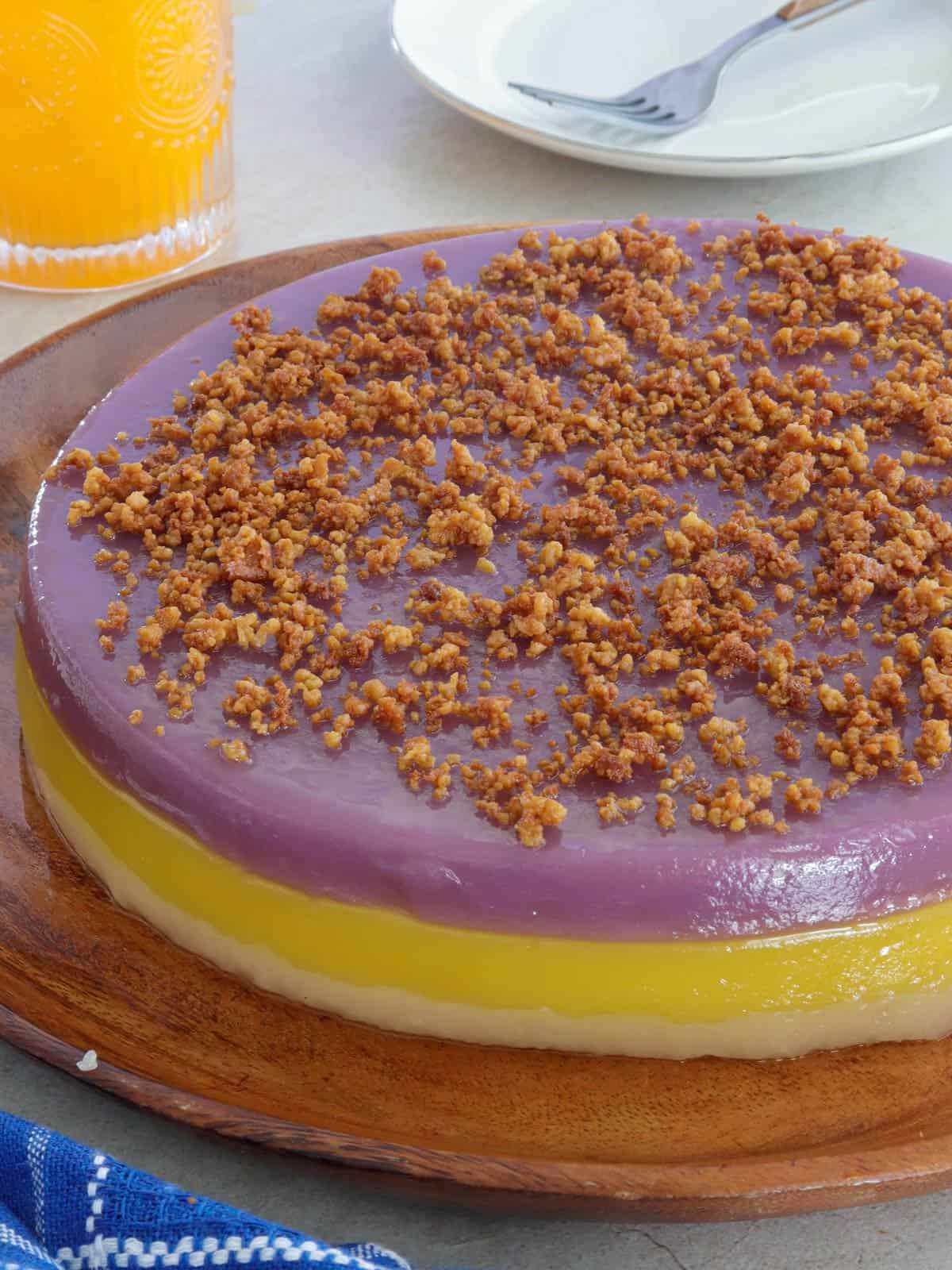
Sapin Sapin uses a mixture of glutinous rice flour, coconut milk, condensed milk, and sugar to create a thick, smooth batter. After straining, the batter is divided and colored with ube and langka flavor extracts, leaving one portion plain white. Layers of these brightly colored batters are poured into a greased 8-inch round pan and steamed successively until set, creating a distinct layered effect.
The dessert is finished with latik, golden coconut milk curds achieved by cooking coconut cream until solids form and brown. Latik adds a contrasting texture and a nutty, caramelized coconut flavor topping the soft, chewy rice cake layers.
Sapin Sapin is typically served at room temperature and is enjoyed for its layered appearance and balanced sweetness with natural flavor extracts. It can be used as a celebratory dessert or sweet snack.
The recipe notes offer tips such as liberally greasing the pan or lining it with banana leaves or parchment paper for easy removal. Adding mashed cooked ube or chopped jackfruit to the layers can enhance texture and flavor. Allowing the cake to cool completely before covering prevents moisture buildup on top.
Ingredients
For the Latik
- 1 cup coconut cream aka kakang gata
- 3 ½ cups glutinous rice flour
- 2 cans coconut milk
- 1 can condensed milk 14 ounces
- 1 cup sugar
- 3 drops ube flavor extract
- 3 drops langka flavor extract
Equipment
Instructions
- In a pan over medium heat, add coconut cream and bring to a boil. Cook, stirring occasionally until liquid starts to thicken.
- Lower heat and continue to cook. As oil starts to separate and solids begin to form, regularly stir and scrape sides and bottom of the pan to prevent from burning. Continue to cook and stir until curds turn golden brown.
- Drain latik from the oil and store in separate containers until ready to use.
- Generously brush inner sides and bottom of an 8-inch round baking pan with the oil.
- In a large bowl, combine glutinous rice flour, coconut milk, condensed milk, and sugar. Stir together until sugar is dissolved and mixture is smooth and well blended.
- Strain the batter using a fine-mesh sieve and divide evenly into three bowls.
- In one bowl, add ube extract and stir until color is well dispersed. In another bowl, add Langka extract and stir until color is well dispersed. The remaining portion will be white and plain.
- Pour ube-flavored batter into the prepared baking pan. Steam for about 10 minutes or until set and toothpick inserted comes out clean.
- Carefully pour langka-flavored batter over purple layer. Steam for about 10 minutes or until set and toothpick inserted comes out clean.
- Gently pour plain batter over yellow layer. Steam for about 10 minutes or until set and toothpick inserted comes out clean.
- Remove cake pan from steamer and allow to cool completely.
- Run a knife around the sides of the pan to loosen the rice cake. Place a wide, flat serving platter over cake pan and gently invert. Tap the pan a few times to release the sapin-sapin onto the platter (purple layer will now be the top layer).
- Liberally brush top and sides of sapin sapin with coconut oil. Sprinkle latik on top and cut the cake into serving portions.
Notes
- Grease the pan thoroughly or line with banana leaves or parchment to facilitate removal.
- For added texture, mix mashed cooked ube into the purple layer and chopped jackfruit into the yellow layer.
- Allow the cake to cool fully before covering to avoid water puddles forming on top.
- The batter volume fits well in an 8x2 round or 8x8 square pan with an 8-cup capacity.
Nutrition Information
Show DetailsNutrition Facts
Serving: 12Servings
Amount Per Serving
Calories 557 kcal
% Daily Value*
| Calories | 557kcal | 28% |
| Carbohydrates | 80g | 27% |
| Protein | 8g | 16% |
| Fat | 24g | 37% |
| Saturated Fat | 20g | 100% |
| Cholesterol | 11mg | 4% |
| Sodium | 51mg | 2% |
| Potassium | 368mg | 8% |
| Fiber | 2g | 8% |
| Sugar | 35g | 70% |
| Vitamin A | 90IU | 2% |
| Vitamin C | 2.1mg | 2% |
| Calcium | 113mg | 11% |
| Iron | 2.8mg | 16% |
* Percent Daily Values are based on a 2,000 calorie diet.
User Reviews
Overall Rating
3.8
You'll Also Love