The best pierogi dough recipe + how to make perfect pierogi
User Reviews
5
The best pierogi dough recipe + how to make perfect pierogi
Description
The best pierogi dough recipe combines 4 cups of all-purpose flour, salt, butter, and hot water to produce a pliable, soft dough that can be rolled out smoothly without tearing. The warmth of the water and melted butter gently activate the flour, creating a tender but elastic dough suited for pierogi wrappers. Kneading for about five minutes ensures elasticity and smoothness, while slight variations in moisture can be corrected by adding water or flour as needed. The dough’s structure strikes a balance between strength for holding filling and softness for tender dumplings.
Cooking times vary depending on dough thickness and personal preference, allowing for either chewier or more tender pierogi. Leftover dough can be repurposed into pasta strips or sweet fruit-filled treats, and pierogi can be stored or frozen with precautions to prevent sticking. Rolling out can be done by hand or with a pasta machine, with attention to flour dusting and resting the dough to maintain elasticity. This recipe yields about 100 small pierogi when filled generously if following size guidelines.
The process involves mixing hot buttered water into the flour and salt, then kneading until the dough is smooth and elastic but not sticky, making it easy to handle and shape while ensuring a tender, delicate final wrapper around various fillings. These qualities make the dough adaptable for many traditional and creative pierogi preparations.
Ingredients
- 4 cups flour 500g / 17.5-oz, spoon and leveled, all-purpose flour
- 1 cup water 280g / 280ml / 10-oz (to weight on a scale, 2.5 Tbsp
- 3 tablespoons butter 1.4 oz/40g, or vegetable oil
- 1 teaspoon salt
Instructions
→ Make the dough:
- Add the flour and salt into a large bowl, mix together.
- In a small saucepan, warm the water with butter until they are very hot, but not boiling (temperature should be around 80-85 °C / 176-185 °F, that is when the water starts to move and steam).
- Pour hot water with butter into the bowl with flour, mix with a wooden spoon until roughly combined.
- Knead the dough using your hands or with a stand mixer fitted with a hook attachment, for about 5 minutes. A food processor can also be used (fitted with the dough blade). The dough should be smooth, soft, and elastic, it shouldn’t stick to your hands. When you follow the recipe (especially if you weigh the ingredients, instead of using measuring cups), the dough should be perfect, but if for some reason it’s not, add some water if it’s too dry, or a little bit of flour if it’s too wet. If the dough already forms a ball, is relatively smooth, but still tough, it means that it’s not ready, it must be further kneaded until soft and elastic (after resting time it will be even softer).
- Wrap the kneaded dough in plastic foil (so it doesn’t dry out), leave to rest for about 30 minutes (it will be easy to roll out).
→ Rolling out, stuffing and shaping the pierogi:
- Divide the dough into 4 parts.
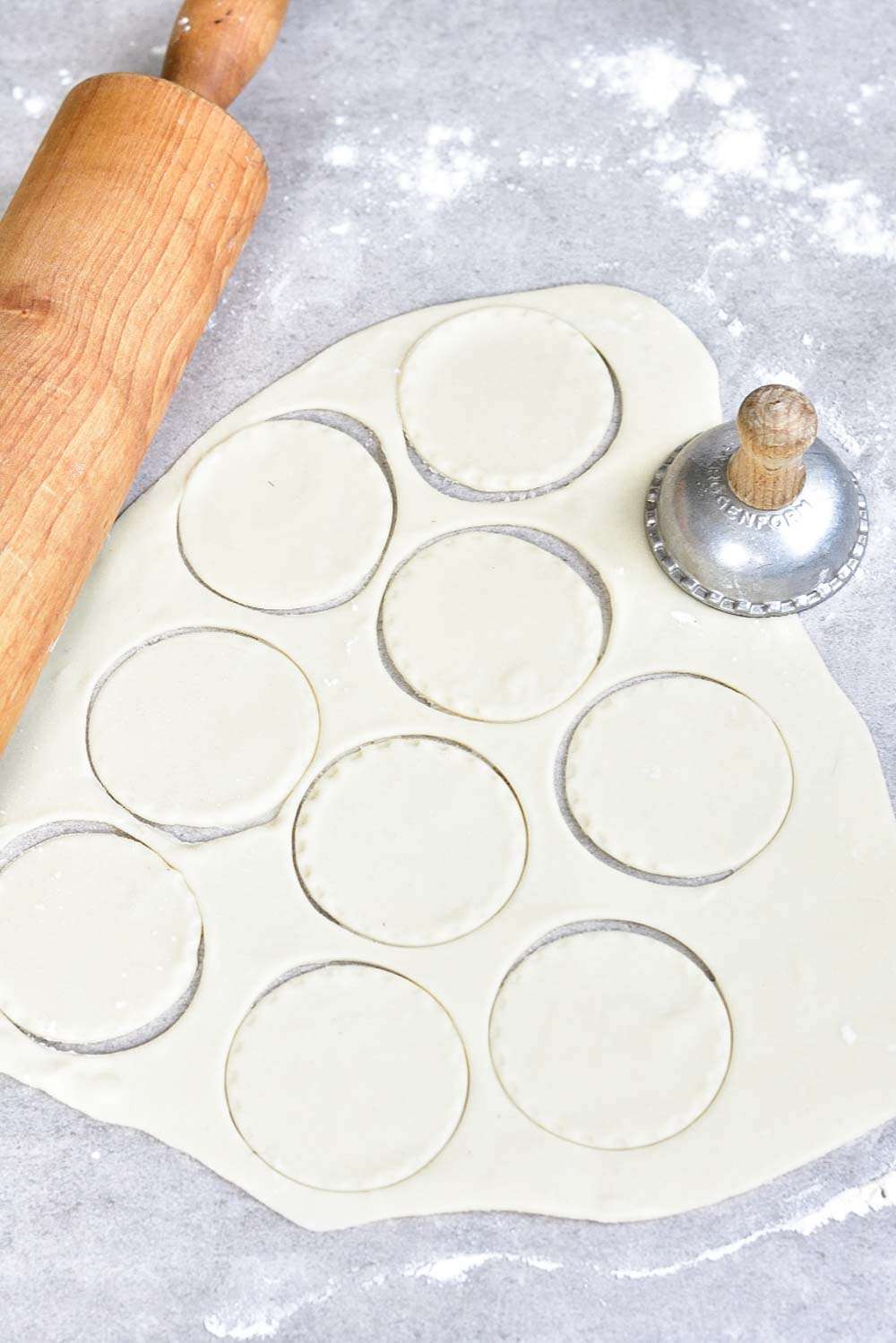
- Onto a lightly floured surface, roll out thinly the first piece of the dough, to a thickness of approx. 2 mm / 1/16 inch. If the dough is hard to roll out, set it aside for about 5-10 minutes to rest.
- Use a cup or a pierogi/pastry cutter to cut out rounds. Place one ball of filling / 1 teaspoon of filling on each round.
- Gather scraps, cover with plastic wrap and set aside.
- Fold the dough over the filling to create a half-moon shape. Press edges together, sealing and crimping with your fingers. Do not leave any gaps or pierogi may open during cooking.
- Place the pierogi apart on a towel lightly sprinkled with flour (this is important, they can stick to the board), cover loosely with a kitchen cloth so that they don‘t dry out.
- Repeat with the remaining dough.
-> Cook the pierogi:
- Bring a large pot of salted water to a boil.
- Cook the pierogi in batches (for a 21 cm /8-inch pot I cook about 10-12 dumplings at a time). When they float to the water surface cook them for 1-2 minutes, then remove from the water with a slotted spoon. The cooking time will depend on the thickness of the dough.
- Drain well and transfer onto a plate. Serve warm, pour over some melted butter.
- Enjoy!
Notes
- Cook pierogi until dough is cooked through; thickness affects cooking time and texture preference.
- Adjust dough thickness to your liking; balance between too thin and too thick affects final texture.
- Leftover dough can be cut into strips for pasta or filled with sweet fruit and sugar for a dessert variation.
- To store cooked pierogi, brush with melted butter or oil to prevent sticking and refrigerate for up to 2 days; reheat by pan-frying for crisp edges.
- For making in batches, refrigerate dough and filling separately, warming dough slightly before reuse improves elasticity.
- Freeze cooked pierogi spread on a flour-dusted tray before transferring to sealed containers; cook from frozen by boiling until they float.
- Freeze uncooked pierogi individually on a floured surface to prevent sticking; cook frozen portions separately to avoid bursting.
- Rolling dough using a pasta machine set to a medium-thin setting works well when dough is floured and slightly rested to prevent tearing.
- Measuring flour by weight improves consistency; 4 cups weighs about 500 grams.
- Estimated yield is about 100 small pierogi, but actual number depends on size and filling amount.
Nutrition Information
Show DetailsNutrition Facts
Serving: 100pierogi
Amount Per Serving
Calories 2107 kcal
% Daily Value*
| Calories | 2107kcal | 105% |
* Percent Daily Values are based on a 2,000 calorie diet.
User Reviews
Overall Rating
5
You'll Also Love