Tottenham Cake
User Reviews
5
Tottenham Cake
Description
The Tottenham Cake balances a light and airy crumb created by beating room-temperature eggs with sugar and vanilla until pale and fluffy. Oil and milk make the cake moist, while flour and baking powder provide structure. Lemon zest adds a subtle citrus note for brightness if desired. The batter is baked at a moderate temperature until springy and cooked through.
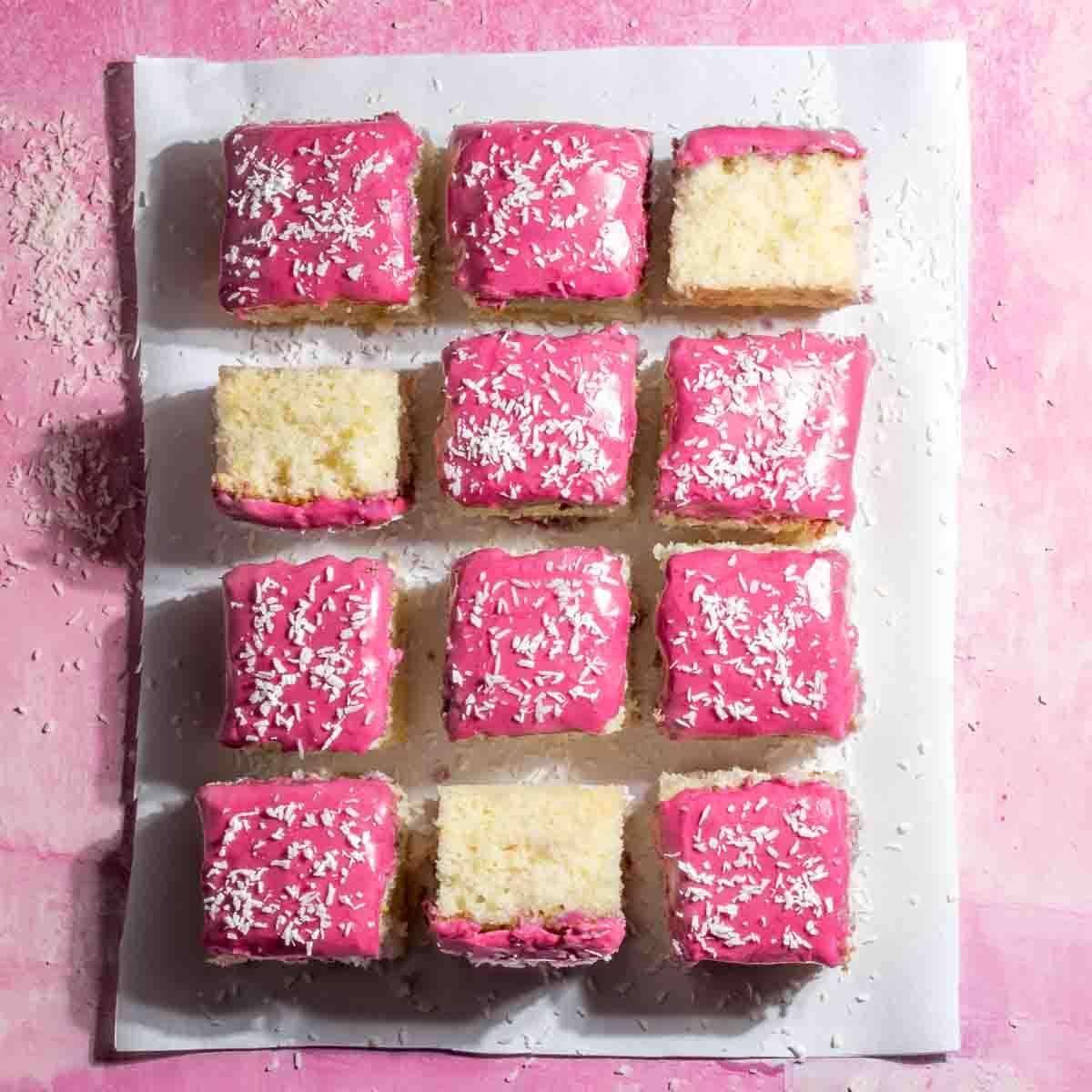
The icing is a simple fruit glaze made by combining pureed blueberries or raspberries with lemon juice and icing sugar to a spreadable consistency. Pink food coloring intensifies the hue if preferred, and desiccated coconut sprinkled on top adds texture and visual appeal.
This cake is suited for serving in casual settings, offering a soft, tender bite with fruity sweetness from the icing. It pairs well with tea or coffee. The recipe benefits from attention to precise measurements and batter aeration for best results.
Careful preparation steps such as bringing eggs to room temperature, thorough beating for air incorporation, and gradual addition of liquids to the icing ensure a balanced texture and flavor. Allowing the icing to set before slicing helps maintain clean, neat pieces.
Ingredients
For the cake
- 4 large egg at room temperature, circa 62g per egg in its shell
- 250 millilitre milk whole or semi-skimmed. Boiled, then cooled down to lukewarm
- 360 grams granulated sugar
- 2 teaspoons vanilla extract
- 100 millilitre oil neutral oil like vegetable or sunflower oil
- 360 grams all-purpose flour
- 1 tablespoon baking powder
- ½ teaspoon salt
- lemon zest, optional
For the icing
- 150 grams blueberries or raspberries
- 30 millilitre lemon juice or water
- 500 grams icing sugar
- pink food colouring only use this if you want a stronger colour pink to what the berries provide, optional
- desiccated coconut for sprinkling, optional
Instructions
Prepping
- If the eggs are fridge-cold, remove them from the fridge approximately 30 minutes before you start to bake. Alternatively, place the eggs in a bowl of warm water for 5 minutes to bring them to room temperature more quickly.
- Heat the milk in the microwave or a small saucepan until it starts to simmer. Allow it to cool to a lukewarm temperature that you can insert a clean finger into without burning.
- Line the baking tin with baking paper (see 'Equipment' above for the baking tin size).
- If you are adding lemon zest to the cake batter, zest the lemon now.
Making the cake
- Preheat the oven to 170℃/338℉/gas mark 3.
- Add the granulated sugar, room-temperature eggs and vanilla extract to a large mixing bowl.
- Using an electric hand mixer or stand mixer, beat the sugar, eggs and vanilla extract together until the mixture is thick, fluffy and very pale in colour. You should notice trails in the mixture left by the beaters. This will take a minimum of 5 minutes of beating.
- In a separate bowl or jug, combine the oil and lukewarm milk. Whisk together with a fork until reasonably well blended.
- Sift together the flour, baking powder and salt in a bowl.
- Add half of the sifted flour mixture to the eggs and sugar mixture and beat on a very low speed using an electric hand mixer or a stand mixer. Stop as soon as the dry ingredients have been incorporated.
- Next, add half of the milk and oil mixture and beat again at a low speed. Stop as soon as the liquids have been incorporated.
- Repeat these steps one more time for the remaining flour and liquid ingredients. Beat on low speed after each addition and be careful not to overbeat.
- If you're including lemon zest, add it at this point and beat it in briefly.
- Pour the cake batter into the prepared tin and tap it gently on the counter a few times to remove any air bubbles.
- Bake on the middle oven shelf for 35-40 minutes until the top of the golden brown cake springs back when touched and a tester inserted in the centre comes out clean. Test doneness at 35 minutes. If your oven runs hot, test earlier at 30 minutes or use a lower oven temperature to begin with.
- Let the baked cake cool in the tin for at least 20 minutes before flipping it upside down onto a cooling rack.
- Carefully peel off the parchment paper, paying extra attention to the corners where the cake might have baked into the folds of the paper. Set the cake aside to cool fully while we make the icing.Note: We will frost the cake on the bottom side, which is why we turned it upside down. This ensures a smoother and flatter surface for icing.
Making the pink icing
- Place the berries in a small bowl and pour the lemon juice or water over the top. Give it a quick stir.
- Microwave the berries for 1 minute, stirring halfway through. If the berries are still quite firm, microwave for 15 seconds more.
- Use a fork to mash and squash the berries to release their juice.
- Strain the berries through a sieve, reserving the juice and discarding the pulp.
- Add the icing sugar to a large bowl. It's not necessary to sift it if your icing sugar is fresh and fluffy, but if it's lumpy, definitely sift it.
- Start by adding about 3 tablespoons of the berry juice (or water) to the icing sugar and mix it through with a fork.
- Add more liquid slowly until the icing reaches the thickness you prefer. It needs to be a thick but spreadable icing. Around six tablespoons of liquid usually does the trick.
- Check if the cake has fully cooled down, then scoop the icing onto the surface of the cake.
- Use an offset spatula or the back of a spoon to spread the icing evenly across the top of the cooled cake, making sure to reach the corners and sides. If the icing is a bit runny, apply it slightly inward, as it tends to spread on its own.
- You can now sprinkle some desiccated coconut or sprinkles over the top of the cake if you wish, or leave it plain.
Notes
- Use a digital kitchen scale and accurate measuring spoons for precise ingredient amounts.
- Bring eggs to room temperature before mixing for better batter aeration.
- Beat eggs and sugar for at least 5 minutes to achieve a pale, fluffy texture, incorporating air for tenderness.
- Handle the batter gently to avoid deflating the air bubbles formed during beating.
- Monitor oven temperature and adjust baking time as needed based on your oven's characteristics.
- Add liquids slowly to the icing to prevent it from becoming too runny; thicken with extra icing sugar if needed.
- Decorate icing with coconut or sprinkles immediately after spreading for best adhesion.
- Let the icing firm up before slicing; use a sharp, long knife for neat cuts.
- The cake embraces a simple, down-to-earth charm rather than focusing on perfect appearance.
Nutrition Information
Show DetailsNutrition Facts
Serving: 24servings
Amount Per Serving
Calories 251 kcal
% Daily Value*
| Calories | 251kcal | 13% |
| Carbohydrates | 49g | 16% |
| Protein | 3g | 6% |
| Fat | 5g | 8% |
| Saturated Fat | 1g | 5% |
| Polyunsaturated Fat | 1g | 6% |
| Monounsaturated Fat | 3g | 15% |
| Trans Fat | 0.02g | 1% |
| Cholesterol | 32mg | 11% |
| Sodium | 120mg | 5% |
| Potassium | 51mg | 1% |
| Fiber | 1g | 4% |
| Sugar | 37g | 74% |
| Vitamin A | 66IU | 1% |
| Vitamin C | 1mg | 1% |
| Calcium | 51mg | 5% |
| Iron | 1mg | 6% |
* Percent Daily Values are based on a 2,000 calorie diet.
User Reviews
Overall Rating
5
You'll Also Love