Vanilla Custard | Crème Anglaise Recipe
User Reviews
5
-
Prep Time
5 mins
-
Cook Time
15 mins
-
Total Time
20 mins
-
Servings
1 medium bowl
-
Calories
956 kcal
-
Course
Dessert
-
Cuisine
International
Vanilla Custard | Crème Anglaise Recipe
Description
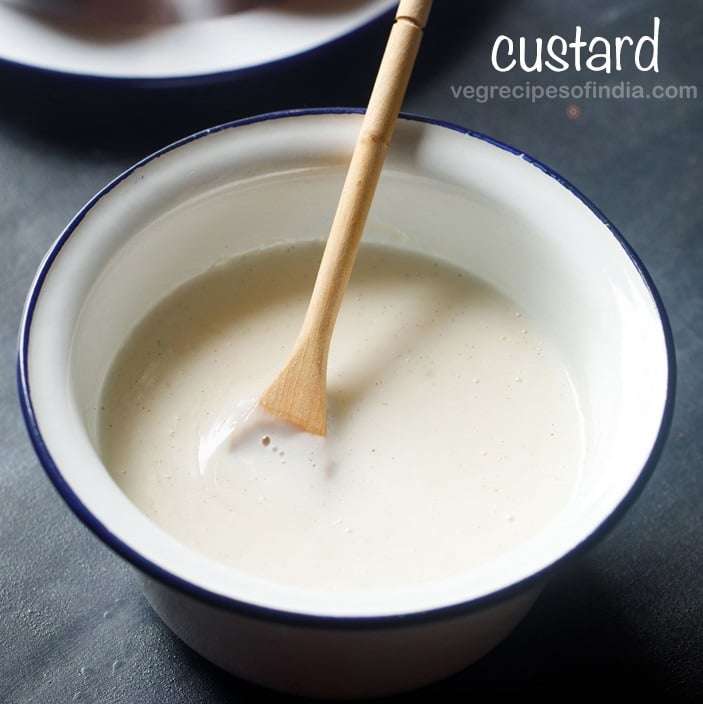
This Vanilla Custard or Crème Anglaise recipe uses whole milk infused with sugar, cornstarch, and vanilla extract or scraped vanilla bean. The mixture is cooked on a low to medium-low heat and stirred constantly to prevent sticking or lump formation. The custard thickens gradually and is ready when it coats the back of a spoon. The preparation method requires patience and gentle heating to preserve the sauce's smooth texture and prevent scorching.
The flavor is a subtle balance of creamy milk sweetness enhanced by pure vanilla, resulting in a light, pourable custard sauce. It can be served alongside desserts like cakes, puddings, or fruit, adding moisture and richness without overpowering other flavors.
Using a heavy-bottomed pan is recommended for even heat distribution and to prevent burning. The recipe allows for adjustments in cornstarch quantity depending on milk fat content, ensuring proper thickening. This custard can be scaled for larger batches, and care should be taken to maintain the low heat throughout cooking.
Ingredients
- 3 cups milk whole
- ¼ cup cornstarch or cornflour
- 8 tablespoons sugar or add as required
- 1 teaspoon vanilla extract or ½ of a vanilla bean, scraped or ½ teaspoon vanilla essence
Instructions
Preparation
- In a heavy saucepan take the milk.
- Add cornstarch and sugar.
- Next add vanilla extract or vanilla bean, scraped.
Making Vanilla Custard
- Mix everything and keep the pan on stovetop on a low to medium-low heat.
- Stir so that all the sugar dissolves. Use a wired whisk for ease of use and best results.
- Simmer on a low to medium-low heat.
- When milk gets hot, then stir often so that the custard mixture does not stick to bottom of pan and forms lumps.
- Continue to stir till the custard sauce starts to thicken gradually.
- Do remember to cook on a low to medium-low heat. So do not rush. You don’t want a lumpy custard or a browned or blackened custard.
- The sauce will thicken. continue to simmer and stir continuously till the sauce thickens more.
- Take the sauce in a spoon and it should coat the back side of the spoon.
- Turn the heat off and cover the pan with cotton kitchen towel or napkin. Placing a cotton kitchen towel prevents from forming the layer of skin on top.
- Let the custard sauce cool at room temperature. Later you can keep in fridge. Do note that on cooling the sauce will thicken more.
- You can use this custard sauce or egg-free crème anglaise to make desserts like fruit custard, bread & butter pudding, baked custard, trifle etc.
Storage
- After the custard sauce cools down to room temperature, refrigerate it. It keeps well for 2 to 3 days in the fridge.
- Note that the sauce will thicken more after refrigeration.
Notes
- Cook the custard on low to medium-low heat and stir continuously to avoid lumps and burning.
- Use a heavy-bottomed pan for even heat and to prevent sticking or scorching.
- Adjust cornstarch amounts if using different types of milk; toned milk may require 1–2 tablespoons more cornstarch.
- The recipe can be scaled to make larger quantities as needed.
Nutrition Information
Show DetailsNutrition Facts
Serving: 1medium bowl
Amount Per Serving
Calories 956 kcal
% Daily Value*
| Calories | 956kcal | 48% |
| Carbohydrates | 160g | 53% |
| Protein | 24g | 48% |
| Fat | 23g | 35% |
| Saturated Fat | 14g | 70% |
| Polyunsaturated Fat | 1g | 6% |
| Monounsaturated Fat | 5g | 25% |
| Cholesterol | 88mg | 29% |
| Sodium | 284mg | 12% |
| Potassium | 1133mg | 24% |
| Fiber | 0.3g | 1% |
| Sugar | 131g | 262% |
| Vitamin A | 1186IU | 24% |
| Vitamin B1 (Thiamine) | 0.4mg | |
| Vitamin B2 (Riboflavin) | 1mg | |
| Vitamin B3 (Niacin) | 1mg | |
| Vitamin B6 | 0.5mg | |
| Vitamin B12 | 4µg | 167% |
| Vitamin D | 8µg | 40% |
| Vitamin E | 0.4mg | |
| Vitamin K | 2µg | |
| Calcium | 913mg | 91% |
| Iron | 1mg | 6% |
| Magnesium | 91mg | 23% |
| Phosphorus | 745mg | |
| Zinc | 3mg |
* Percent Daily Values are based on a 2,000 calorie diet.
User Reviews
Overall Rating
5
You'll Also Love