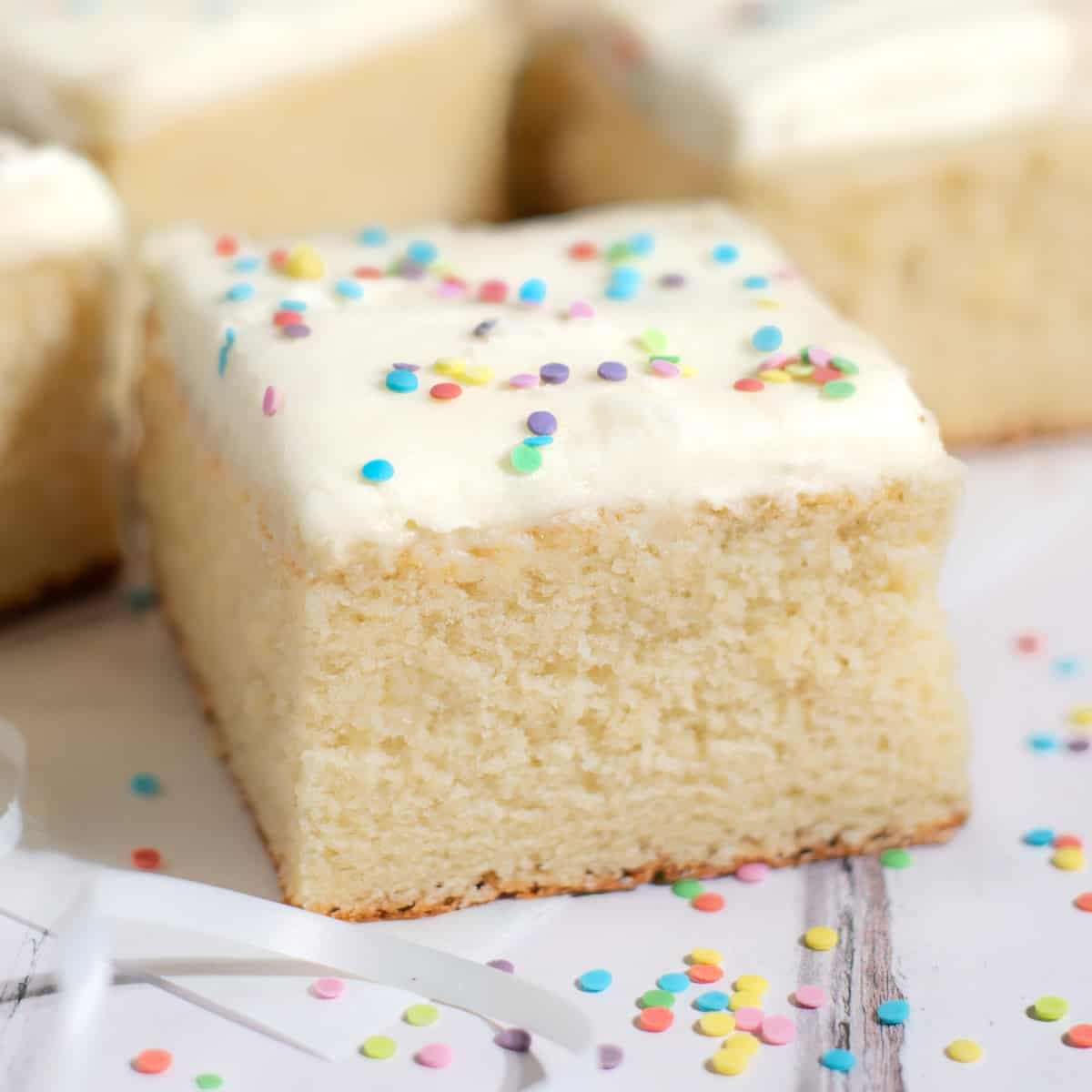
Vanilla Tray Bake
User Reviews
5
-
Prep Time
15 mins
-
Cook Time
40 mins
-
Total Time
55 mins
-
Servings
24 squares or 12 large squares
-
Calories
308 kcal
-
Cuisine
International
Vanilla Tray Bake
Description
This vanilla tray bake uses room temperature eggs, lukewarm milk, granulated sugar, oil, and vanilla extract combined with flour, baking powder, and salt to create a tender cake base. Beating the eggs and sugar thoroughly until pale and fluffy incorporates air, contributing to a light texture. Folding in warm milk and oil balances moisture while maintaining softness.
The batter is baked in a prepared tray bake tin and then topped with a buttercream made from sifted icing sugar, salted butter, vanilla, and a small amount of cream or milk. The buttercream is carefully beaten to a fluffy consistency and spread smoothly, possibly decorated with sprinkles for a festive touch.
Preparing eggs at room temperature, sifting icing sugar to remove clumps, and avoiding overmixing after adding dry ingredients promote a uniformly textured cake. Slight adjustments based on oven calibration and visual tests for doneness are advised.
The cake serves well for gatherings and can be adapted with different sprinkles or flavor extracts. Measuring ingredients accurately with a kitchen scale enhances baking reliability.
Ingredients
For the cake
- 4 large egg at room temperature, circa 62g per egg in its shell
- 250 millilitre milk whole or semi-skimmed. Boiled, then cooled down to lukewarm
- 360 grams granulated sugar
- 2 teaspoons vanilla extract
- 100 millilitre oil neutral oil like vegetable or sunflower oil
- 360 grams all-purpose flour
- 1 tablespoon baking powder
- ½ teaspoon salt
For the buttercream
- 450 grams icing sugar or powdered sugar, sifted
- ¼ teaspoon salt
- 225 grams unsalted butter softened at room temperature
- 1 teaspoon vanilla extract
- 2-4 tablespoons cream or milk
- Sprinkles of choice, measured by heart
Instructions
Prepping
- If the eggs are fridge-cold, remove them from the fridge approximately 30 minutes before you start to bake. Alternatively, place the eggs in a bowl of warm water for 5 minutes to bring them to room temperature more quickly.
- Heat the milk in the microwave or a small saucepan until it starts to simmer. Allow it to cool to a lukewarm temperature that you can insert a clean finger into without burning.
- Line the baking tin with baking paper (see 'Equipment' above for the baking tin size).
To make the cake
- Preheat the oven to 170℃/338℉/gas mark 3.
- Add the granulated sugar, room-temperature eggs and vanilla extract to a large mixing bowl.
- Using an electric hand mixer or stand mixer, beat the sugar, eggs and vanilla extract together until the mixture is thick, fluffy and very pale in colour. You should notice trails in the mixture left by the beaters. This will take a minimum of 5 minutes of beating.
- In a separate bowl or jug, combine the oil and lukewarm milk. Whisk together with a fork until reasonably well blended.
- Sift together the flour, baking powder and salt in a bowl.
- Add half of the sifted flour mixture to the eggs and sugar mixture and beat on a very low speed using an electric hand mixer or a stand mixer. Stop as soon as the dry ingredients have been incorporated.
- Next, add half of the milk and oil mixture and beat again at a low speed. Stop as soon as the liquids have been incorporated.
- Repeat these steps one more time for the remaining flour and liquid ingredients. Beat on low speed after each addition and be careful not to overbeat.
- Pour the cake batter into the prepared tin and tap it gently on the counter a few times to remove any air bubbles.
- Bake on the middle oven shelf for 35-40 minutes until the top of the golden brown cake springs back when touched and a tester inserted in the centre comes out clean. Test doneness at 35 minutes. If your oven runs hot, test earlier at 30 minutes or use a lower oven temperature to begin with.
- Let the baked cake cool in the tin for at least 20 minutes before flipping it upside down onto a cooling rack.
- Carefully peel off the parchment paper, paying extra attention to the corners where the cake might have baked into the folds of the paper. Set the cake aside to cool fully while we make the buttercream.Note: We will frost the cake on the bottom side, which is why we turned it upside down. This ensures a smoother and flatter surface for the buttercream.
To make the buttercream
- Sift the icing sugar and salt into a large bowl and set aside. Note: Sifting icing sugar may be a bit of a chore but it's the secret to a lump-free, velvety buttercream!
- Cut the softened butter into smaller pieces to make mixing easier. Add the cubed butter to the bowl of a stand mixer or a large mixing bowl if you're using a handheld electric mixer.Note: Use the regular beater attachment, not the whisk.
- Whip the butter until it's soft and fluffy, around 2 minutes. Scrape down the bowl.
- At medium speed, start adding the icing sugar two tablespoons at a time. Beat between each addition until all the sugar is incorporated, which takes about 15 seconds each time.
- After all the icing sugar is mixed in, scrape down the bowl once more and add the vanilla extract. Beat for approximately 30 seconds.
- Check the consistency of the buttercream. If you prefer it thinner, add a tablespoon of cream or milk and beat again. Keep adding small amounts of liquid until it reaches your desired consistency. You will likely need a couple of tablespoons at least.
- Beat for just 1 more minute. Too much beating can introduce too much air into the buttercream, making it less smooth.
Decorating the cake
- Once the cake has cooled, spread a thin layer of buttercream over the surface. This acts as a crumb coat, stopping any crumbs from appearing in your final layer of buttercream.
- Spread the remaining buttercream over the cake and finish it off with your favourite sprinkles.
Notes
- Use a kitchen scale and quality measuring spoons for accurate ingredient amounts to achieve consistent results.
- Allow eggs to come to room temperature for smoother batter and better rise; remove from fridge 30 minutes prior or warm in water for 5 minutes.
- Beat eggs and sugar for at least 5 minutes until pale and fluffy to incorporate air and ensure a tender crumb.
- Handle batter gently after adding dry ingredients to avoid deflating air bubbles critical to texture.
- Know your oven’s temperatures; adjust baking times and heat if it runs hotter or cooler; visually check for springy top or use a tester for doneness.
- Sift icing sugar before making buttercream to prevent lumps; add sugar gradually and beat butter first for fluffy frosting.
- When adding milk or cream to buttercream, incorporate slowly by hand mixing to control consistency and avoid air bubbles.
Nutrition Information
Show DetailsNutrition Facts
Serving: 24squares or 12 large squares
Amount Per Serving
Calories 308 kcal
% Daily Value*
| Calories | 308kcal | 15% |
| Carbohydrates | 46g | 15% |
| Protein | 3g | 6% |
| Fat | 13g | 20% |
| Saturated Fat | 6g | 30% |
| Polyunsaturated Fat | 2g | 12% |
| Monounsaturated Fat | 5g | 25% |
| Trans Fat | 0.3g | 15% |
| Cholesterol | 53mg | 18% |
| Sodium | 205mg | 9% |
| Potassium | 49mg | 1% |
| Fiber | 0.4g | 2% |
| Sugar | 34g | 68% |
| Vitamin A | 299IU | 6% |
| Calcium | 54mg | 5% |
| Iron | 1mg | 6% |
* Percent Daily Values are based on a 2,000 calorie diet.
User Reviews
Overall Rating
5
You'll Also Love