Miso 手前味噌
User Reviews
4.4
-
Prep Time
18 hrs
-
Cook Time
30 mins
-
Total Time
18 hrs 30 mins
-
Servings
1
-
Calories
2692 kcal
-
Course
Condiments
-
Cuisine
Japanese
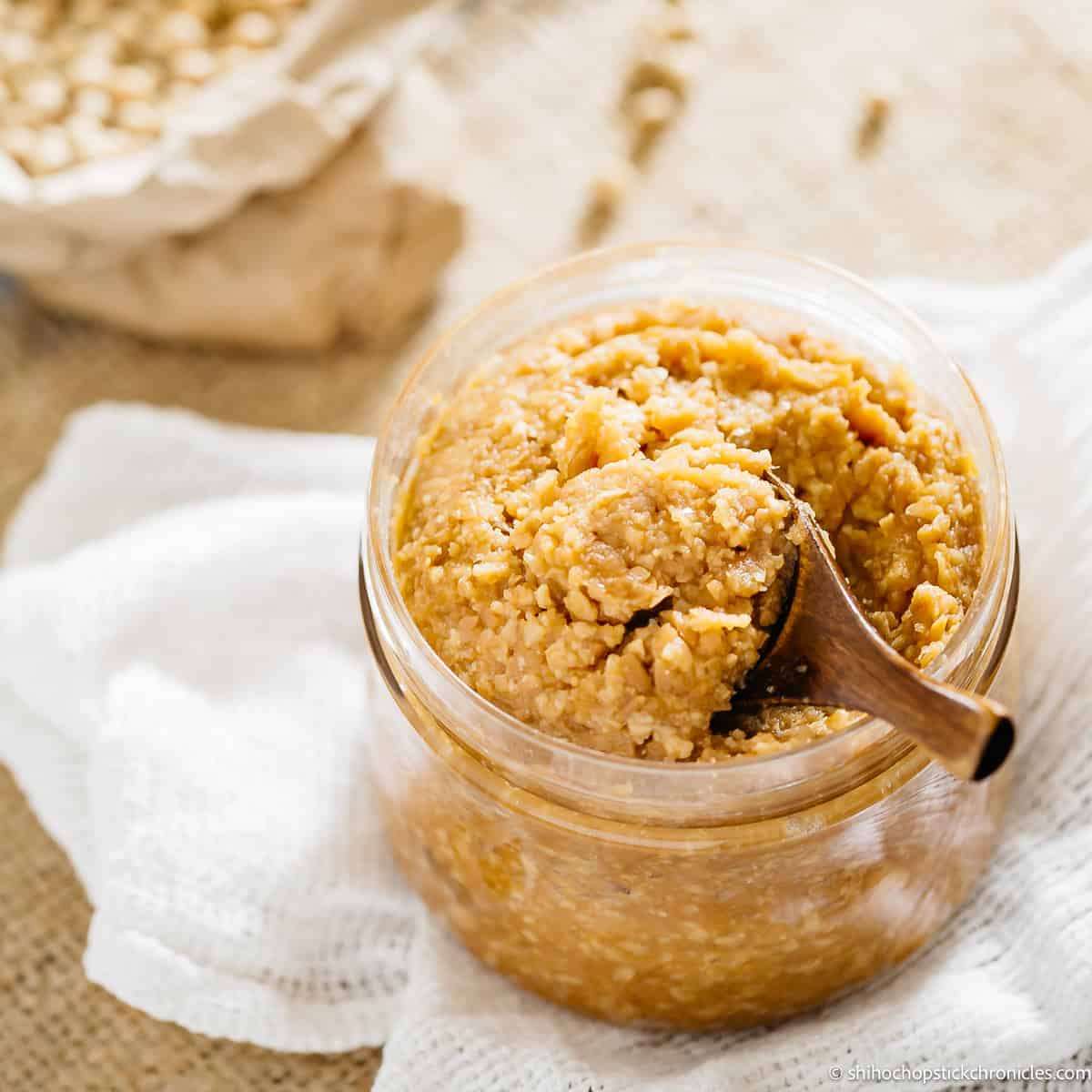
Miso 手前味噌
Description
This Miso 手前味噌 recipe relies on dry soybeans soaked for over 18 hours and cooked in a pressure cooker until they reach a soft consistency suitable for mashing. After mashing while warm but below 40°C to preserve the koji, rice koji and salt are mixed into the soybeans. This mixture ferments to form miso, a staple Japanese seasoning paste.
The process emphasizes careful temperature control to maintain microorganism viability for fermentation and strong seasoning balance. The resulting miso paste has a rich, savory character important to many Japanese dishes.
Once prepared, the miso can be stored in a fermentation container and transferred to the refrigerator when desired. Specific notes mention alternative cooking methods without a pressure cooker and using vodka instead of shochu for sterilization. The total yield is about 1 kg of miso paste.
Ingredients
- 200 g soybean dry
- 450 g rice koji
- 130 g salt
- 1/2 cup water used for soybean cooking
- 2 tbs salt for sprinkle
Instructions
- Wash the dry soybeans under running water until the water become clear.
- Soak the washed dry soybeans for over 18 hours
- After over 18 hours have passed, drain the water and place the soaked soybeans in a pressure cooker. *1
- Add enough water to cover the soybeans, lock on the lid in place and select pressure cooker. *2
- Set the timer to pressure cook for 5 minutes. When the 5 minutes is up, let the pressure come down naturally.
- While the soybean is being cooked, place salt and koji in a mixing bowl and combine them well and set aside.
- Pick one bean and check if you can squish the bean with your finger tips. If it can be squished, it is the right softness to mash.
- Mash the cooked soybean. I used a stand mixer with a mincer attachment, but if you don't have it, just use a potato masher and mash them finely.
- Place the mashed soybean in a large mixing bowl while it is still hot and add koji and salt to the bowl. *3
- Mix them well with your hands and add some liquid if necessary. I add about 1/2 cup of liquid.
- Make the mashed soybeans into baseball sized balls.
- Slam the mashed soybean mixture balls into a container that is going to be used for fermenting 2-3 balls at a time and press them compactly in order to let any air bubbles out. Repeat the process until all soybean balls are compressed into the container.
- Smoothe the surface and wipe off any soybean mash from the container.
- Sprinkle salt to cover the surface.
- Place 20% of the mixtures weight over the salt sprinkled surface. I used salt in a ziplock bag. *4
- Cover the container with cling wrap and place a lid.
- Store the container in dark and cool place for at least 3 months. Write the date prepared on the lid.
- After 3 months, open the lid, remove the weight and turn the mixture with an wooden spatula.
- Smooth the surface again and place a cling wrap on top.
- Place the container back to a dark and cool place for another 2-3 months.
- After 2-3 months, transfer the container to a cooler place like the fridge in order to stop the Miso from over fermenting. *5
Notes
- Soak soybeans for over 18 hours to ensure proper softening during cooking.
- If no pressure cooker is available, simmer soybeans in water for 3-4 hours until soft.
- Temperature of mashed soybeans should be below 40°C when adding koji to avoid killing fermentation cultures.
- This recipe yields about 1 kg of miso paste; adjust container size accordingly.
- After fermentation, transfer miso to a smaller container for storage in the refrigerator if space is limited.
- Shochu is traditionally used for sterilization; vodka is a suitable substitute outside Japan.
Nutrition Information
Show DetailsNutrition Facts
Serving: 1Serving
Amount Per Serving
Calories 2692 kcal
% Daily Value*
| Calories | 2692kcal | 135% |
| Carbohydrates | 450g | 150% |
| Protein | 92g | 184% |
| Fat | 45g | 69% |
| Saturated Fat | 7g | 35% |
| Sodium | 64353mg | 2681% |
| Potassium | 3594mg | 76% |
| Fiber | 18g | 72% |
| Sugar | 385g | 770% |
| Vitamin C | 12mg | 13% |
| Calcium | 585mg | 59% |
| Iron | 31.8mg | 177% |
* Percent Daily Values are based on a 2,000 calorie diet.
User Reviews
Overall Rating
4.4
You'll Also Love